Why the next agent winners will be the companies people trust with real work
By Jaka Kotnik, CMO of Inflectiv
Every major technology shift starts with excitement, then becomes serious when businesses try to deploy it.
That is exactly where we are with AI agents.
The first wave was about demos. An agent could browse, call a tool, write code, query a database, trigger a workflow, and return an answer impressive enough to share. For a while, that was the story. Agents were exciting because they looked like software that could finally operate on behalf of the user.
Then teams started putting agents near real business systems.
That is when the conversation changed.
The moment an agent connects to internal tools, databases, files, APIs, credentials, customer data, or workflows, it stops being a chatbot. It becomes an operational actor. And operational actors need boundaries.
This is where the agent market is moving from hype to trust.
MCP Changed the Agent Conversation
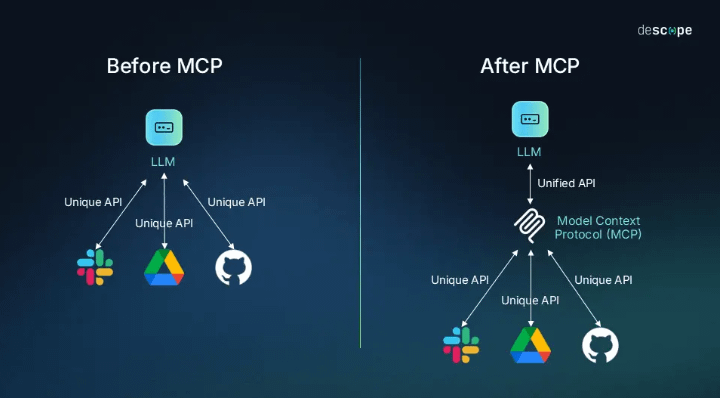
The Model Context Protocol has become one of the most important standards in agent infrastructure because it gives AI applications a cleaner way to connect with external systems. Instead of building custom integrations for every model, tool, database, and workflow, MCP creates a more standardized interface between agents and the context they need.
That matters because agents need context to be useful. They need access to files, databases, APIs, tools, memory, workflows, and business systems. Without a shared interface, every connection becomes custom work. Every integration becomes another fragile bridge. Every product team ends up rebuilding the same plumbing.
📷
Source: https://www.descope.com/learn/post/mcp
Anthropic introduced MCP
as an open standard for building secure, two-way connections between data sources and AI-powered tools, while Google’s MCP Toolbox for Databases shows how quickly this interface is moving into real developer infrastructure by connecting agents, IDEs, and applications to enterprise databases.
That is a huge signal.
Agents are moving closer to the systems where real work happens.
But the same thing that makes MCP powerful also makes it risky: it connects agents to real systems.
The Trust Gap Is Now the Adoption Gap
This is the part that matters most for adoption.
Customers will not adopt agents because the demo looks impressive. They will adopt agents when the system is reliable, explainable, secure, and connected to the right knowledge. A good agent cannot only answer quickly. It needs to know where the answer came from, what it is allowed to access, what it should never expose, and whether the workflow can be trusted.
That is the enterprise gap.
Everyone wants agents, but very few teams are ready for what agents require. Most companies still have knowledge spread across disconnected systems. Their documents are unstructured. Their files are duplicated. Their datasets are not agent-ready. Their permissioning logic was designed for humans, not autonomous workflows. Their credentials are scattered across tools, environments, and local machines.
That works for prototypes.
It does not work for production.
The security side is already showing stress. Trend Micro’s research showed exposed MCP servers nearly tripling to 1,467, with exposed servers becoming vectors not only for data access but also for attacks against the cloud services hosting them.
That is what happens when adoption moves faster than infrastructure.
For founders, marketers, sales teams, and enterprise buyers, this is not only a technical issue. It is a buying issue. It is a brand issue. It is a trust issue.
The next agent winners will not be the loudest teams saying “we use AI.”
They will be the teams that can say, our agents can be trusted with real work.
Trust Is Becoming the New Brand Moat
For years, AI marketing has been built around capability.
Can the model generate?
Can the assistant summarize?
Can the agent automate?
Can the workflow run faster?
Those questions still matter, but they are no longer enough.
As agents move closer to business-critical workflows, the buying criteria changes. Enterprises do not only ask what the agent can do. They ask what it can access, how it behaves, whether it can be audited, whether it respects boundaries, and what happens when something goes wrong.
That changes the GTM story.
Security is no longer a backend detail. Data quality is no longer an engineering-only concern. Access control is no longer something to patch later. These become part of the product narrative, the sales process, and the brand promise.
This is where many companies will struggle.
They will keep marketing agents as “smarter assistants,” while buyers are quietly asking whether those agents can be trusted around customer data, internal tools, financial systems, private documents, and operational workflows.
The agent category does not need more magic.
It needs confidence.
Marketing Teams Are Becoming Agent Operators
This shift is also changing marketing teams themselves.
For a long time, marketing technology was mostly about tools: CRMs, analytics dashboards, email platforms, social schedulers, content calendars, attribution systems, and automation flows. Marketers learned how to operate software around the customer journey.
Agents change that operating model.
A modern marketing team is no longer only managing campaigns. It is managing AI-assisted workflows: research agents, content agents, CRM enrichment agents, support intelligence, sales enablement systems, community monitoring, partner tracking, competitive analysis, and automated reporting.
📷

Source: https://www.aprimo.com/blog/the-future-of-marketing-teams-with-ai-agents
That means marketing leaders need to understand more than messaging. They need to understand what data the agent can access, where that data comes from, what the agent is allowed to do, how outputs are reviewed, and whether the workflow can be trusted.
The marketers who win will not be the ones using AI to write faster posts. They will be the ones who turn company knowledge into repeatable, governed, AI-powered GTM systems.
If you do not evolve with that shift, you will not just move slower. You will lose to teams that can research faster, personalize better, respond sooner, test more ideas, and turn useful insights into operational memory.
Agents are not only changing products. They are changing how teams operate.
Why Inflectiv Built for the Trust Layer
At Inflectiv, we start from a simple truth: agents are only as useful as the intelligence they can safely access.
Instead of throwing raw PDFs, documents, spreadsheets, and internal files into a retrieval system and hoping the model finds the right chunk, Inflectiv turns trapped knowledge into structured, queryable intelligence. Agents can read from it, write back to it, and improve it over time, creating reliability that raw retrieval simply cannot deliver.
This matters because confidence is not created by saying “our agent is smarter.” It is created when the agent can show what it knows, where it knows it from, what it is allowed to access, and how its knowledge improves over time.
That is the difference between an impressive demo and a production-ready system.
The Interface Has to Meet Builders Where They Work
This is also why Inflectiv’s own MCP Server matters.
We built directly on the standard so developers can move from raw knowledge to working agents without forcing the data layer into a separate workflow. From Claude Code, Cursor, VS Code, Windsurf, or Claude Desktop, builders can create agents, attach datasets, ingest files, run semantic search, and manage workflows inside the environments they already use.
For GTM, that matters because adoption does not scale only through capability. It scales through reduced friction.
The easier it is for builders to move from idea to working agent, the faster a product becomes part of their workflow. MCP is becoming an interface layer for the agent economy. Inflectiv makes structured intelligence available inside that interface.
Why We Launched AVP
The next part of the adoption story is controlled access.
When agents can reach more tools, they also create more trust boundaries. When they can access more data, data governance becomes harder. When they can act through credentials, credential management becomes a product risk. When they can execute workflows, auditability becomes mandatory.
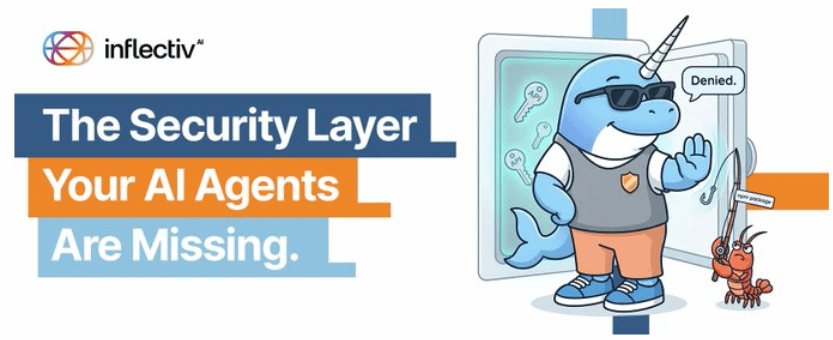
This is why we launched the Agent Vault Protocol, AVP.
The problem is simple: AI agents are starting to operate with real permissions, but most credential systems were designed for humans, not autonomous software. Without clear controls, teams have limited visibility into what the agent accessed, what was allowed, what was denied, and whether sensitive memory was stored safely.
AVP was created to make those boundaries enforceable. AgentVault is the reference implementation, giving developers a safer way to manage encrypted credentials, scoped permissions, audit trails, session controls, and secure memory for agent workflows.
That matters because agent security cannot be solved by telling developers to “be careful.”
If agents are going to operate inside real workflows, they need infrastructure that can enforce what they are allowed to see, what they are allowed to use, and what gets logged before anything happens.
Control has to be designed into the system.
https://x.com/inflectivAI/status/2049422111031046337
📷
Agent Commerce Needs Less Friction
There is another layer most people are not talking about enough: how agents actually pay for intelligence.
If agents are going to query paid datasets, APIs, or services on demand, the commercial layer cannot depend on manual subscriptions, invoices, and human approvals at every step.
Inflectiv’s support for x402 and autonomous USDC payments creates trusted, frictionless machine-to-machine commerce, aligning business models with real agent behavior.
This matters because business models follow behavior.
If agents query data at runtime, pricing needs to match runtime usage. If agents access specialized intelligence on demand, monetization needs to happen at the point of access. If contributors and data owners participate, value needs to flow back to the people and organizations creating useful intelligence.
The agent economy cannot be built only around subscriptions.
It needs usage, access, settlement, and confidence.
The Real Adoption Story
The market does not need another company saying “we use AI.”
Everyone says that now.
The stronger story is: our agents are connected to structured knowledge, governed by controlled access, supported by secure memory, and designed for real workflows.
That is not just an engineering message. It is a GTM message.
Enterprises buy outcomes. They buy lower operational friction, better knowledge access, faster execution, safer automation, and stronger customer experiences. If an agent cannot be trusted with real company knowledge, it will stay in the sandbox.
This is why trust becomes the adoption moat.
The next wave of agent companies will be separated by their ability to answer hard buyer questions:
Where does the data come from?
Can the agent cite the source?
Who controls access?
Can credentials be scoped?
Can memory be secured?
Can activity be audited?
Can the agent improve without creating new risk?
Can the system handle real workflows, not just demos?
The companies that answer those questions clearly will earn the right to deploy deeper into organizations.
Everyone else will keep competing for attention.
The Brand Moat Is Real Work
MCP will keep growing because the need is real. Agents need a standard way to connect to tools and data. But the market will quickly separate teams that connect everything recklessly from teams that build around governance, security, and structured intelligence.
The next brand moat will not be “we have an AI agent.”
It will be: “our agent can be trusted with real work.”
That is the story Inflectiv is built to own: structured intelligence agents can use, secure memory they can rely on, and an MCP-native interface developers can build from without leaving their editor.
Start structuring your first dataset at app.inflectiv.ai, or connect Inflectiv directly inside your IDE with the Inflectiv MCP Server.
Further Reading
Anthropic: Introducing the Model Context Protocol
Google: MCP Toolbox for Databases
Trend Micro: Update on Exposed MCP Servers
AgentVault
Inflectiv App
About the Author
Jaka Kotnik is the CMO of Inflectiv, leading end-to-end go-to-market strategy, ecosystem partnerships, and market positioning for the company. Based in Dubai, he is a senior growth leader with experience across AI, Web3, blockchain infrastructure, gaming, and consumer-facing ecosystems.
Before Inflectiv, Jaka served as Head of Marketing at Vanar, where he helped lead global campaigns, ecosystem growth, and partnership communications around AI, data, and PayFi infrastructure. He previously worked as Product Marketing Manager at Virtua, supporting product narratives, user growth, and community-facing launches across digital collectibles, gaming, and Web3 products.