
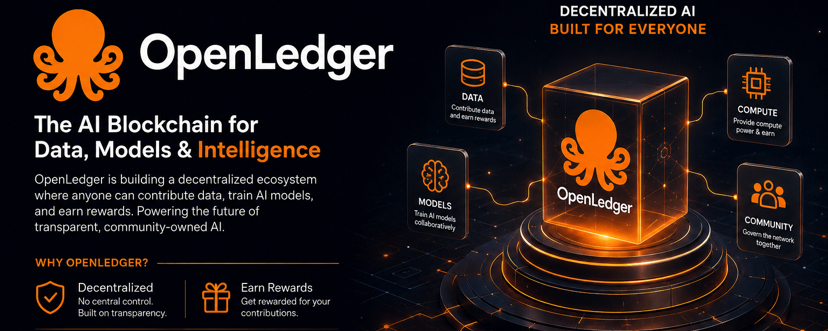
Artificial Intelligence is rapidly transforming the way people work, communicate, and build technology. From smart assistants to advanced automation systems, AI has become one of the most powerful innovations of the modern era. However, as AI continues to grow, concerns around data ownership, transparency, and centralized control are becoming more serious. This is where decentralized AI platforms like OpenLedger are creating a new direction for the future.
OpenLedger is emerging as a platform that combines blockchain technology with artificial intelligence to create a more open, transparent, and community-driven ecosystem. Instead of allowing a few large corporations to dominate AI infrastructure and data access, OpenLedger focuses on decentralization, giving contributors and communities a more active role in the development of intelligent systems.
One of the most important aspects of OpenLedger is its vision of community-powered AI. In traditional AI systems, massive amounts of data are collected and controlled by centralized companies. Users often contribute valuable information without receiving ownership, rewards, or transparency about how their data is used. OpenLedger aims to change this model by creating an ecosystem where participants can contribute data, intelligence, and computing resources while maintaining greater control and potentially receiving value in return.
Blockchain technology plays a major role in making this possible. By using decentralized infrastructure, OpenLedger can provide transparency and security while reducing dependence on centralized authorities. Transactions, contributions, and interactions can be verified on-chain, creating trust between users and the network. This combination of blockchain and AI could help solve major challenges related to data authenticity, fairness, and accountability.
Another reason OpenLedger is gaining attention is because decentralized AI is becoming increasingly relevant in today’s digital economy. As AI adoption expands across industries such as finance, healthcare, gaming, education, and social media, the demand for transparent and scalable AI infrastructure continues to grow. Projects that can successfully combine AI utility with decentralized ownership may become a major part of the next generation of Web3 innovation.
OpenLedger also represents a broader shift toward user empowerment in technology. Modern internet platforms are often criticized for concentrating power and monetization within a small group of corporations. Decentralized ecosystems attempt to reverse that structure by giving users more influence over governance, participation, and value creation. This idea aligns closely with the principles of Web3, where communities become active stakeholders rather than passive users.
The future of decentralized AI still faces challenges, including scalability, regulation, adoption, and technical complexity. However, projects like OpenLedger are helping push the industry toward a more open and collaborative future. By integrating blockchain transparency with AI development, the platform is exploring new possibilities for how intelligent systems can be built and shared globally.
As technology continues evolving, decentralized AI may become one of the defining innovations of the next digital era. OpenLedger stands out as a project attempting to bridge the gap between artificial intelligence and decentralized infrastructure while encouraging community participation and innovation. For developers, creators, and Web3 enthusiasts, it is a project worth watching as the future of AI continues to unfold.#OpenLedgar