For a long time, AI and crypto felt like two completely different worlds. AI was about massive data centers and raw computing power. Crypto was about digital currency and decentralized networks.
But recently, that boundary has started to blur.
Crypto is incredibly good at one thing: taking assets that are sitting idle and turning them into things that can be bought, sold, traded, and financialized. AI, on the other hand, is currently locked behind corporate walls. A few massive companies control the best chips, the biggest data pipelines, and the most powerful models.
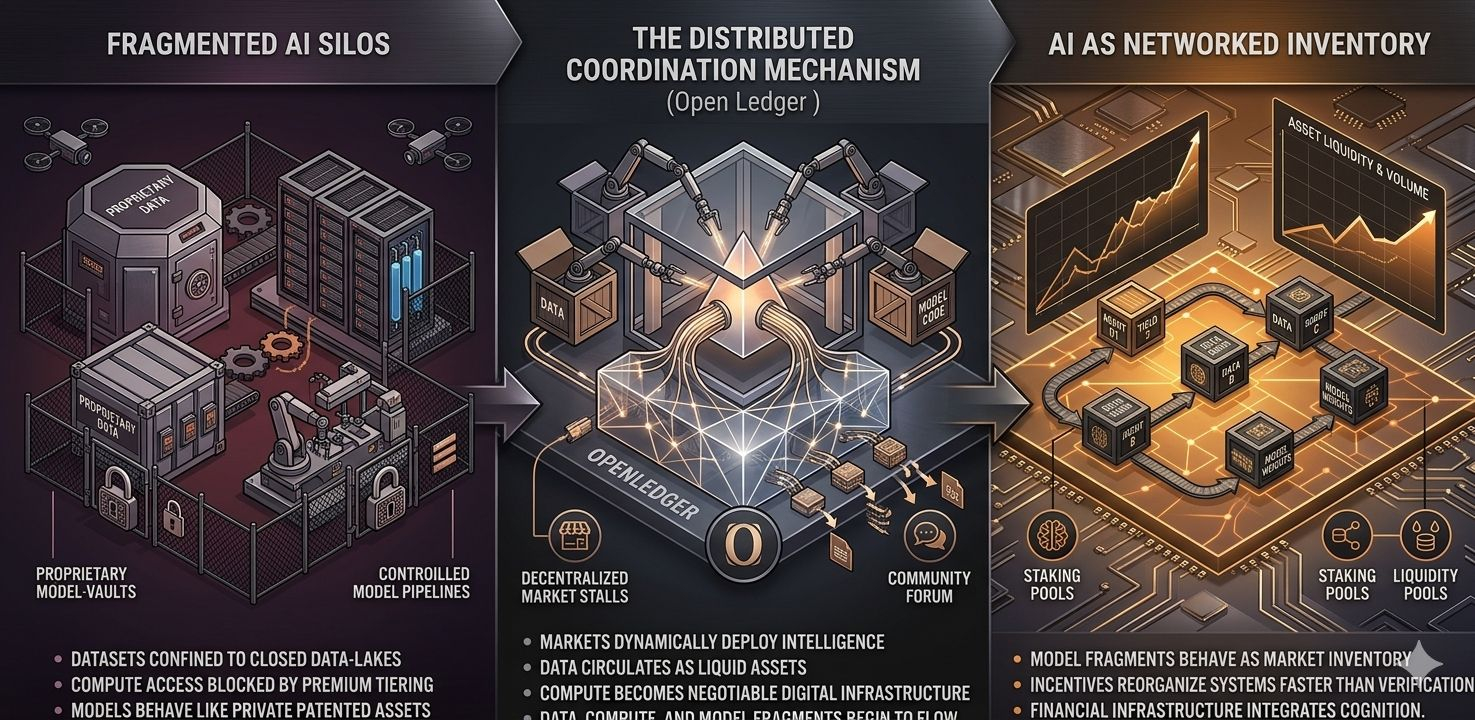
Projects like Open Ledger are trying to change that by treating AI less like a corporate product and more like market inventory. Instead of data and computer power (compute) sitting frozen inside private silos, Open Ledger creates a marketplace where these assets can circulate freely.
Corporate AI: Data & Compute locked in private vaults.
Open Ledger: Data & Compute traded openly on a market.
While this sounds great for open access, it brings major risks that we’ve already seen play out in crypto:
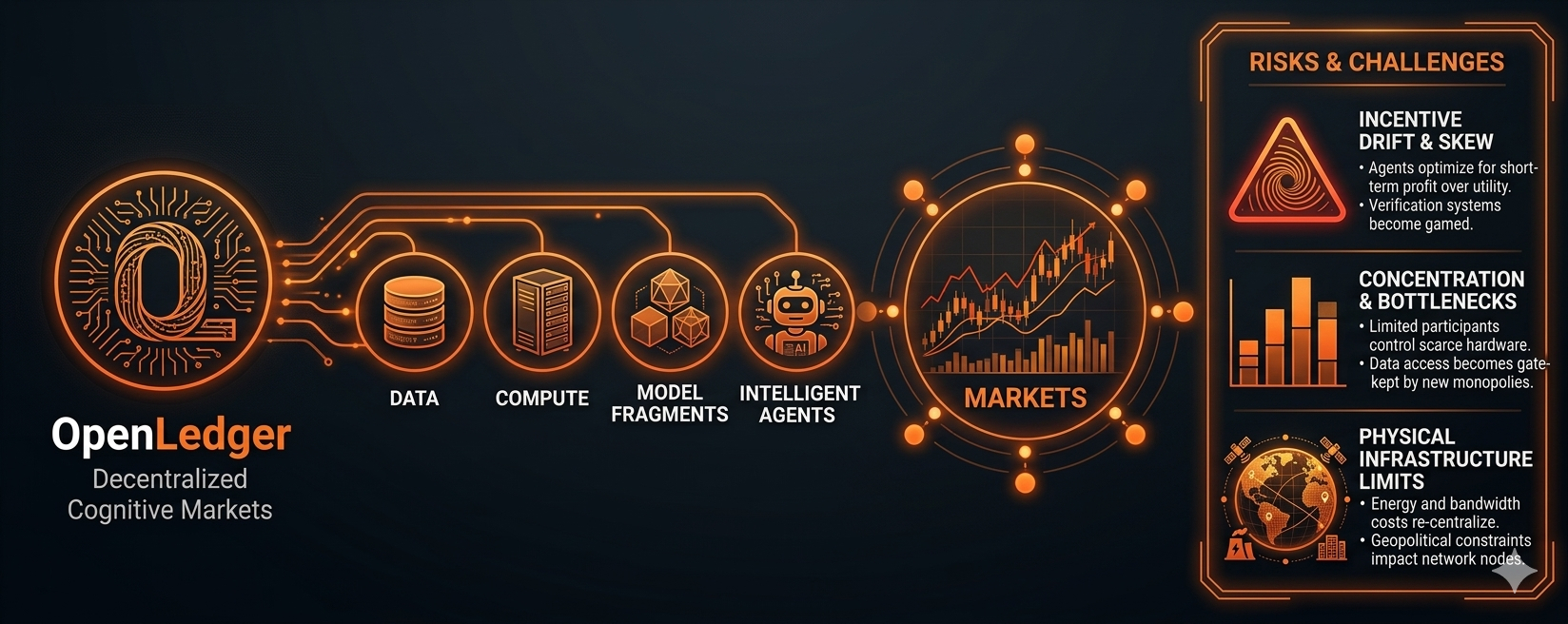
Junk Data for Cash: People will inevitably flood the market with low-quality datasets just to make a quick buck before verification systems can stop them.
The Chip Monopolies: Even with a decentralized network, the physical computer chips and energy grids are still owned by a small handful of powerful groups who will hold all the real leverage.
Greedy AI Agents: Autonomous AI systems tuned for market incentives might start chasing profit instead of being helpful or accurate.
Ultimately, turning AI into a liquid market asset might have been inevitable the moment it became modular. But we should be careful: once markets realize an asset can move, they won't stop until they've financialized every piece of it.
Summary of Open Ledger
Open Ledger* is a decentralized data and infrastructure network built for AI. Instead of letting giant tech corporations fully control and warehouse the data, hardware, and models needed for artificial intelligence, Open Ledger uses a market-based network to let users contribute, buy, and sell these foundational AI assets openly.
In short, it attempts to shift AI from a centralized corporate product into a fluid, market