
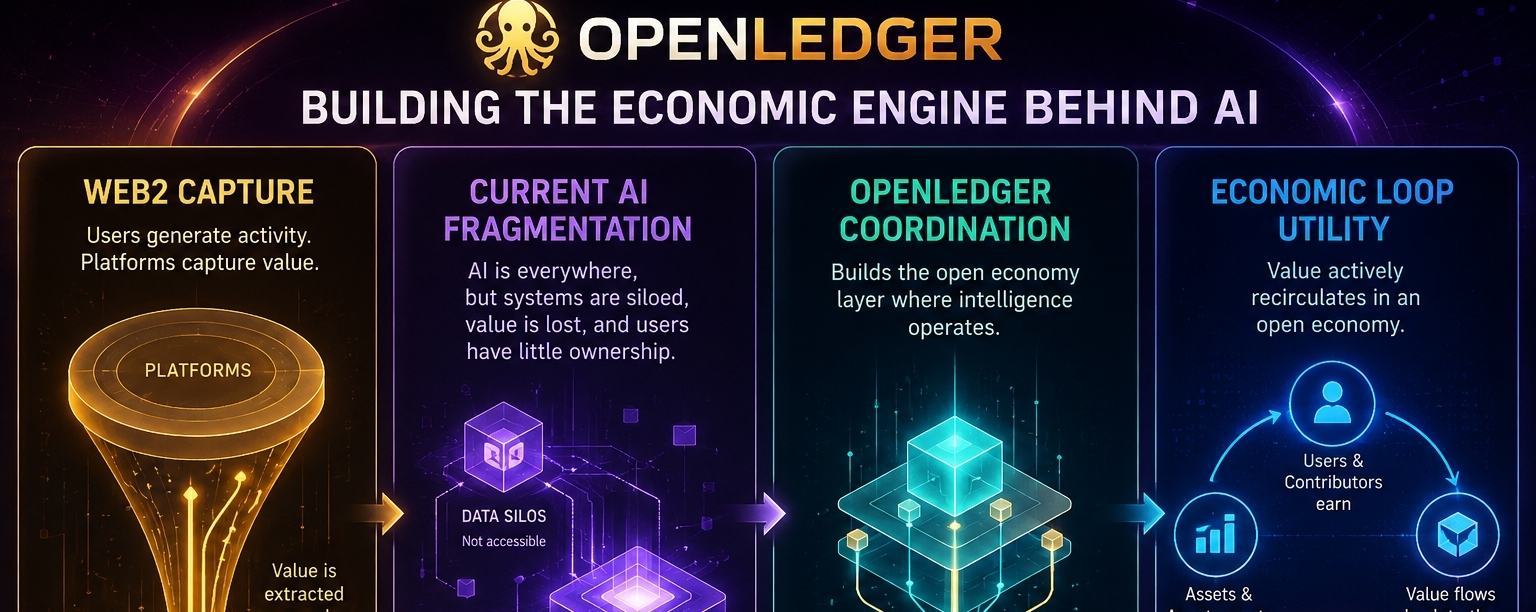
The AI industry is moving faster than ever.Every day, new models are released, autonomous agents become more capable, and businesses race to integrate artificial intelligence into their products and services. Most discussions focus on which model is smarter, which company is ahead, or which technology will dominate the next cycle.
Yet beneath all of this innovation lies a much larger question.
This question may ultimately prove more important than the race to build the most powerful model.
Today artificial intelligence depends on three critical resources: data, models, and intelligent agents. These assets generate enormous value, but the systems that support them remain largely centralized. Data contributors rarely receive fair compensation. Model creators often struggle to capture the full value of their work. Intelligent agents operate inside ecosystems where ownership and economic participation remain limited.
This is precisely the challenge OpenLedger is trying to solve.
Rather than competing in the crowded race to create another AI application, OpenLedger is building something far more fundamental. It is creating the economic infrastructure that allows AI to operate as a decentralized and self sustaining ecosystem.
The significance of this approach cannot be overstated.
Throughout history infrastructure has often created more lasting value than the applications built on top of it. Roads created economies. Railways connected industries. The internet enabled global commerce. In the same way, AI requires a foundation that allows intelligence to be owned, verified, coordinated, and monetized at scale.
OpenLedger is positioning itself as that foundation.
Its vision extends beyond simple blockchain functionality. The network is designed to transform data, AI models, and autonomous agents into productive economic assets. Instead of value being concentrated among a small number of centralized entities, OpenLedger seeks to create an environment where contributors can participate directly in the growth of the AI economy.
This represents a major shift in how people think about artificial intelligence.
Most conversations around AI focus on intelligence itself. OpenLedger focuses on the economy surrounding intelligence.
That distinction matters The future will likely contain millions of autonomous agents interacting with each other, accessing services, consuming data, performing tasks, and generating value independently. These systems will require transparent ownership, reliable incentives, secure coordination, and efficient mechanisms for exchanging value.
Traditional infrastructure was not designed for this future.
OpenLedger was makes the project particularly compelling is its understanding that AI is rapidly becoming an economic network rather than simply a technological one. Data is no longer just information. Models are no longer just software. Agents are no longer just tools.
They are emerging as economic participants.
As this transformation accelerates, the demand for systems capable of supporting these new forms of value creation will continue to increase. OpenLedger aims to provide exactly that capability.
Another reason the project stands out is its focus on long-term sustainability.
Many blockchain narratives rise quickly on speculation and disappear just as fast. OpenLedger appears focused on building infrastructure that can support real economic activity. The emphasis is not merely on attracting attention but on creating mechanisms that align incentives between developers, data providers, model creators, and users.
Strong ecosystems are rarely built on hype alone.
They are built on utility This is where OpenLedger's strategy becomes especially interesting. Instead of asking how AI can generate attention, it asks how AI can generate sustainable economic value for everyone involved in the network.
As decentralized AI continues to gain momentum, the importance of ownership and transparency will only grow. Users increasingly want to know where data originates, how models are trained, and who benefits from the value being created. Open systems capable of answering these questions may become increasingly important over time.
OpenLedger is building for that future today. The project recognizes that the next stage of AI evolution will require more than intelligence. It will require markets, incentives, coordination mechanisms, and economic structures capable of supporting billions of interactions between humans and machines.
This is why OpenLedger has attracted growing attention among those looking beyond short term narratives.
The opportunity is not simply to participate in the AI revolution.The opportunity is to help build the economic engine that powers it.
If AI truly becomes one of the defining technologies of this century, the networks enabling ownership, liquidity, and value distribution could become just as important as the models themselves.
That is the vision #OpenLedger is pursuing. While much of the market remains focused on today's headlines, OpenLedger is building for tomorrow's economy.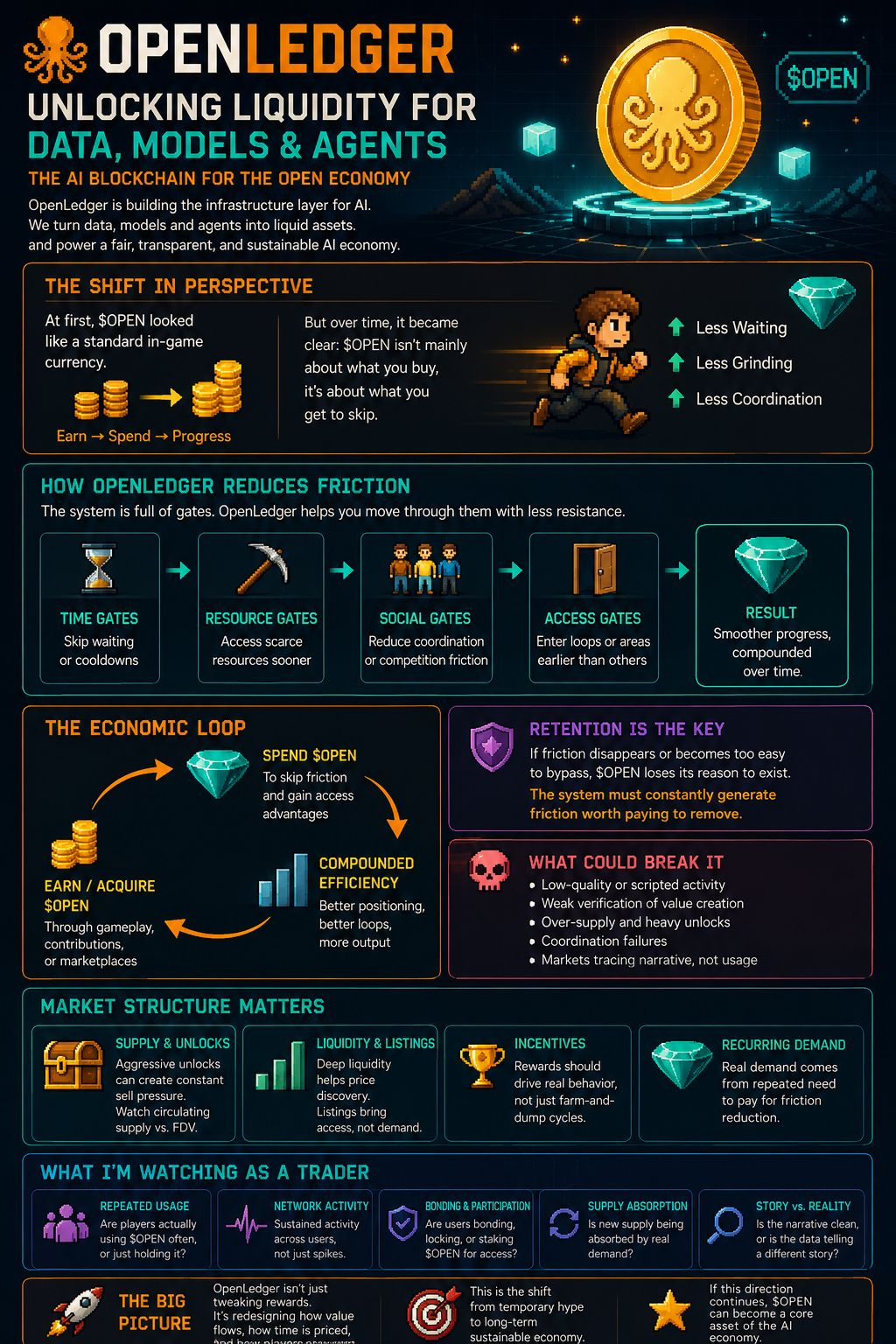
And if the future of AI is ultimately determined by who creates the strongest infrastructure beneath it, OpenLedger may be positioning itself as one of the most important projects to watch in the years ahead.
