

Let me be honest with you. I have been watching the AI space for a while now, and most of what gets labeled "open" or "fair" AI is neither of those things. Companies collect your data, your writing, your medical records, your legal documents — and they use all of it to build products they sell for billions. You get nothing. Not a thank you, not a small payment, not even credit. The people who actually created the raw material of modern AI the doctors who wrote clinical notes, the lawyers who drafted contracts, the developers who pushed code to public repositories have zero stake in what got built from their work. I started paying attention to OpenLedger because it is one of the very few projects that is trying to fix this problem at the root, not just talking about it in a whitepaper nobody reads.
@OpenLedger What Makes OpenLedger Different From Every Other AI Blockchain
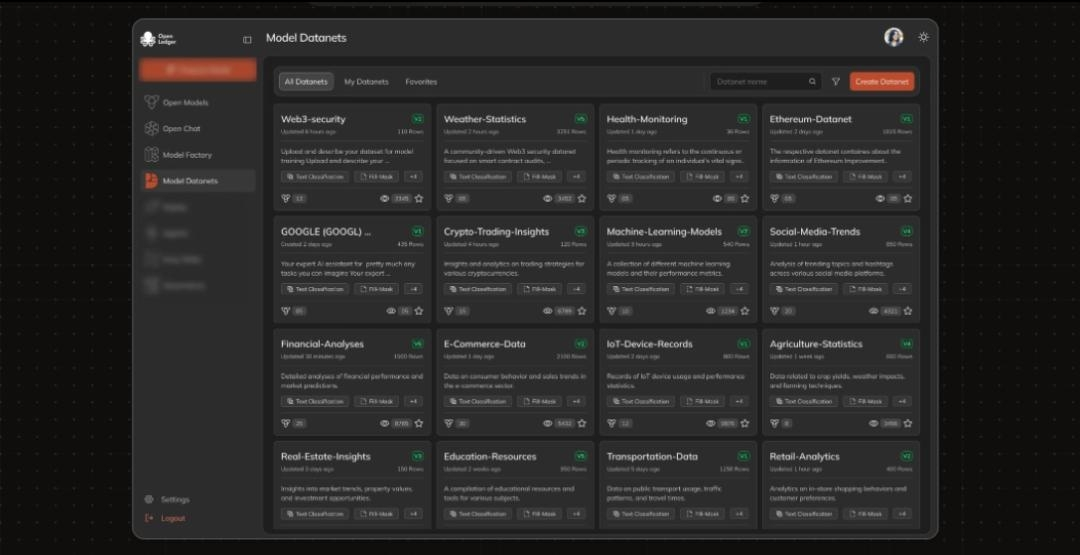
Here is the thing about most "AI plus blockchain" projects. Strip away the marketing and you usually find a crypto project with an AI story bolted on after the fact. The AI angle is there to catch attention. The actual product is just another token. OpenLedger is not that. It was designed from day one around how AI models are actually built data collection, contributor tracking, model training, fine-tuning, deployment, and ongoing improvement. Every stage of that process happens on-chain with a record you can verify yourself. The platform gives you three real tools to work with: Datanets for building and contributing to community-owned datasets, Model Factory for training and deploying specialized AI models, and OpenLoRA for fine-tuning existing models on domain-specific data. These tools are live right now. This is not a roadmap item. You can go use them today.
Proof of Attribution The Feature That Actually Changes Something
This is the part that made me take OpenLedger seriously. Think about whupat normally happens when an AI model gets trained. Five hundred people contribute data. The model gets built. It starts earning money. Who decides how much each contributor gets paid? The company. Which means in practice, contributors get nothing and the company keeps everything. OpenLedger solves this with something called Proof of Attribution. Every dataset uploaded, every model training run, every contribution made it all gets recorded on-chain with a permanent timestamp and an identity link. When the model earns revenue, a smart contract calculates each contributor's proportional share automatically and sends the payment without anyone at a company making a judgment call about who deserves what. Attribution is not a policy that can be changed next quarter. It is code running on a public blockchain. That is a meaningful difference.
The $OPEN Token Four Uses That Are Actually Real
#OpenLedger Most tokens have one real use and three fake ones. The $OPEN token has four uses that are working inside the live ecosystem right now. Gas fees every transaction on the network, including AI training runs and data uploads, gets paid in $OPEN. Contributor rewards data contributors, model developers, and validators all earn $OPEN automatically based on real usage, not on a vague promise. Staking validators lock up $OPEN to provide quality checks on data and models, with good contributors earning more and bad actors getting slashed. Governance token holders vote on protocol upgrades, model funding, AI agent regulations, and how the treasury gets used. The total supply is one billion. The number that matters most is 51.7 percent — that is the share going to community rewards and ecosystem growth. The team and investors combined got less than the community. I cannot tell you how rare that is. Most projects do the opposite and dress it up in language about "long-term alignment."
What the Numbers Actually Say
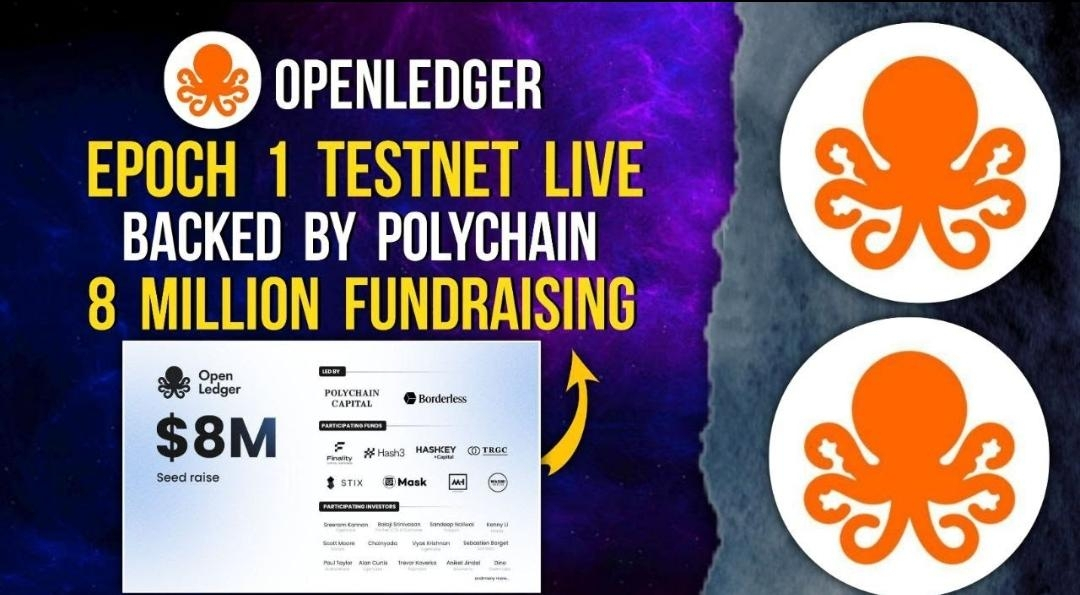
OpenLedger launched on Binance on September 8, 2025. It was the 36th project in Binance's HODLer Airdrops program ten million tokens went to BNB holders who had locked through Simple Earn or On-Chain Yields. The token went up over 200 percent after listing. Mainnet went live on November 18, 2025, which meant full on-chain data attribution became real rather than theoretical. It is listed on Upbit and Bithumb in Korea on top of Binance solid exchange coverage for a project this early. The seed round was $8 million from Polychain Capital and Borderless Capital. Individual backers include ex-Coinbase CTO Balaji Srinivasan, EigenLabs founder Sreeram Kannan, and Polygon co-founder Sandeep Nailwal. The Trust Wallet partnership opens the door to over 200 million users who could interact with AI models through simple voice and text without ever touching the blockchain directly.
The Risks Because You Deserve the Full Picture
OpenLedger has a well-built architecture and serious people behind it. That is real. But I would be doing you a disservice if I stopped there. Team and investor token unlocks start after a one-year lockup and release linearly over three years new supply starts hitting the market around September 2026. The question that matters is whether real usage of Datanets, ModelFactory, and the upcoming OpenFin AI Marketplace grows fast enough to absorb that supply. If people are actually buying AI model access with $OPEN, the economics work. If adoption stays thin while unlock pressure builds, the price story gets harder to defend. This is not a reason to avoid the project. It is a reason to watch it closely, understand what you are participating in, and make decisions based on what the usage numbers actually show over the next year.
Follow @OpenLedger for mainnet updates, new Datanets, and governance votes.
