
I think most digital ecosystems have a hidden problem nobody talks about publicly. Communities create enormous value for for platforms every single day, yet contributors themselves usually remain invisible once ecosystems become successful. The realization completely changed how I started looking at OpenLedger.
At first, I approached it like another infrastructure narrative trying to gain attention inside a rapidly expanding sector. But while reading deeper into the whitepaper, the project started feeling less like a normal ecosystem and more like an attempt to solve a problem that quietly exists across almost the entire internet. The problem is not participation. The internet already has endless participation. The real problem is that contribution itself remains extremely difficult to identify, measure, and reward fairly.
What caught my attention most was the direction around Proof of Attribution and contributor ownership. Most systems today absorb enormous amounts of value from communities without clearly identifying where meaningful contribution actually comes from. People create behavior patterns, data layers, feedback systems, specialized knowledge, adoption momentum, and ecosystem growth every single day, yet most of that value eventually disappears into centralized structures where contributors themselves become almost invisible.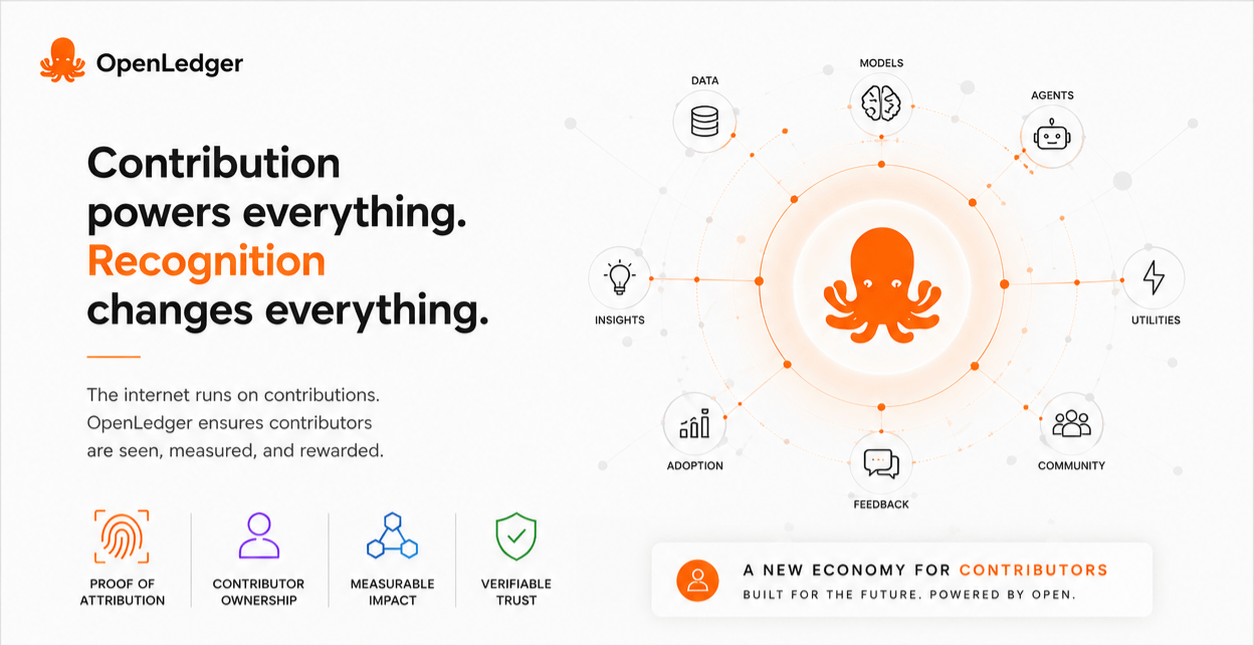
The more I thought about it, the more I realized how strange this model actually is. Entire ecosystems are often built on top of participation, yet participation itself rarely gains long term ownership inside the systems it helps expand. Communities continuously strengthen digital economies, but most platforms still operate like extraction layers where value flows upward while contributors remain temporary participants inside structures they helped create.
One section from the $OPEN whitepaper that genuinely stayed in my mind was the focus on specialized models instead of treating every contribution the same way. Most ecosystems today reward visibility and scale more than actual usefulness, which eventually creates shallow engagement loops where noise becomes more profitable than quality. But OpenLedger seems to be exploring a structure where contribution quality itself becomes measurable and economically relevant instead of remaining hidden beneath larger systems.
That distinction feels extremely important to me because I think the next phase of digital economies may depend less on pure scale and more on identifying meaningful participation correctly. The systems that survive long term may not simply be the loudest ecosystems or the ones attracting the most temporary attention. They may become the systems capable of aligning participation, attribution, ownership, and sustainability together without breaking under their own incentive structures.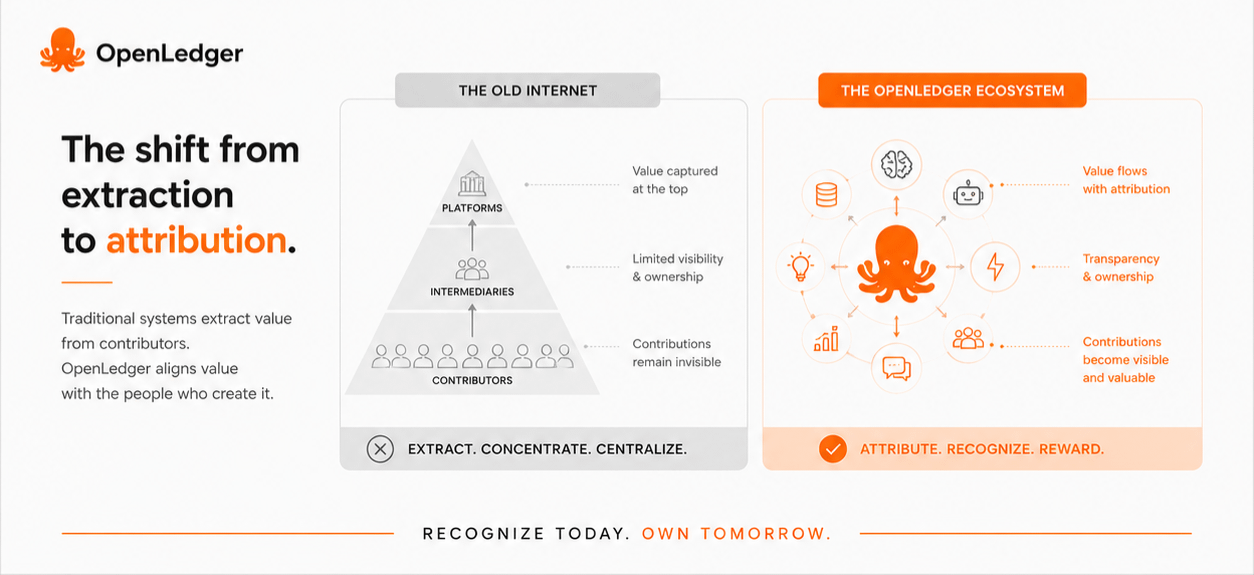
At the same time, I do not think this direction is easy at all. Measuring contribution fairly across large ecosystems becomes incredibly complex once systems scale globally. Every attribution model risks manipulation, low quality farming behavior, or artificial engagement designed only to exploit reward structures. Even adoption itself remains uncertain because most people still do not think deeply about contributor ownership as long as existing systems remain convenient enough to use daily.
But despite those risks, I still think OpenLedger is touching something much deeper than a temporary market narrative. The project feels like part of a larger shift where ecosystems slowly start questioning who actually creates value inside digital economies and whether contributors should remain invisible forever. And honestly I think that conversation will become far more important over the next few years than most people currently realize.
