
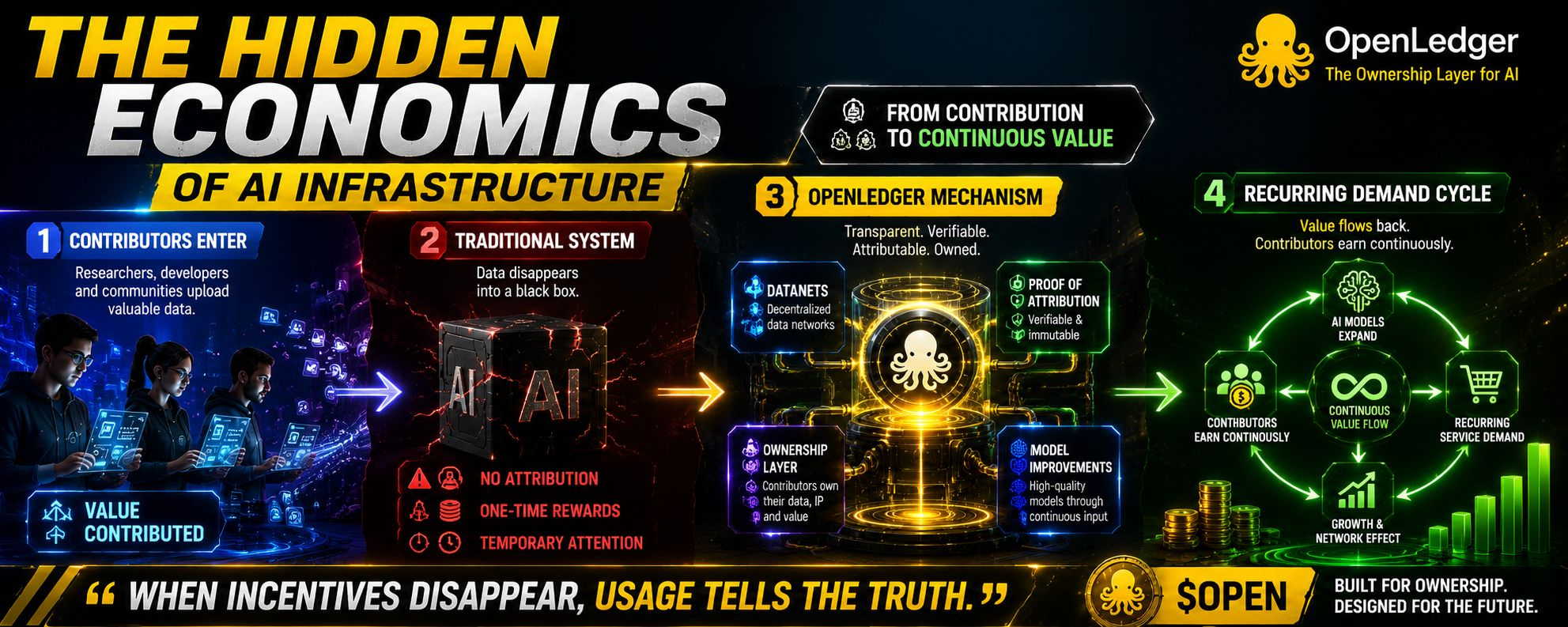
I’ve watched enough infrastructure tokens go through the same cycle to notice a pattern. A listing happens, attention spikes, contributors rush in, activity explodes, and the narrative becomes simple: reward users, grow the network, and demand will naturally follow.
On paper that sounds convincing.
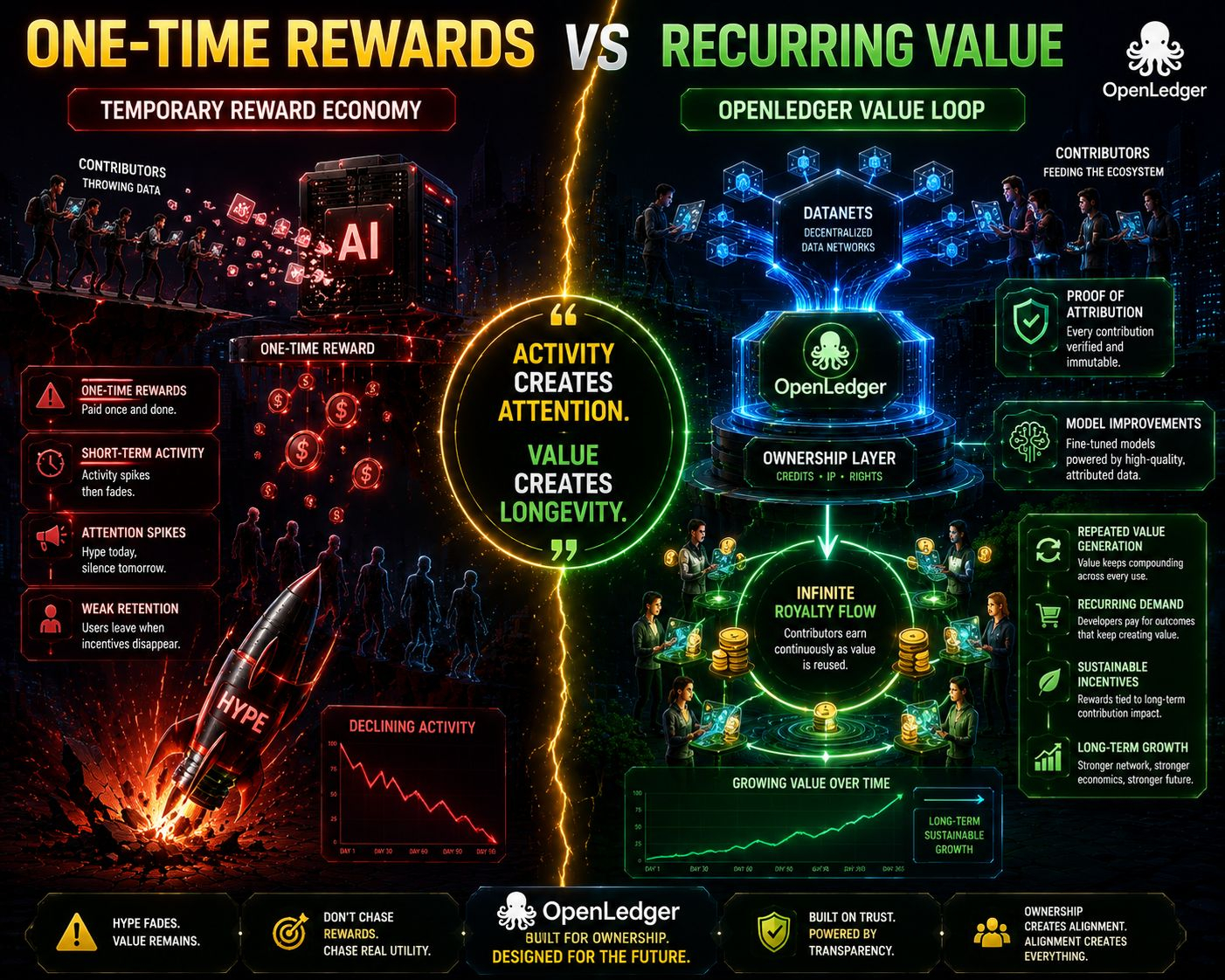
But after seeing multiple projects move through that cycle, I started questioning whether activity and long-term value are actually the same thing. Incentives can attract participation very quickly, but attracting people and keeping them engaged are completely different challenges.
That’s why OpenLedger caught my attention from an economic perspective.
If contributors are rewarded only once for submitting useful data or improving a model, then the mechanism starts looking like a standard marketplace. Tokens flow out, users arrive, and activity increases temporarily.
But imagine something different.
Suppose valuable fine-tuned behaviors continue generating value across future model use, repeated inference requests, or downstream adaptation. Suddenly the equation changes. The contribution isn't simply uploaded and forgotten. It becomes productive over time.
That begins to resemble a royalty model rather than a one-time payment structure.
Still, this is where the real test begins.
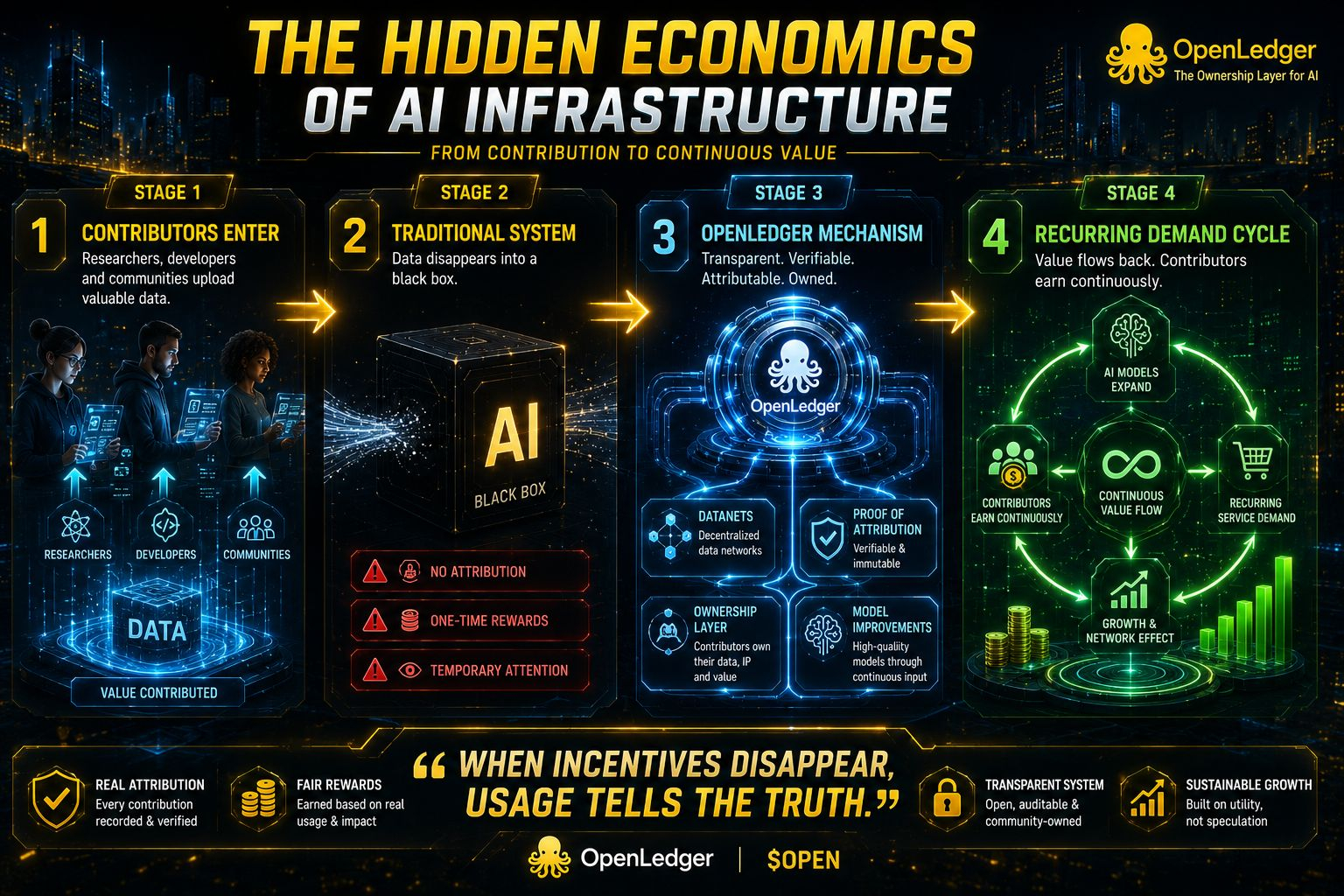
Strong attribution matters. Verification matters. If low-quality contributions become easier than genuine value creation, systems eventually become noisy and buyers lose confidence.
As a trader, I usually look beyond the headlines. Narratives create excitement, but recurring demand creates staying power.
Because when incentives fade, usage tells the truth.
#OpenLedger #OpenLedger $OPEN @OpenLedger
