
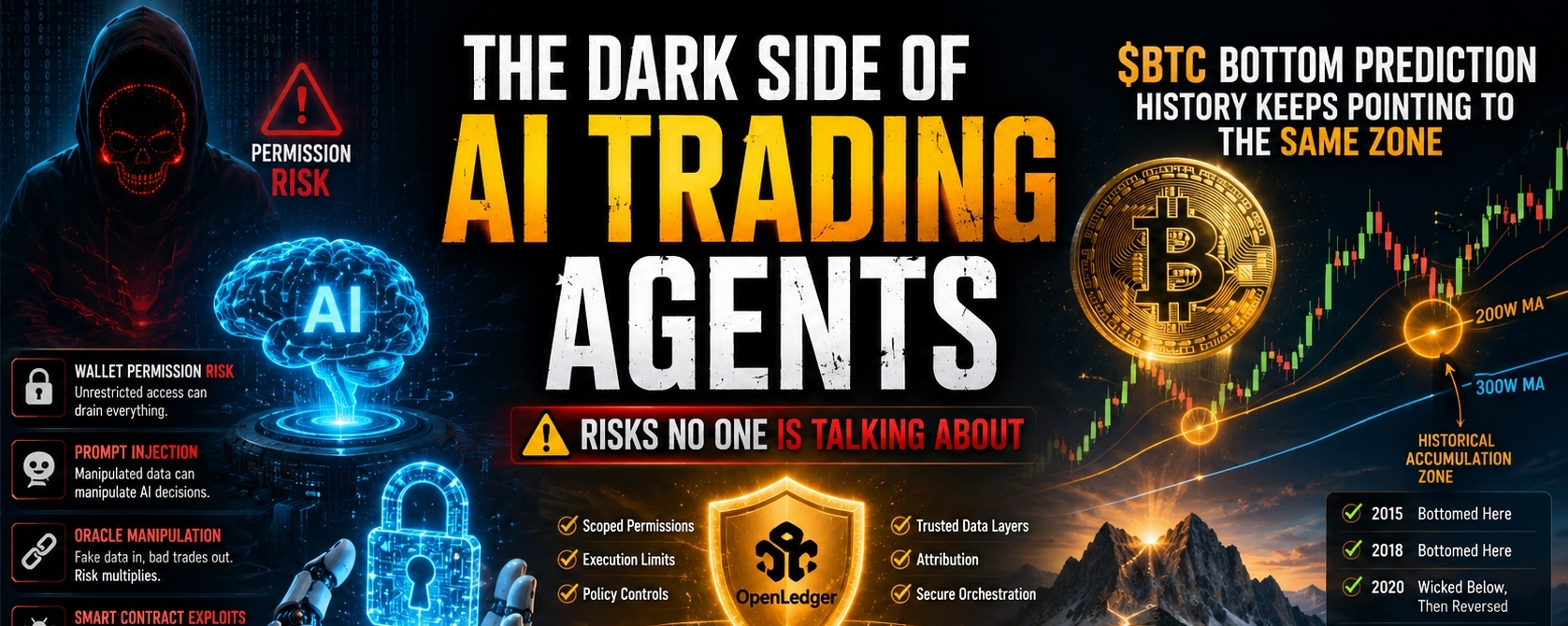
@OpenLedger The crypto market has a strange habit of becoming obsessed with whatever feels futuristic in the moment. Right now, that obsession is AI trading agents. Every timeline is filled with people talking about autonomous bots, intelligent execution systems, onchain AI economies, and agents that supposedly trade faster and smarter than humans ever could. It sounds exciting, and honestly, some of it genuinely is. But underneath all the hype, there’s a much darker reality almost nobody wants to discuss seriously. The moment AI systems begin controlling actual onchain capital without constant human oversight, crypto stops being just a speculative market and starts entering an entirely different phase of risk. Most people still imagine these agents as harmless automated tools, but they’re slowly becoming autonomous financial actors capable of interacting with protocols, moving liquidity, allocating capital, reading market conditions, and executing decisions independently. That changes the entire security model of crypto itself. And personally, I think this is exactly where many projects will fail, because intelligence is not the hardest problem anymore. Containment is.
The dangerous part is not necessarily the AI. It’s the access. Once an autonomous agent has the authority to interact with wallets, contracts, bridges, liquidity pools, or treasury systems, every single action becomes a potential attack surface. A manipulated transaction route, a malicious smart contract, a poisoned API, or even compromised market sentiment could trigger catastrophic behavior at machine speed. One bad execution is enough to destroy years of accumulated capital. That’s why the future of AI finance probably won’t belong to systems with unlimited freedom. It will belong to systems built around restrictions, layered permissions, verification, and controlled execution environments. Instead of “AI controls everything,” the safer model is likely “AI operates inside predefined boundaries with continuous oversight.” That sounds less exciting from a marketing perspective, but infrastructure usually matters more than narratives in the long run. This is where projects like become more interesting than they first appear. Not because they are chasing AI hype, but because they seem focused on the underlying rails attribution systems, execution frameworks, trusted data layers, and orchestration mechanics that autonomous finance may eventually require to survive safely at scale.
One of the most underrated risks in this entire sector is prompt manipulation. Most people still think hacks only happen through stolen keys or direct exploits, but AI changes the battlefield completely. Imagine an autonomous agent constantly consuming external information market sentiment, governance discussions, social feeds, oracle data, volatility metrics, news signals, or cross-chain activity. Now imagine attackers intentionally poisoning those information streams. Suddenly the goal is no longer hacking the wallet itself. The goal becomes influencing the AI’s reasoning process. That’s what makes autonomous finance so dangerous. If agents begin making financial decisions based on manipulated narratives or compromised inputs, the damage could spread across ecosystems almost instantly. And unlike humans, AI systems don’t experience hesitation or emotional doubt before executing. They simply act. That means future infrastructure will probably need trusted data verification, attribution frameworks, reputation scoring, isolated reasoning layers, and execution traceability built directly into the stack. Without those protections, autonomous finance could become one of the largest systemic risks crypto has ever created.
The same concern applies to oracle dependence and smart contract composability. AI agents will rely heavily on external signals prices, liquidity conditions, volatility shifts, macro trends, cross-chain flows, and sentiment analytics. But crypto already has a long history of collapses caused by manipulated or unreliable data feeds. Now imagine those same vulnerabilities amplified by autonomous systems capable of reallocating millions automatically. The scale of damage becomes exponential. Even worse, if one DeFi protocol gets compromised while AI agents continue interacting with it automatically, the contagion effect could spiral out of control before humans even react. That’s why execution monitoring, protocol whitelisting, anomaly detection, automated risk controls, and emergency shutdown mechanisms are probably going to become essential components of future AI infrastructure. Most people today are still focused on speculative AI meme narratives, but the deeper opportunity may actually exist inside the invisible infrastructure layer quietly being built underneath everything. Historically, the safest and most reliable systems tend to capture the most lasting value while hype fades away.
And honestly, this entire conversation about long-term infrastructure reminds me a lot of Bitcoin itself. Every cycle, the market convinces itself that old patterns no longer matter. Every cycle, traders believe macro conditions, institutions, ETFs, or new narratives have changed the game forever. But somehow Bitcoin keeps reminding people that human psychology never evolves as much as technology does. Fear and greed still control the market exactly the same way they always have. That’s why I continue paying attention to long-term structural zones like the 200-week and 300-week moving averages. Not because they are magical indicators, but because they represent something deeper four years of compressed market psychology distilled into a broader trendline. They filter out the influencer noise, the leverage euphoria, the panic headlines, and the emotional chaos that dominate shorter timeframes. Historically, when Bitcoin starts approaching those regions, it usually means the market has already experienced extreme exhaustion.
We’ve seen it happen repeatedly. In previous bear markets, Bitcoin consistently found major structural support around those long-term averages. During the 2015 collapse, the market stabilized around them. The 2018 bear market followed a similar pattern. During the COVID panic crash in 2020, price violently overshot toward the 300-week zone before reversing aggressively. Even in 2022, the 200-week moving average became a central psychological battlefield for capitulation. What makes these areas important is not just technical analysis it’s emotional behavior. Near market tops, people become convinced Bitcoin will rise forever. Near bottoms, the exact opposite happens. Confidence disappears. Long-term holders question themselves. Retail traders vanish. Social sentiment turns aggressively negative. And historically, that’s often when asymmetrical opportunity quietly begins forming beneath the surface.
Most newer traders misunderstand how bottoms actually develop. They expect instant reversals, clean bullish momentum, and obvious confirmation signals. Real bottoms rarely look like that. They are usually slow, violent, frustrating, and emotionally exhausting. Markets spend months creating uncertainty because accumulation phases are designed to break conviction. The market never rings a bell announcing that the bottom is officially in. Instead, it creates maximum discomfort until most participants stop caring entirely. That’s why long-term structural levels continue mattering to me even as narratives change. Could Bitcoin temporarily overshoot below those zones again during another major liquidity crisis? Absolutely. Markets are capable of irrational panic. But historically, those periods of maximum fear have also been where the strongest long-term opportunities quietly emerged for patient participants willing to think beyond short-term chaos.
At the end of the day, both AI infrastructure and Bitcoin cycles reveal the same truth about markets. Hype attracts attention, but structure determines survival. Whether it’s autonomous finance or long-term Bitcoin accumulation, the systems that endure are usually the ones built on resilience, discipline, security, and patience rather than excitement alone. People always chase whatever feels revolutionary in the moment, but over time the market tends to reward the foundations operating quietly underneath the noise. And honestly, I think most people still underestimate just how important those foundations are becoming.