

Something nobody talks about enough — the AI revolution we're living through was built on borrowed data. Not licensed. Not purchased. Borrowed. Scraped. Taken. And for years, nobody really pushed back because the outputs were impressive enough that people just accepted the terms. But that's changing. Slowly, then all at once — which is usually how these things go.
OpenLedger showed up in this space and said something pretty simple: what if the people who create data actually controlled it? What if instead of feeding a machine and walking away empty-handed, contributors got a real stake in what they built? The Open network is designed around exactly this question. And the answer it's building toward is more interesting than most people realize right now.
Here's what actually makes OpenLedger different from a hundred other "decentralized data" pitches I've seen. Most of them stop at the marketplace layer — list your data, someone buys it, transaction complete. That's fine. But Open goes deeper. The protocol is designed to handle attribution at the infrastructure level. Meaning when your data contributes to an AI model's training, that contribution is traceable. Recorded. Compensated through $OPEN.
That's not a small thing. In traditional AI pipelines, once your data enters the system it becomes invisible. It dissolves into the model. OpenLedger is essentially proposing a world where it doesn't have to work that way. Where the chain of custody for training data is preserved and the economics flow back to the source.
I'll be honest — implementing that cleanly is genuinely hard. This isn't me being negative on the project. It's me acknowledging that what Open is attempting is technically complex and organizationally ambitious. But ambitious problems, when solved, create durable moats.
Let me shift gears a bit. Because there's a user side to this that doesn't get discussed enough.
Most coverage of OpenLedger focuses on the developer or enterprise angle — who's buying the data, what models get trained. But the contributor side is where the real network effect lives or dies. If enough regular people, small businesses, niche communities decide to bring their data into the Open ecosystem, the network becomes genuinely valuable. Not because of any single dataset, but because of the aggregate diversity.
Think about it. A medical researcher's annotated datasets. A language community preserving a dialect. A financial analyst's structured market commentary. All of it flowing into Open, all of it attributed, all of it rewarded. That's the vision. And if OpenLedger can actually deliver on the contributor experience — make it simple, transparent, worth the effort — the flywheel could move faster than people expect.
One more thing I want to address directly. There's a question of timing that matters with Open. The regulatory environment around AI training data is tightening. The EU AI Act has provisions that are going to make the "scrape everything" model much harder to defend legally. US regulators are watching. Lawsuits are piling up. OpenLedger doesn't need regulators to force the issue — but if they do, it becomes a massive tailwind for exactly the kind of consent-based, attribution-first data infrastructure that Open is building.
That's not a guaranteed outcome. Regulation moves slowly and unpredictably. But the directional pressure is real. And OpenLedger is already positioned on the right side of where that pressure is pointing.
What I keep coming back to with Open is this: the project isn't solving a crypto problem. It's solving an internet problem. A fundamental misalignment between who creates value and who captures it. Crypto just happens to be the best toolkit we have right now for fixing that kind of systemic imbalance — transparent ledgers, token incentives, on-chain attribution.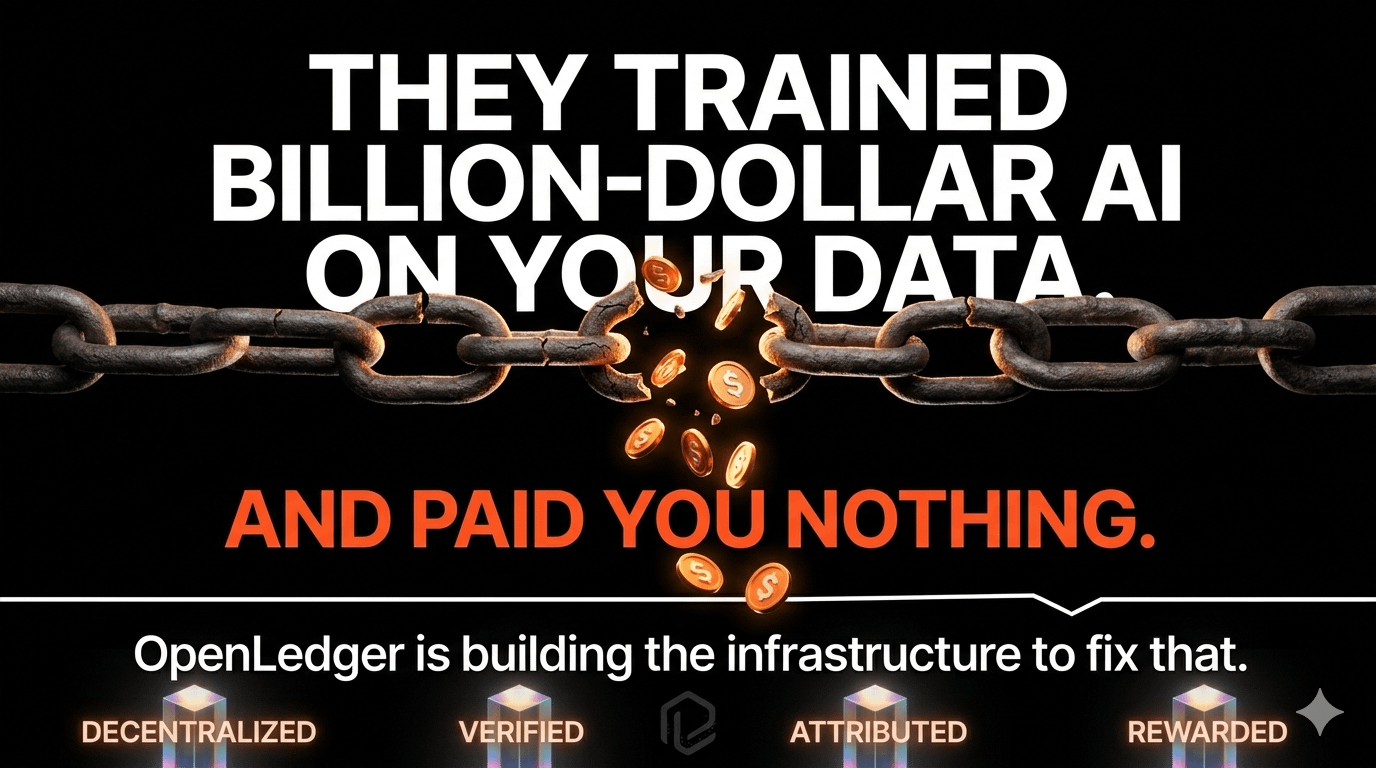
OpenLedger is using those tools deliberately. Not slapping a token on top of something and calling it decentralized. Actually restructuring the incentive layer around a real economic problem.
That's rare. Genuinely rare. Most projects in this space are solving problems that exist inside crypto. Open is solving a problem that exists outside of it — and bringing the solution on-chain. That distinction matters more than people give it credit for.
The data economy needed a redesign. OpenLedger is attempting that redesign. It won't be quick. It won't be clean. But the foundation is being laid. And sometimes that's enough reason to pay attention.
