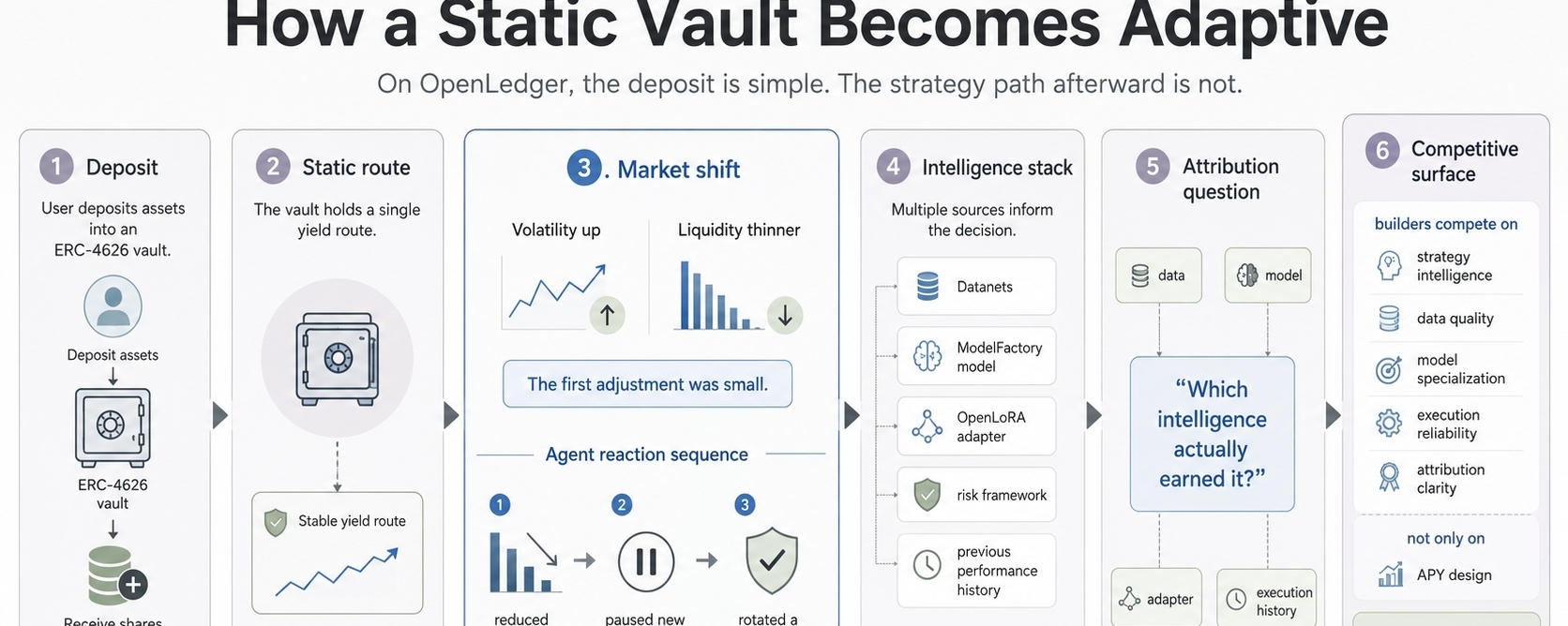
The first mistake was watching the execution.
I thought that was the important part. OctoClaw had moved through research, shaped a strategy, and pushed toward an on-chain action. Clean enough. Maybe too clean. The transaction looked like the final sentence.
Wrong place.
Then I blamed the prompt. Maybe the user had written something sharp. Maybe the agent was only following the visible instruction. Prompt in, strategy out, execution after.
That felt neat.
Too neat.
Because the prompt did not explain why one signal carried more weight than another. It did not explain why the agent reduced exposure instead of chasing the obvious move. It did not explain the risk note that appeared before the action.
So the workflow had to be read backward.
Behind the agent action sat a model path. Behind that, training history. Behind that, Datanets carrying verified data that someone had contributed before this specific execution ever happened.
That is where OpenLedger gets interesting.
Most agent systems make the final action look like the product. The agent researched. The agent generated. The agent executed. Done. But on OpenLedger, the data that shaped the model does not stop mattering after training. If a contributor’s dataset helped improve the model, and that model later influenced an agent decision, the contribution is still economically alive inside the action.
That is the pressure Proof of Attribution is meant to handle.
Not just “who built the agent?”
More like:
Which data helped the model decide?
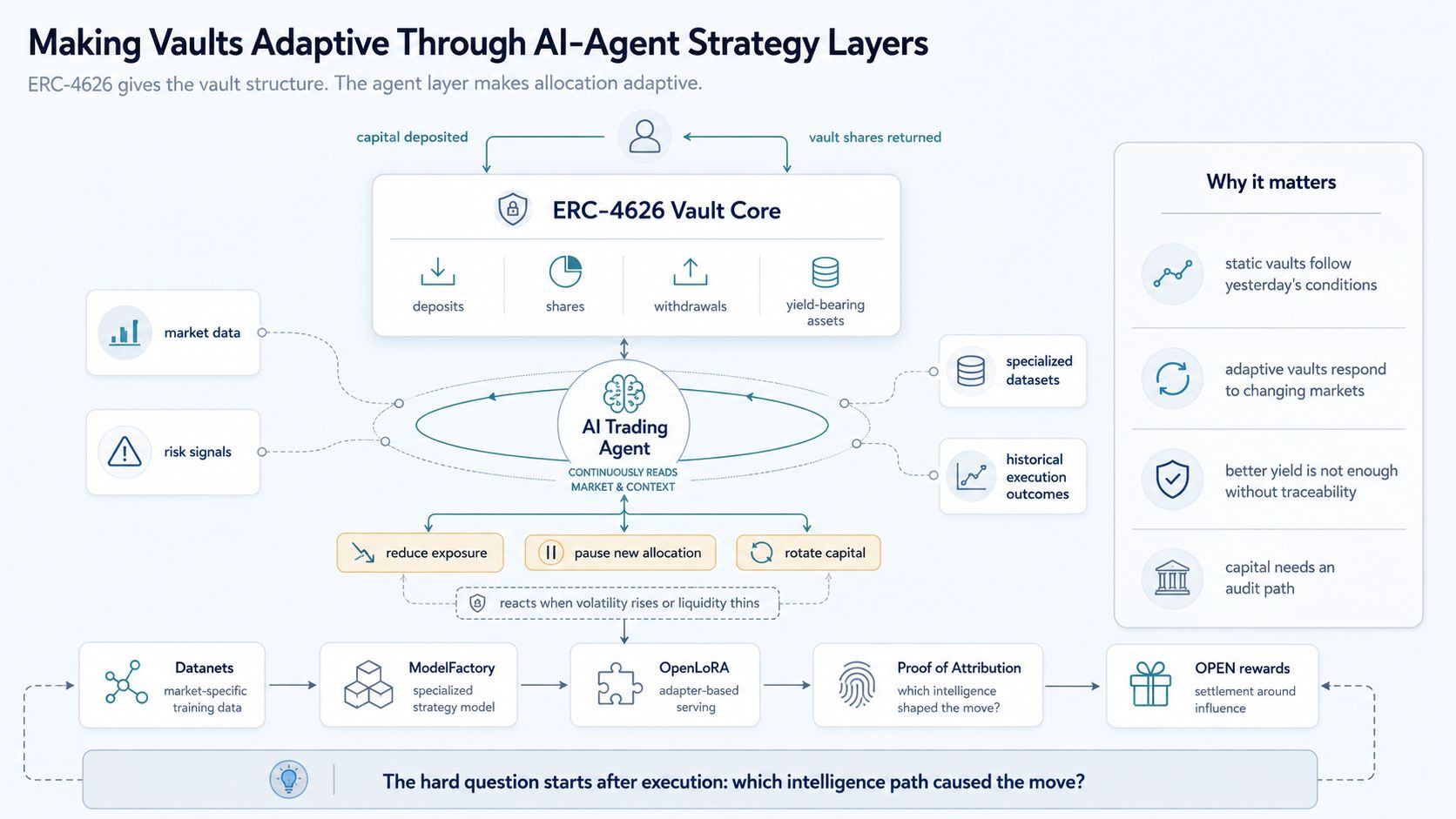
A contributor may upload verified data into a Datanet, then disappear from the visible workflow. Later, a builder may use ModelFactory to fine-tune a specialized model. OpenLoRA may make that model easier to deploy. OctoClaw may then use it inside a live agentic workflow. By the time execution happens, the contributor is nowhere near the dashboard.
But their data may still be inside the decision.
That matters because agent actions can move value. A strategy, allocation, vault adjustment, or market route is not just text anymore. Once execution happens, contributor leakage becomes harder to ignore.
If the model learned from useful data, and the agent acted because of that intelligence, rewards cannot only follow the visible performer.
They have to follow the value path.
And that is the unresolved part.
OpenLedger can make data traceable through Datanets, ModelFactory, OpenLoRA, Proof of Attribution, OctoClaw, and OPEN rewards. But after every agent action, one uncomfortable question still remains:
Did the system prove which invisible intelligence it just used?