
Most conversations around AI focus on power, speed, and scale. Bigger models, faster systems, smarter automation. But after spending time researching @OpenLedger, I started thinking about something different: the people behind the intelligence itself.
Every AI model is shaped by thousands of invisible contributions. A dataset uploaded by someone nobody knows. A correction added during training. A validator identifying weak outputs. A developer improving efficiency by a small percentage. Individually these actions may seem small, but together they shape how intelligent systems behave.
The problem is that modern AI infrastructure rarely remembers where that value came from. Contributions disappear inside centralized systems while the rewards stay concentrated at the top. The people helping improve the models often receive no visibility, no ownership, and no long-term benefit from the ecosystems they helped build.
This is why the idea behind OpenLedger feels important to me. Instead of treating AI as a black box, the project is trying to create an AI-native blockchain where contributions can actually be traced, verified, and rewarded through Proof of Attribution.
What makes this different from general-purpose blockchains is the focus on AI workflows themselves. OpenLedger is not simply adding AI tools onto existing infrastructure. It is designing systems specifically for model attribution, data provenance, decentralized collaboration, governance, and contributor incentives. That distinction matters because AI development has very different needs compared to traditional blockchain applications.
I also think the timing is interesting. AI is moving from experimental tools into systems that influence finance, healthcare, security, research, and decision-making. As these systems become more integrated into everyday life, transparency becomes more important. People will eventually want to know where outputs came from, how models evolved, and whether contributors were treated fairly.
Another thing that stands out is the shift toward specialized AI. For years the industry focused mostly on giant general-purpose models trained on internet-scale datasets. But real-world industries often need focused intelligence trained on accurate and domain-specific information. OpenLedger seems to understand that the future may not belong only to the largest models, but also to the most trustworthy and specialized ones.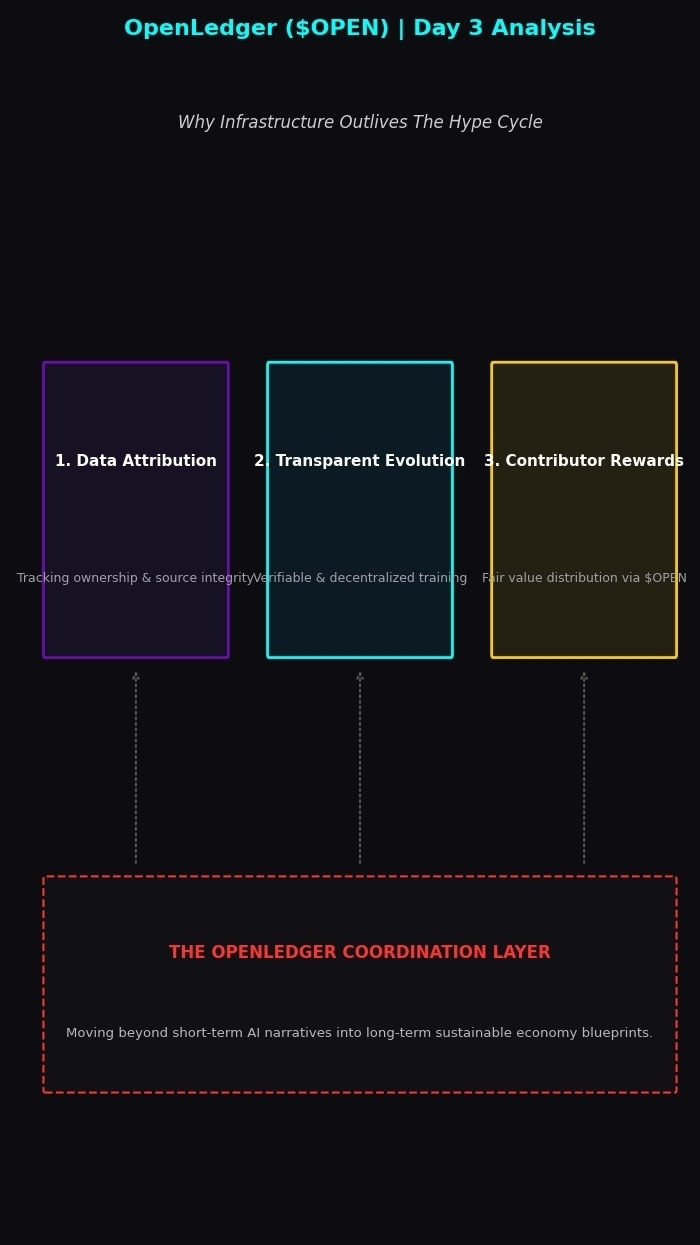
Of course, none of this guarantees success. Building decentralized AI infrastructure is extremely difficult. Questions around security, governance, scalability, incentives, and model reliability still need real answers. Most projects entering the AI narrative today probably will not survive long term.
But I think the larger idea is worth paying attention to. If AI continues becoming part of the global economy, then systems managing attribution, ownership, and transparent collaboration may eventually become as important as the models themselves.
That’s the perspective I’m using when I follow @OpenLedger right now. Not simply as another short-term crypto trend, but as an experiment around how AI economies could function in a more open and collaborative way.
