
AI Has a Memory Problem: Why Blockchain Matters for Attribution
Artificial Intelligence is transforming the world at an incredible pace. From generating code and research to creating videos, art, and business insights, AI systems are learning from enormous amounts of human-created data. But this rapid growth has exposed a major issue: AI has a memory problem.
Today’s AI models can absorb information from millions of sources, yet they often fail to properly recognize where that information came from. Writers, developers, researchers, and creators contribute valuable knowledge, but attribution is usually lost once data enters an AI training system. As AI becomes more powerful, the need for transparency, ownership, and accountability becomes increasingly important.
The Attribution Crisis in AI
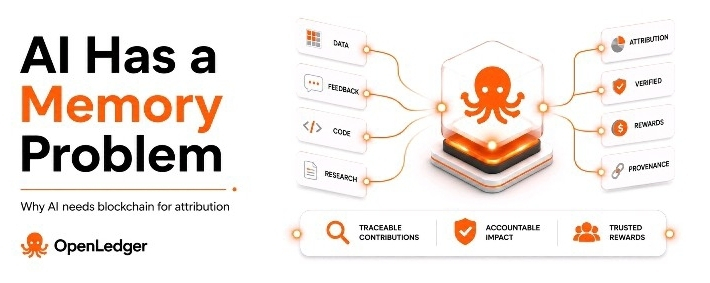
Modern AI systems rely on:
Data
User feedback
Code contributions
Research papers
Creative content
However, most contributors receive little or no recognition when their work helps train AI models. This creates several challenges:
1. Lack of Transparency
Users cannot easily verify where AI-generated information originated.
2. No Contributor Rewards
Creators whose data improves AI systems are rarely compensated.
3. Weak Accountability
Without traceable records, it becomes difficult to identify misinformation, bias, or misuse.
4. Trust Issues
Businesses and users hesitate to fully trust AI systems without verified provenance.
Why Blockchain Can Help
Blockchain technology offers a solution by creating permanent, verifiable records of contributions. Every interaction, dataset, or improvement can be securely tracked and attributed.
With blockchain integration, AI systems could provide:
Traceable Contributions — Every creator’s input is recorded.
Verified Data Sources — Information authenticity can be checked.
Reward Mechanisms — Contributors can receive incentives or royalties.
Provenance Tracking — The origin of content remains transparent.
This combination creates a more ethical and trustworthy AI ecosystem.
The Role of OpenLedger
[OpenLedger](https://openledger.xyz?utm_source=chatgpt.com) is one example of a platform exploring how blockchain infrastructure can support AI attribution and decentralized intelligence systems.
Its vision focuses on connecting:
AI data
Feedback systems
Research
Code contributions
while maintaining transparency and contributor ownership.
The goal is to build an ecosystem where AI development becomes:
Accountable
Transparent
Reward-driven
Community-powered
The Future of AI Attribution
As AI continues to evolve, attribution may become one of the most important technological debates of the decade. The future will likely require systems that can:
Verify information origins
Protect creators
Reward contributors fairly
Build public trust in AI outputs
Blockchain may not solve every AI challenge, but it offers a strong foundation for transparency and digital ownership.
Conclusion
AI is only as valuable as the knowledge it learns from. Without attribution, contributors remain invisible, trust declines, and accountability weakens. By combining AI with blockchain technology, platforms can create systems that remember where knowledge came from and ensure contributors receive recoAI Has a Memory Problem: Why Blockchain Matters for Attribution
Artificial Intelligence is transforming the world at an incredible pace. From generating code and research to creating videos, art, and business insights, AI systems are learning from enormous amounts of human-created data. But this rapid growth has exposed a major issue: AI has a memory problem.
Today’s AI models can absorb information from millions of sources, yet they often fail to properly recognize where that information came from. Writers, developers, researchers, and creators contribute valuable knowledge, but attribution is usually lost once data enters an AI training system. As AI becomes more powerful, the need for transparency, ownership, and accountability becomes increasingly important.
The Attribution Crisis in AI
Modern AI systems rely on:
Data
User feedback
Code contributions
Research papers
Creative content
However, most contributors receive little or no recognition when their work helps train AI models. This creates several challenges:
1. Lack of Transparency
Users cannot easily verify where AI-generated information originated.
2. No Contributor Rewards
Creators whose data improves AI systems are rarely compensated.
3. Weak Accountability
Without traceable records, it becomes difficult to identify misinformation, bias, or misuse.
4. Trust Issues
Businesses and users hesitate to fully trust AI systems without verified provenance.
Why Blockchain Can Help
Blockchain technology offers a solution by creating permanent, verifiable records of contributions. Every interaction, dataset, or improvement can be securely tracked and attributed.
With blockchain integration, AI systems could provide:
Traceable Contributions — Every creator’s input is recorded.
Verified Data Sources — Information authenticity can be checked.
Reward Mechanisms — Contributors can receive incentives or royalties.
Provenance Tracking — The origin of content remains transparent.
This combination creates a more ethical and trustworthy AI ecosystem.
The Role of OpenLedger
[OpenLedger](https://openledger.xyz?utm_source=chatgpt.com) is one example of a platform exploring how blockchain infrastructure can support AI attribution and decentralized intelligence systems.
Its vision focuses on connecting:
AI data
Feedback systems
Research
Code contributions
while maintaining transparency and contributor ownership.
The goal is to build an ecosystem where AI development becomes:
Accountable
Transparent
Reward-driven
Community-powered
The Future of AI Attribution
As AI continues to evolve, attribution may become one of the most important technological debates of the decade. The future will likely require systems that can:
Verify information origins
Protect creators
Reward contributors fairly
Build public trust in AI outputs
Blockchain may not solve every AI challenge, but it offers a strong foundation for transparency and digital ownership.
Conclusion
AI is only as valuable as the knowledge it learns from. Without attribution, contributors remain invisible, trust declines, and accountability weakens. By combining AI with blockchain technology, platforms can create systems that remember where knowledge came from and ensure contributors receive recognition for their impact.
The future of AI may depend not only on intelligence — but also on memory.gnition for their impact.
The future of AI may depend not only on intelligence — but also on memory.