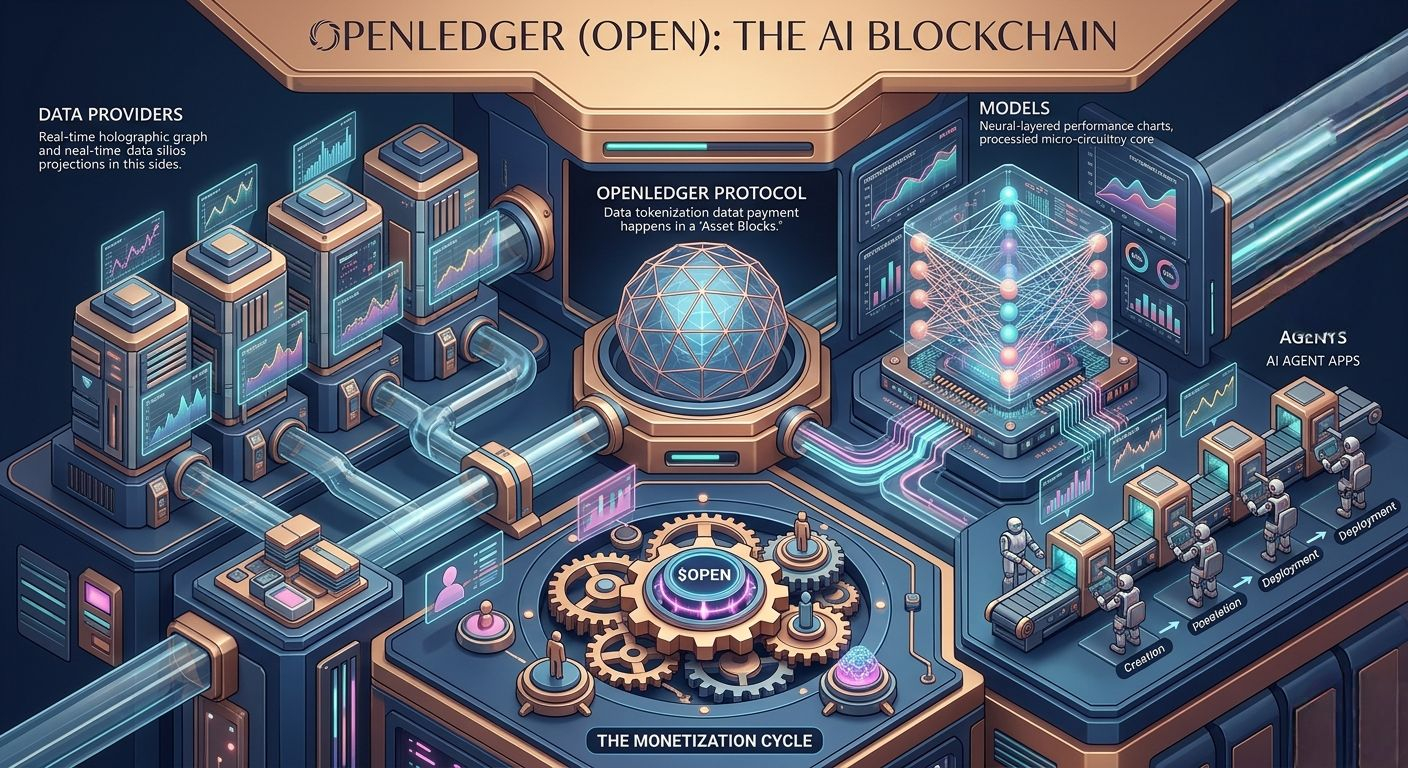
I keep noticing how people talk about AI and crypto like they already know where everything is heading, which is strange because most of this infrastructure still feels unfinished, experimental, almost unstable underneath the surface. The confidence sounds artificial sometimes. Too clean. Too rehearsed. One week every protocol is “building the future of intelligence,” then the next week nobody remembers what problem those systems were even supposed to solve in the first place. Markets move fast like that. Narratives move even faster. But beneath all the noise, there are still a few projects trying to attack problems that actually matter structurally, and OpenLedger sits somewhere in that category, although I’m still not completely sure whether the market fully understands what it is trying to become.
Or maybe the market understands it perfectly and simply does not care yet.
That is possible too.
Because OpenLedger forces people into a conversation that is less exciting than artificial superintelligence and less emotionally addictive than meme-driven speculation. It asks questions about ownership, attribution, coordination, economic routing, invisible infrastructure. Not glamorous topics. Not the kind of things retail crowds usually rally around. But sometimes the least exciting layers end up becoming the most important because they quietly determine where value flows underneath everything else.
And honestly, I think the AI industry has an ownership problem already, even if most users are too distracted by product quality to notice it clearly. Data flows upward into centralized systems constantly. Human behavior becomes training material. Conversations become training material. Preferences become training material. Entire industries are effectively generating informational fuel for AI systems while the monetization remains concentrated around a relatively small number of entities controlling compute and distribution infrastructure. People accept this because convenience usually wins. It almost always wins. That’s the uncomfortable pattern repeating across the internet over and over again.
Users say they want ownership until ownership introduces friction.
Then convenience crushes ideology in about five seconds.
Crypto learned that lesson repeatedly. AI probably will too.
Still, OpenLedger seems to be operating from the assumption that eventually machine economies become large enough, autonomous enough, and economically significant enough that attribution can no longer remain opaque forever. And that assumption is interesting because it shifts the discussion away from AI hype and toward economic accountability. Once AI agents start generating value independently, the question stops being “how smart is the model?” and starts becoming “who gets paid when the model produces something valuable?”
That sounds boring initially.
Until you think about it longer.
Because suddenly the entire system becomes messy.
Imagine autonomous AI agents conducting research, writing code, managing logistics, generating media, executing financial decisions, negotiating contracts, maybe even operating businesses eventually. If those systems are trained on distributed datasets contributed by millions of people, institutions, or machines, how exactly do you trace economic contribution? How do you measure influence? How do you verify provenance? And maybe the hardest question of all: how do you prevent the incentive layer itself from collapsing into manipulation once attribution becomes financially valuable?
That last part keeps pulling me back because humans are incredibly predictable once rewards enter the equation. Every incentive system eventually teaches people how to exploit it. It’s almost inevitable. The internet became filled with engagement farming because algorithms rewarded attention. Crypto became filled with liquidity mercenaries because protocols rewarded short-term participation. AI attribution systems will probably experience their own version of this. Synthetic datasets pretending to be valuable. Coordinated manipulation. Sybil attacks. Poisoned contributions disguised as useful information. Fake activity optimized purely for extraction.
And honestly, I think many AI protocols underestimate how aggressive these behaviors become once real economic incentives appear.
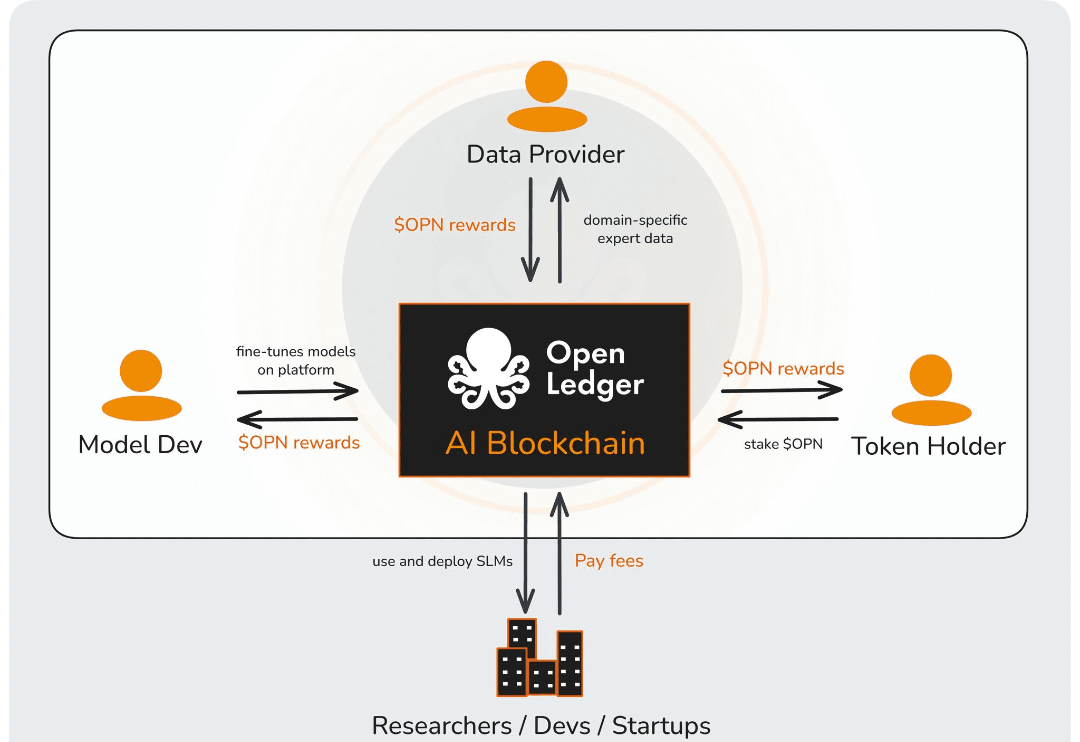
OpenLedger tries to approach this through its Proof of Attribution framework and Datanet architecture, which is essentially an attempt to transform data contributions into traceable economic assets tied to AI output generation. At a conceptual level, the logic makes sense. If a model produces value using distributed informational inputs, then contributors should theoretically participate in the economic upside connected to that output. The protocol attempts to formalize that relationship instead of leaving it entirely inside opaque corporate structures.
Simple idea.
Complicated reality.
Because attribution inside machine learning is not clean mathematics. Models absorb patterns probabilistically across huge parameter spaces. Influence becomes nonlinear. One obscure data point might alter behavior dramatically while millions of other inputs barely matter at all. Trying to isolate precise contribution inside neural systems can feel almost impossible sometimes. Not impossible in theory maybe, but operationally ugly. Expensive too.
That’s another thing people avoid talking about enough.
The computational burden.
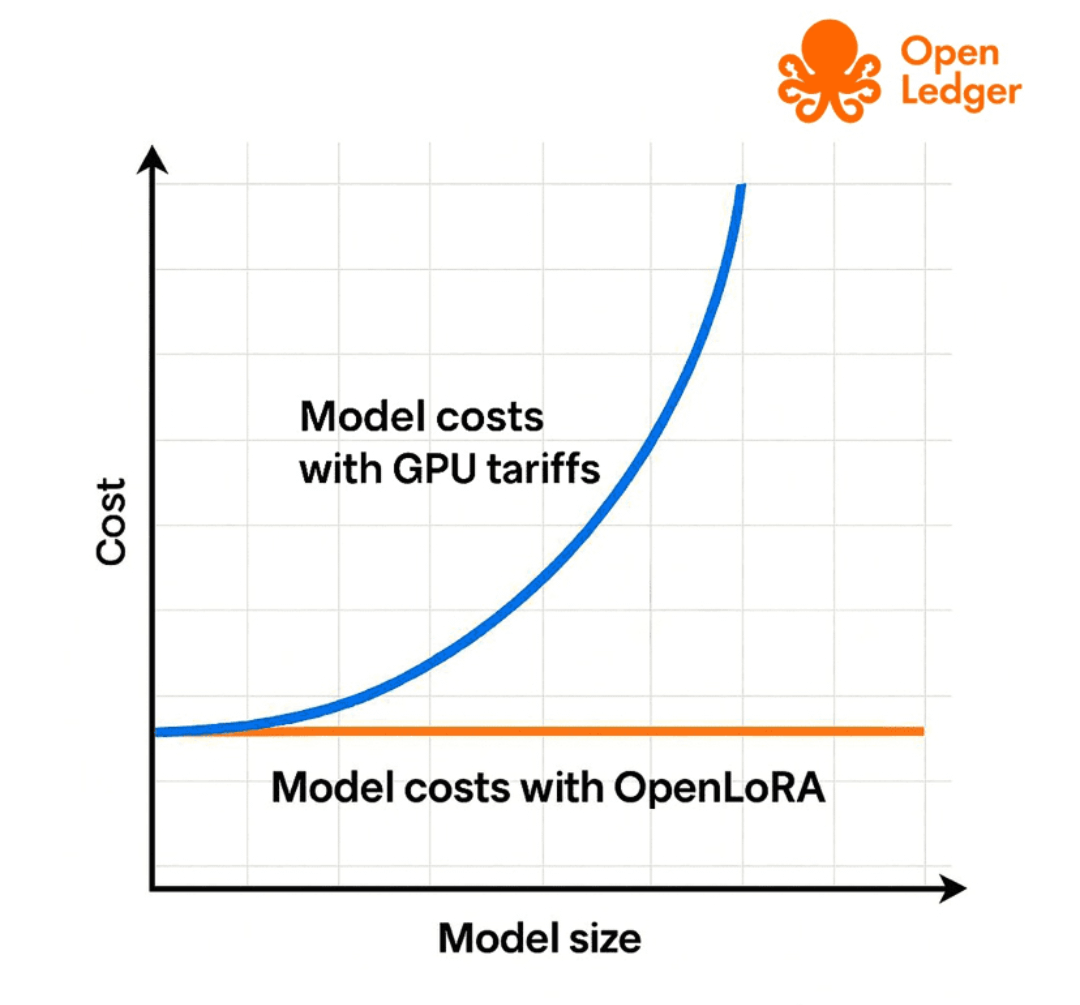
AI infrastructure already consumes enormous resources before decentralization enters the picture. Training models is expensive. Running inference at scale is expensive. Storage is expensive. Validation layers introduce additional overhead. Blockchain coordination introduces latency. Verification systems consume more resources. Every trust guarantee creates operational drag somewhere in the architecture, and this is where the fantasy of frictionless decentralization usually collides with physical reality.
AI systems naturally optimize for efficiency.
Blockchains naturally optimize for verification.
Those objectives do not align perfectly. Sometimes they actively fight each other.
And I think OpenLedger understands this tension better than some of the louder AI narratives floating around crypto right now. At least the protocol appears more focused on economic infrastructure and attribution mechanics than pretending decentralization magically removes engineering constraints. It doesn’t. Physics still exists. Compute scarcity still exists. Bandwidth limitations still exist. The internet sometimes talks about decentralization like it’s a moral spell capable of solving every coordination problem automatically. It isn’t. Trade-offs remain unavoidable.
Always.
Maybe that’s why I find the protocol more interesting from a first-principles perspective than from a speculative perspective. Because the real issue here isn’t whether AI becomes decentralized in some pure ideological sense. The real issue is whether future machine economies require auditable coordination layers once autonomous systems begin interacting financially with each other at scale.
And I think they probably do.
Not because decentralization sounds noble.
Because opaque systems eventually create economic instability when enough value flows through them.
Imagine AI agents transacting continuously across financial markets, supply chains, healthcare systems, legal infrastructure, enterprise operations. At some point provenance becomes more than a philosophical concern. It becomes accounting infrastructure. Institutions care about traceability once liability appears. Enterprises care about auditability once money moves. Governments care once compliance enters the conversation. Suddenly attribution systems stop looking optional.

That possibility feels important.
But there’s another side to this that bothers me a little.
Maybe users simply won’t care.
Maybe centralized AI remains so efficient, so convenient, so operationally superior that people willingly trade transparency for performance indefinitely. That wouldn’t be unprecedented. Most internet users already rely on systems they barely understand. Convenience has a terrifying ability to normalize opacity over time. People rarely examine invisible infrastructure unless it fails catastrophically.
And OpenLedger, in a strange way, is betting against that complacency.
Or maybe not against it exactly. Maybe the protocol is betting that even if average users remain indifferent, machine economies themselves eventually require accountability layers beneath the surface whether humans actively notice them or not. That’s a more subtle thesis. Less ideological. More infrastructural.
The irony is that successful infrastructure often becomes invisible. Nobody thinks about payment rails during a normal transaction. Nobody thinks about DNS systems while browsing the internet. Nobody thinks about cloud orchestration while streaming media. Infrastructure disappears once it functions reliably enough. Maybe attribution systems evolve the same way eventually. Quiet coordination layers underneath machine-driven economies, operating continuously while users interact only with polished applications sitting on top.
If that happens, protocols like OpenLedger could matter more than people currently assume.
Or maybe they fail completely because the operational complexity becomes overwhelming.
That possibility shouldn’t be ignored either.
There are genuine risks everywhere here. Tokenized incentive systems often attract extraction behavior before productive behavior. Speculative attention can distort infrastructure development priorities. Governance structures become vulnerable to concentration. Data validation mechanisms become difficult to scale fairly. Reputation systems can be manipulated. Attribution metrics may become economically gameable in ways nobody fully anticipates initially.

And honestly, there’s still a broader uncertainty hanging over the entire AI sector itself. Nobody really knows what the dominant architecture of future machine economies looks like yet. Model structures keep changing. Hardware efficiency keeps evolving. Regulatory pressure keeps shifting. Entire assumptions about training, inference, and ownership could look outdated surprisingly fast. Infrastructure built too early sometimes solves temporary problems rather than durable ones.
That risk feels real.
But waiting too long creates a different problem because centralized incumbents solidify control while everyone else hesitates.
So these protocols exist in an awkward middle zone where they’re trying to architect systems for economies that do not fully exist yet. That’s dangerous territory. Infrastructure speculation always is. Railroads were speculative once. Early internet infrastructure looked irrational once. Cloud computing sounded unnecessary once. Sometimes important systems appear economically absurd before the surrounding environment matures enough to justify them.
Other times they just fail.
The hard part is telling the difference early.
And maybe that uncertainty is exactly why the conversation around AI infrastructure feels so strange right now. People talk about inevitability constantly even though almost everything remains unresolved underneath the surface. Ownership unresolved. Attribution unresolved. Compute decentralization unresolved. Incentive design unresolved. Governance unresolved. Behavioral constraints unresolved. Yet the confidence remains strangely high anyway, maybe because markets reward certainty even when certainty is artificial.
Personally I trust systems more when they openly acknowledge operational trade-offs instead of pretending perfection exists somewhere around the corner.

Resilience over perfection matters more.
It always has.
A system doesn’t need to eliminate every flaw to become useful. It just needs to remain functional under pressure while solving a real coordination problem better than existing alternatives. That threshold matters. And OpenLedger, at minimum, appears focused on a coordination problem that actually feels structurally important instead of cosmetically impressive.
Who owns machine-generated value?
That question keeps getting larger the more AI advances.
Because once intelligence becomes economically productive at scale, attribution stops being abstract philosophy. It becomes financial architecture. The systems tracing informational influence may quietly determine who captures value underneath the next generation of digital economies.
And maybe most people still won’t notice.
Maybe the interfaces become so smooth that users never think about the infrastructure underneath them. Maybe AI economies operate on invisible attribution rails the same way modern finance operates on invisible settlement systems today. Quiet machinery. Constant movement. Very little public attention until something breaks.
Or maybe convenience wins again and centralized models absorb everything permanently because users prioritize outcomes over ownership structures.
Honestly, I’m not fully convinced either scenario is impossible.
That’s probably the most realistic position right now.
Uncertainty.
Not the polished certainty the market likes to manufacture, but the uncomfortable kind where multiple futures remain plausible simultaneously. OpenLedger feels like an attempt to prepare for one of those futures before it fully arrives. Maybe early. Maybe necessary. Maybe both.
And there’s something strangely human about that, even inside all this machine infrastructure discussion. People keep building systems to solve problems that haven’t fully materialized yet because waiting for certainty usually means arriving too late. Sometimes those bets reshape entire industries. Sometimes they disappear quietly beneath newer architectures nobody predicted.

But the underlying tension remains regardless.
Convenience versus ownership.
Efficiency versus verification.
Opacity versus accountability.
AI is going to force that conflict into the open eventually.
I don’t think we’re ready for how messy that process becomes once real economic power starts flowing through autonomous systems at scale.
Maybe protocols like OpenLedger are early glimpses of the infrastructure trying to prepare for that reality before the rest of the internet realizes it’s already happening.
@OpenLedger #OpenLedger $OPEN