

Tutti continuano a parlare di AI come se fosse solo una corsa alla potenza.
Più GPU. Modelli più grandi. Inferenza più veloce. Costi più bassi.
Questa è la versione headline della storia.
E guarda, lo capisco. Il calcolo conta. Ovviamente. Le aziende con la più grande infrastruttura di solito finiscono per dominare la conversazione per un motivo.
Ma onestamente, penso che la gente stia guardando il collo di bottiglia sbagliato.
Il vero problema non è più l'intelligenza.
È responsabilità.
È lì che le cose diventano scomode.
Perché una volta che l'AI inizia a toccare soldi, sanità, assicurazioni, sistemi legali, assunzioni, operazioni aziendali, tutte le cose serie, a nessuno importa quanto fosse appariscente la demo su Twitter.
Le domande cambiano immediatamente.
Da dove è venuto questo output?
Chi ha addestrato il modello?
Quali dati hanno influenzato questa decisione?
Possiamo fare un audit in seguito?
E il grande argomento che nessuno ama dire ad alta voce:
Chi si prende la colpa quando il sistema commette un errore orribile?
È il momento in cui l'IA smette di essere una storia tecnologica interessante e inizia a diventare un problema di governance.
E onestamente? I problemi di governance muovono i mercati molto più di quanto le persone pensino.
Ecco perché OpenLedger ha catturato la mia attenzione.
Non perché promette qualche futuro AGI da fantascienza.
Ho già visto quel pitch cento volte.
E non perché 'IA + crypto' significhi automaticamente qualcosa di prezioso. La maggior parte di quei progetti scompare nel momento in cui il mercato perde interesse.
Ciò che rende OpenLedger interessante è che sembra ossessionato da qualcosa di molto meno emozionante.
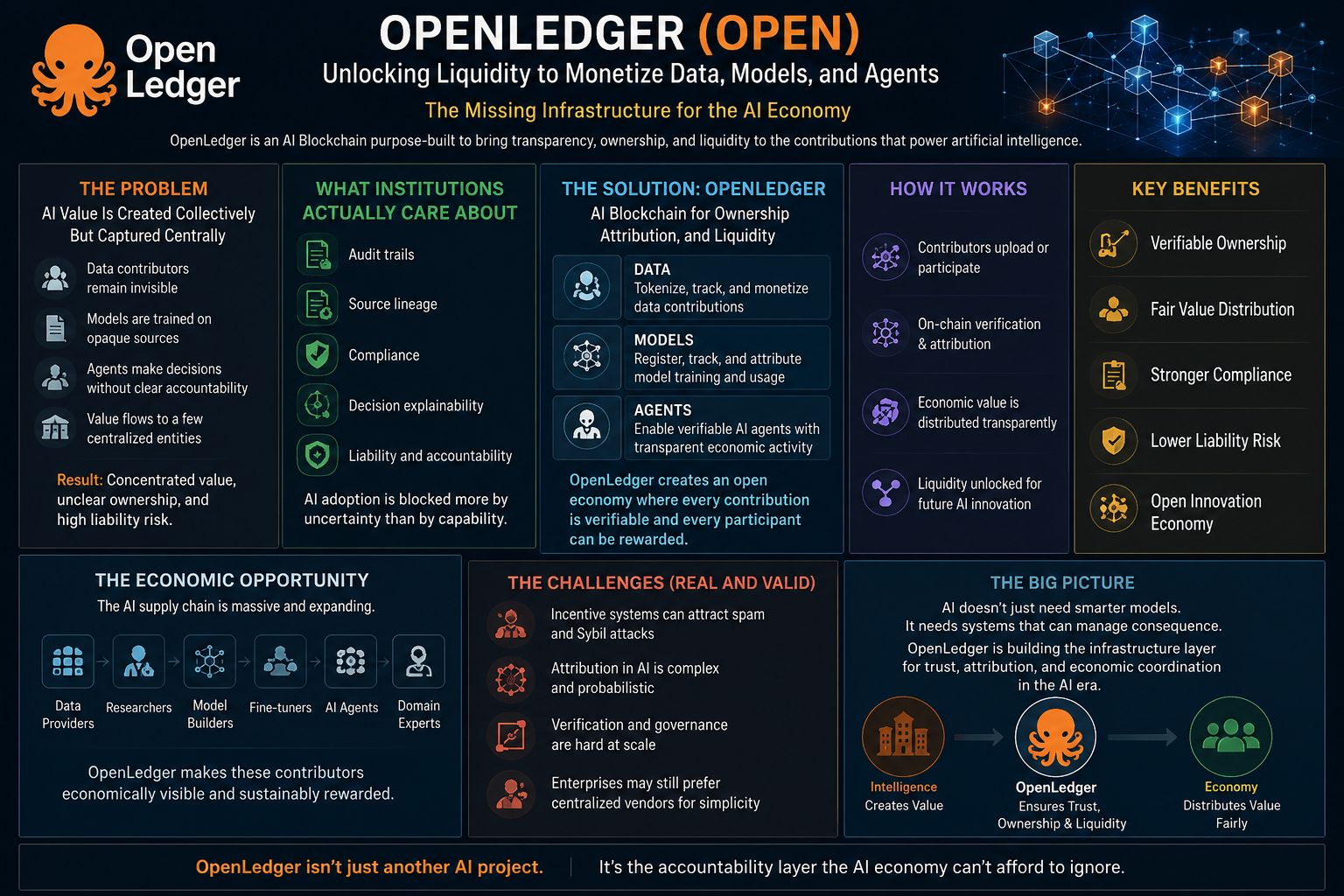
Proprietà.
Attribuzione.
Responsabilità economica.
Cose noiose.
Il tipo di cose di cui le istituzioni si preoccupano davvero.
Ecco il punto di cui le persone non parlano abbastanza: l'attuale economia AI si basa su contributori invisibili.
Massicce quantità di dati vengono estratte.
I ricercatori contribuiscono con idee.
Le persone affilano i modelli.
Gli specialisti migliorano i risultati.
Gli agenti svolgono compiti.
E poi tutto quel valore fluisce verso l'alto nelle mani di alcune aziende centralizzate.
Questa è fondamentalmente la struttura attuale.
I contributori diventano invisibili mentre le piattaforme assorbono la maggior parte del guadagno economico.
OpenLedger sembra stia cercando di sfidare quella dinamica. O almeno rendere più difficile ignorarla.
Non competendo direttamente con i laboratori di modelli stile OpenAI. Sarebbe suicidio, onestamente.
Invece, il progetto sembra concentrarsi sulla costruzione di un'infrastruttura attorno alla provenienza e alla monetizzazione.
Significa:
Chi ha contribuito?
Cosa hanno contribuito esattamente?
Come lo verifichi?
E come li compensi equamente?
Domande semplici.
Risposte terribilmente difficili.
Soprattutto quando i sistemi AI iniziano a interagire tra loro in modo autonomo.
E sì, suona futuristico, ma stiamo già andando in quella direzione.
Gli agenti AI stanno lentamente diventando partecipanti economici invece di semplici strumenti. Gestiscono flussi di lavoro, eseguono compiti, spostano informazioni, fanno raccomandazioni, a volte anche attivando transazioni.
Una volta che ciò accade, l'attribuzione smette di essere opzionale.
Perché se un sistema autonomo crea valore, qualcuno si chiederà chi possiede quel valore.
Sempre.
Le persone sottovalutano quanto rapidamente i team legali iniziano a preoccuparsi di queste cose.
Un trader retail potrebbe vedere l'IA e pensare:
“Può far guadagnare?”
Un'impresa vede l'IA e pensa:
“Può questo sopravvivere a un audit?”
Mentalità completamente diversa.
Le banche non implementano sistemi che non possono spiegare.
Le compagnie assicurative non si fidano di scatole nere con esposizione alla responsabilità.
I regolatori non si interessano di quanto sia avanzato il tuo modello se nessuno può ricostruire il percorso decisionale in seguito.
È qui che OpenLedger inizia a avere più senso.
Sta cercando di costruire lo strato di proprietà sotto l'IA stessa.
E onestamente, questo potrebbe finire per contare più di quanto le persone si aspettino.
Perché la storia si ripete un po' qui.
Internet ha seguito lo stesso schema.
All'inizio, tutti si concentravano su prodotti consumatori visibili. Browser. App. Siti web.
Ma alla fine gli strati invisibili sono diventati la vera infrastruttura:
sistemi d'identità,
binari di pagamento,
standard di sicurezza,
quadri di conformità,
strati di autenticazione.
La noiosa macchina sottostante a tutto.
Probabilmente l'IA seguirà lo stesso percorso.
In questo momento il mercato è ossessionato dai risultati.
Chi ha il chatbot più intelligente.
Chi genera le migliori immagini.
Chi ha il modello più grande.
Bene. Ok.
Ma alla fine qualcuno deve gestire le conseguenze.
E la gestione delle conseguenze è dove le cose diventano rapidamente disordinate.
È qui che OpenLedger sembra posizionato strategicamente.
Non come il progetto più rumoroso.
Non come il progetto più pubblicizzato.
Più come… infrastrutture che nessuno nota fino a quando non ne ha improvvisamente bisogno.
E stranamente, quei progetti a volte finiscono per diventare i più importanti.
Comunque, diciamolo chiaramente.
Ci sono rischi enormi con questo modello.
I sistemi di incentivo crypto hanno un pessimo record a volte.
Le persone romanticizzano troppo la decentralizzazione.
I sistemi di contributo aperto spesso attirano spazzatura prima di attrarre qualità.
Gli incentivi token attirano spam.
Gli attacchi Sybil diventano un incubo.
La governance viene manipolata.
La verifica diventa costosa.
Ho già visto questo prima.
La parte difficile non è far partecipare le persone.
La parte difficile è ottenere una partecipazione onesta senza trasformare il sistema in una fattoria di sfruttamento.
E l'IA rende tutto questo ancora più difficile perché l'attribuzione stessa diventa sfocata.
I modelli influenzano altri modelli.
I dati si sovrappongono.
I risultati diventano probabilistici.
I contributi si mescolano.
Chi merita il credito economico all'interno dei sistemi di intelligenza collaborativa?
Buona fortuna a rispondere a questo in modo chiaro.
Sul serio.
Quel problema da solo potrebbe far crollare metà di questi modelli.
C'è anche un altro problema che le persone ignorano perché rovina il sogno della decentralizzazione.
Molte imprese preferiscono effettivamente sistemi centralizzati.
Non perché siano migliori tecnicamente.
Perché semplificano la colpa.
Ecco.
Se qualcosa si rompe, le aziende vogliono un chiaro controparte legale. Un fornitore. Un contratto. Qualcuno che possano citare in giudizio se le cose vanno male.
I sistemi decentralizzati complicano tutto ciò.
E la maggior parte dei dirigenti non si sveglia al mattino sognando la purezza ideologica. Gli interessa la sopravvivenza operativa.
Quella tensione conta molto più di quanto Twitter crypto ami ammettere.
Quindi no, non penso che progetti come OpenLedger vincano automaticamente solo perché la decentralizzazione suona filosoficamente attraente.
Lungi da ciò.
Ma penso che stiano affrontando un problema reale.
E questo già li separa dalla maggior parte delle narrazioni AI in circolazione in questo momento.
Perché onestamente, il mercato agisce ancora come se l'adozione dell'IA dipendesse puramente dalla capacità.
Non ci credo più.
Penso che l'adozione dipenda dalla governabilità.
Grande differenza.
I sistemi che sopravvivono a lungo termine di solito non sono quelli che sembrano più intelligenti nelle dimostrazioni.
Sono i sistemi che le istituzioni possono effettivamente controllare, auditare, spiegare e di cui fidarsi sotto pressione.
Questo è il gioco che nessuno vuole ammettere stiamo già giocando.
Ecco perché OpenLedger spicca per me.
Non perché promette un futuro AI decentralizzato perfetto.
Non lo fa.
Ma perché riconosce qualcosa che il mercato continua a ignorare:
L'economia futura dell'IA probabilmente non apparterrà solo a chi costruisce i modelli più intelligenti.
Potrebbe appartenere a chiunque costruisca i sistemi che rendono l'intelligenza economicamente affidabile.
