
the same way they looked at internet infrastructure years ago. Bigger systems, faster processing, more compute power. The assumption sounds logical on the surface — if a network can handle more activity, then naturally it becomes more valuable over time.
But I’m not fully convinced that’s where the real scarcity sits anymore.
AI markets are crowded with conversations around model size, GPU demand, and performance benchmarks. Everyone keeps competing to build smarter systems. Yet as these tools slowly move closer to real-world operations, another issue quietly becomes impossible to ignore.
Trust.
Not the social media type of trust. Operational trust.
Who is allowed near sensitive systems?
Who can provide data safely?
Who becomes responsible when something fails?
Who actually gets permission to participate?
That changes the entire economic structure around AI.
A lot of people still describe OpenLedger like a standard AI marketplace where contributors provide data while builders consume intelligence resources through token incentives. Simple framework. Easy for markets to understand too because crypto investors usually prefer narratives they already recognize.
Still, I think that explanation misses something deeper.
The real bottleneck may not be supply itself. It may be qualified access.
Consumer AI made people underestimate this problem because low-risk environments tolerate mistakes. If an AI image generator creates something weird, nobody really panics. Maybe users laugh, post memes, move on. But enterprise environments work differently.
Once AI touches insurance workflows, legal analysis, payment systems, compliance reviews, internal documents, or customer screening, suddenly everybody starts asking uncomfortable questions.
Where did the training data come from?
Can outputs be traced?
Was the source licensed properly?
Who becomes accountable if harm happens later?
Those questions are not philosophical. They directly affect whether large organizations are willing to deploy these systems at scale.
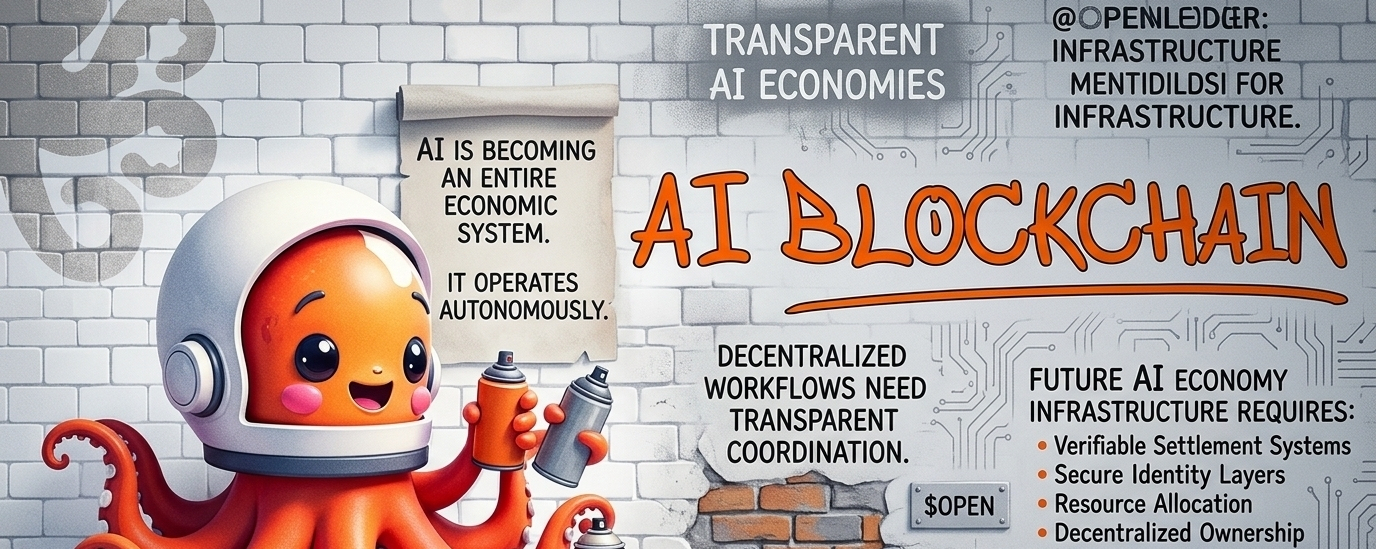
And honestly, that’s where OpenLedger starts looking less like a marketplace and more like infrastructure for controlled participation.
Because intelligence itself is becoming less scarce. Open-source development keeps shrinking performance gaps faster than expected. Compute eventually becomes cheaper. Models improve across the board. The advantage window around raw capability probably keeps narrowing.
But verified trust doesn’t scale that easily.
That process is slower, expensive, political, and messy.
Two datasets may technically train similar models, but economically they can carry completely different risk profiles. One may come from uncertain sources with unclear ownership history. Another may come from verified contributors with documented rights and transparent attribution.
Both contain information.
Only one reduces future liability.
That difference matters far more once real money and regulation enter the picture.
Same thing applies to AI agents. People keep talking like autonomous systems are ready to manage financial operations tomorrow. Maybe technically they are getting close. But capability alone doesn’t create adoption.
No serious company wants unknown agents interacting with sensitive infrastructure simply because they appear smart enough.
Competence without accountability becomes a risk.
And that’s why permission may become the hidden scarce asset inside AI economies.
Not open participation.
Trusted participation.
That subtle difference changes how infrastructure gets valued over time.
History kinda shows this pattern repeating everywhere. Open systems begin with idealistic narratives about equal access. Then scale introduces spam, abuse, manipulation, uncertainty, and operational costs. Eventually filtering mechanisms become the real product underneath everything else.
Payments evolved that way.
Cloud systems evolved that way.
Identity layers evolved that way too.
AI probably follows a similar path eventually.
What makes this interesting is that attribution systems stop being just reward mechanisms. They become economic credibility systems. A way to measure who contributed what, under which conditions, and with what level of reliability.
Of course, that creates risks too. Permission systems can slowly turn into gatekeeping machines if governance becomes concentrated. Reputation can be manipulated. Incentives can distort fairness. Useful infrastructure doesn’t automatically guarantee long-term token value either.
Crypto markets forget that all the time.
Still, I think people are asking the wrong question entirely.
The bigger question may not be whether AI marketplaces succeed.
It may be whether future AI economies start valuing trusted access more than raw intelligence itself.
Because if that shift happens, the valuable layer won’t simply be compute power anymore.
It will be permission.
#openledger #OpenLedger @OpenLedger $OPEN
