
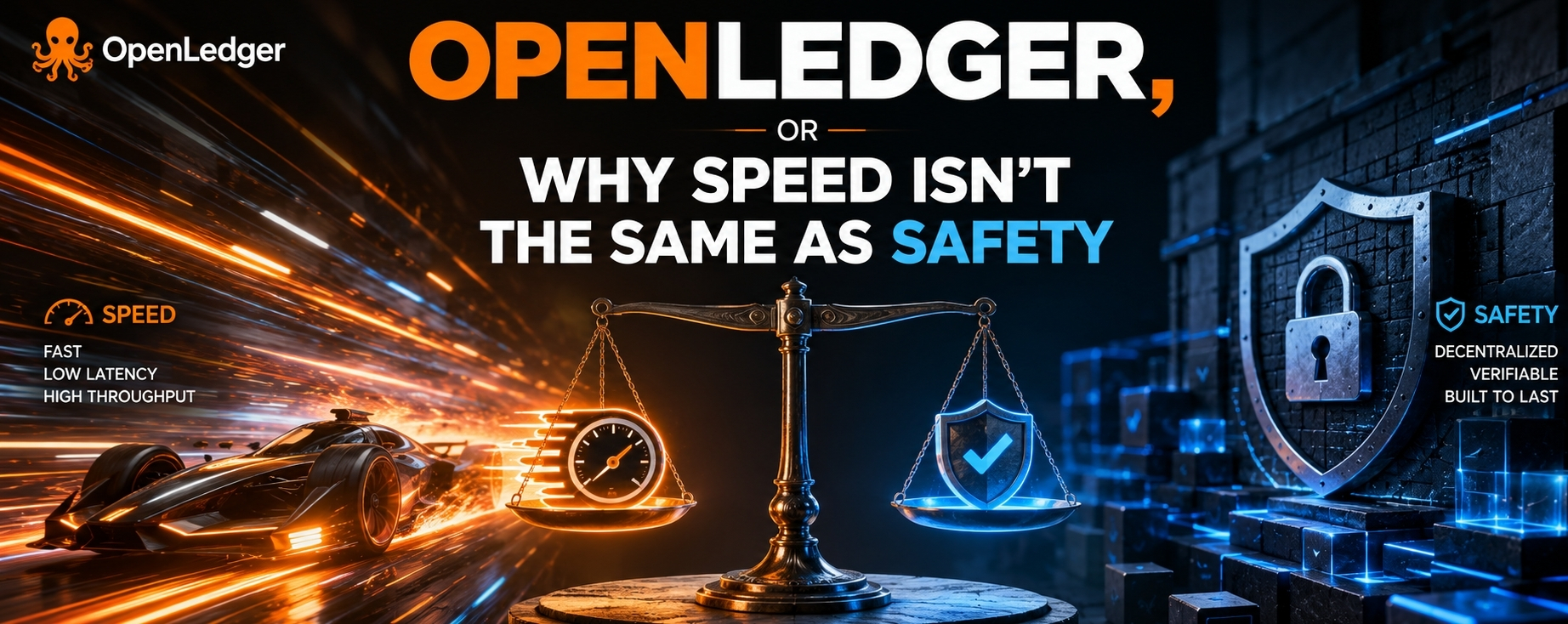
I stopped caring about TPS charts the night I watched four grown adults argue over a wallet approval at 2:07 a.m.
Not the kind of argument people post online. No memes. No “gm” energy. Just tired voices inside a security call, staring at logs, trying to understand why a signer still had access to something it should have lost weeks earlier.
Nobody in that room cared how fast the chain was.
They cared about permissions.
Who approved what. Which wallet signed it. Why the delegation never expired. Why nobody noticed.
That was the moment I realized most failures in crypto are not performance failures. They are authority failures.
And honestly, that is why I started paying attention to OpenLedger.
At first glance, it looks like another high-performance L1 built on SVM architecture. Fast execution. Scalable design. AI-focused infrastructure. The usual words are all there.
But underneath that, there is something more mature happening.
OpenLedger does not seem obsessed with speed for the sake of headlines. It feels designed by people who understand that systems break in quieter ways. Not because blocks were slow, but because someone exposed a key, overtrusted a wallet, or gave permanent permissions to something that should have been temporary.
That distinction matters more than most people admit.
Crypto spent years treating throughput like the ultimate measure of intelligence. Higher TPS became a kind of religion. Every chain trying to prove it could move faster than the last one.
But real infrastructure is not judged during normal conditions. It is judged during failure.
During audits. During governance disputes. During incident reviews. During those ugly late-night calls where legal, operations, and security teams all end up in the same room asking the same question:
“How did this signer still have access?”
That is why OpenLedger Sessions stood out to me.
Time-bound delegation. Scope-bound permissions. Authority that expires instead of lingering forever in the background waiting to become a problem later.
It sounds small until you have seen the alternative.
Because the truth is, most people do not want to sign twenty transactions a day just to stay safe. But they also should not have to trust permanent approvals they barely understand.
That middle ground matters.
“Scoped delegation + fewer signatures is the next wave of on-chain UX.”
Not because it sounds futuristic, but because it sounds realistic.
The industry is slowly learning that convenience without boundaries eventually becomes risk. Every additional permission creates another invisible surface area. Another thing nobody remembers until something goes wrong.
OpenLedger feels aware of that reality.
Its modular execution approach makes sense through that lens too. Fast execution where speed matters, sitting above a more conservative settlement layer where certainty matters more than hype. That balance feels intentional. Like someone finally accepted that infrastructure does not need to choose between performance and restraint.
It needs both.
Even the EVM compatibility story feels refreshingly practical. Not ideological. Just reducing tooling friction so developers can build without unnecessary migration pain.
That kind of restraint actually gives me more confidence, not less.
Because mature systems usually stop trying to reinvent every component at once.
And honestly, the older I get, the less impressed I am by chains that only talk about speed.
Speed is easy to advertise.
Safety is harder. Operational discipline is harder. Building systems that survive human behavior is harder.
That is the real challenge.
The OPEN token only matters in that context to me. Security fuel. Participation in the network’s integrity. Staking not as passive fantasy, but as responsibility attached to the system itself.
Maybe that sounds less exciting than the usual crypto narrative.
But after enough incident reports, enough audit calls, enough exhausted engineers staring at dashboards at impossible hours, I think the industry is slowly growing up.
The future probably does not belong to the fastest chain.
It belongs to the chain that understands humans are imperfect, permissions are dangerous, and trust should always expire eventually.
That is the part OpenLedger seems to understand better than most.
