
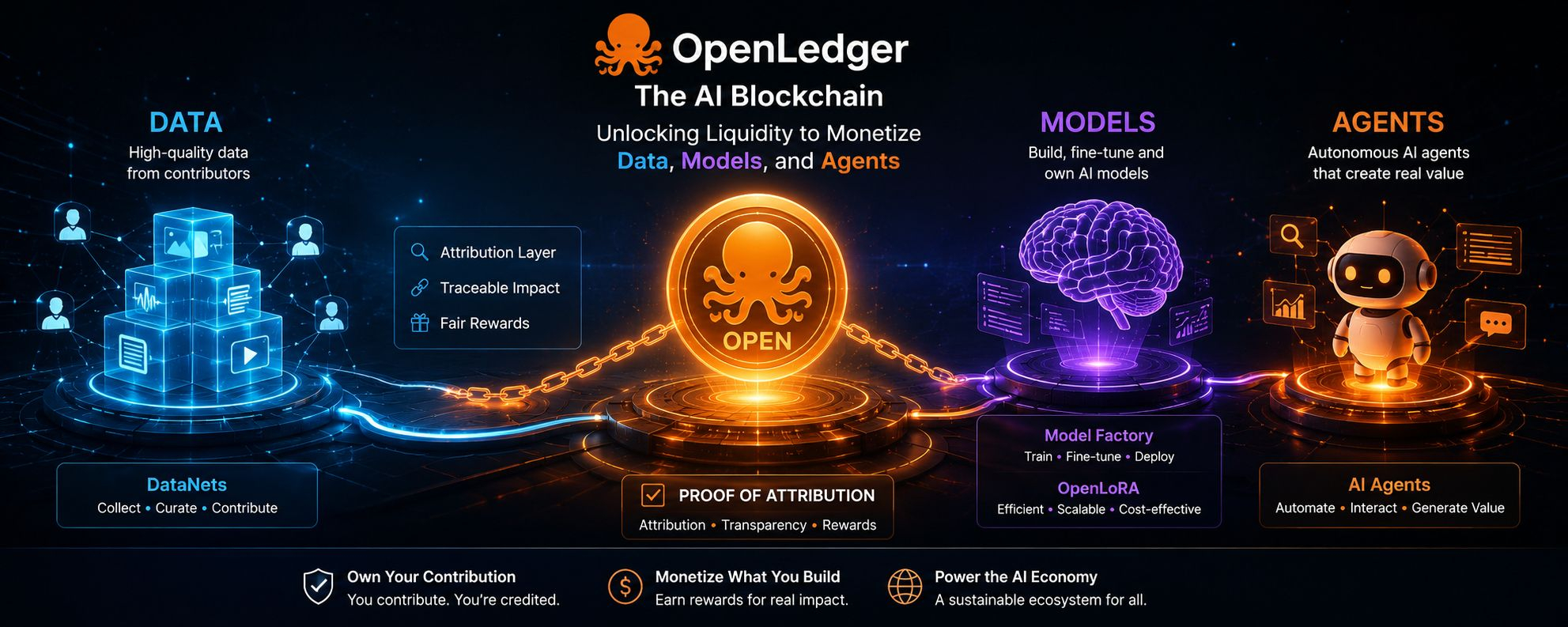
OpenLedger ko samajhne ka sabse behtar tareeqa shayad yeh hai ke isse sirf ek aur blockchain project na samjha jaye. Bahut si crypto projects artificial intelligence ka naam use karti hain, lekin kam hi aisi hain jo yeh poochti hain ke AI asal mein kis cheez par tikki hui hai, aur us bunyaad ki value kis ke paas rehni chahiye. OpenLedger isi sawal se shuru hota hai. Iska focus sirf technology banana nahi, balki un cheezon ko value dena hai jo aam tor par AI ke safar mein kahin peeche reh jaati hain—data, models aur woh agents jo systems ko chalate aur improve karte hain.
Aaj ka AI landscape thoda ajeeb sa imbalance lekar chal raha hai. Models powerful hote ja rahe hain, companies unse billion-dollar products bana rahi hain, lekin jis data ne in systems ko intelligent banaya, uska asal source aksar gum ho jata hai. Kisi ne data collect kiya, kisi ne curate kiya, kisi ne improve kiya, magar jab model tayar hota hai to un contributions ka zikr mushkil se hota hai. OpenLedger isi fracture ko address karne ki koshish karta hai. Yeh kehna shayad seedha lage, lekin important hai: agar kisi cheez ne value create ki hai, to us contribution ko invisible nahi hona chahiye.
Isi jagah OpenLedger ki thinking dusri AI-blockchain narratives se alag mehsoos hoti hai. Project ka idea yeh hai ke data aur models ko sirf digital assets samajh kar store na kiya jaye, balki unki contribution ko trace bhi kiya jaye. Agar koi dataset kisi model ko better banane mein meaningful role play karta hai, to system ko yeh samajhna chahiye ke influence kahan se aaya. Aur agar model se economic value nikalti hai, to us chain ke peeche jo log hain unke liye bhi koi pathway hona chahiye. Yeh sirf ownership ki baat nahi, fairness aur sustainability ki bhi baat hai.
OpenLedger isi concept ko “unlocking liquidity” ke framework mein dekhta hai. Usually data ek static cheez ban kar reh jata hai—use hota hai aur phir kahin database ke andheron mein kho jata hai. Yahan soch kuch aur hai. Data ko ek living asset ki tarah treat kiya jaye jo time ke sath value generate kar sake. Models ko bhi closed systems ke bajaye evolving ecosystems samjha jaye. Aur agents, jo AI interactions ko execute karte hain, unko bhi monetization ke broader structure ka part banaya jaye. Yeh approach theory se zyada ek economic redesign jaisi lagti hai.
Project ka interesting hissa yeh bhi hai ke yeh AI ko ek giant all-purpose machine ke taur par frame nahi karta. Har problem ke liye ek universal intelligence ka idea practical duniya mein hamesha kaam nahi karta. Healthcare ka model finance ke model jaisa nahi hota, legal data entertainment data jaisa behave nahi karta. OpenLedger ki approach specialized intelligence ki taraf jhukti hui nazar aati hai—aisa ecosystem jahan niche-specific models apne relevant data ke sath train aur improve ho saken. Is thinking mein ek grounded realism mehsoos hota hai.
OPEN token bhi isi structure ka functional hissa banne ki koshish karta hai, sirf speculative asset nahi. Iska role network activities, inference, governance aur rewards ke sath connect kiya gaya hai. Simple lafzon mein, idea yeh hai ke ecosystem ke andar jo economic movement hai, woh kisi abstract promise par nahi, actual participation par depend kare. Crypto mein aksar tokens pehle aa jate hain aur purpose baad mein dhunda jata hai. Yahan kam az kam framework ulta nazar aata hai—pehle use case define karne ki koshish, phir token ko us structure mein fit karna.
Lekin yeh keh dena bhi theek nahi hoga ke sab kuch seedha aur guaranteed lagta hai. Attribution ko accurately measure karna mushkil kaam hai. AI systems linear nahi hote. Kai dafa ek output ke peeche hazaron small influences hoti hain, jinhe clearly separate karna technically complicated ho sakta hai. Isi wajah se OpenLedger ka vision ambitious lagta hai. Idea compelling hai, magar execution us se bhi zyada important hogi. Real challenge wahi hoga—kya system genuinely prove kar payega ke kis contribution ne kitni value add ki?
Phir bhi, OpenLedger ko dekhte waqt ek cheez noticeable lagti hai: yeh project sirf buzzwords par survive karne wali story jaisa mehsoos nahi hota. Ismein kam az kam ek coherent logic nazar aata hai. AI ko sirf powerful banane ki race mein shamil hone ke bajaye, yeh poochne ki koshish ki gayi hai ke power ke peeche jo invisible effort hai, usko acknowledge kaise kiya jaye. Shayad isi wajah se project ka narrative thoda different lagta hai—less noise, more structure.
Agar AI ka future waqai collaborative hona hai, jahan builders, contributors aur users sab ecosystem ka meaningful hissa banen, to attribution aur monetization jaise ideas eventually center stage par aane wale hain. OpenLedger shayad us conversation ko thoda pehle start kar raha hai. Yeh kehna abhi jaldi hoga ke yeh model kitna successful hoga, lekin itna zaroor lagta hai ke project ne ek real problem par ungli rakhi hai—aur kabhi kabhi, technology ki duniya mein wahi pehla meaningful step hota hai.