
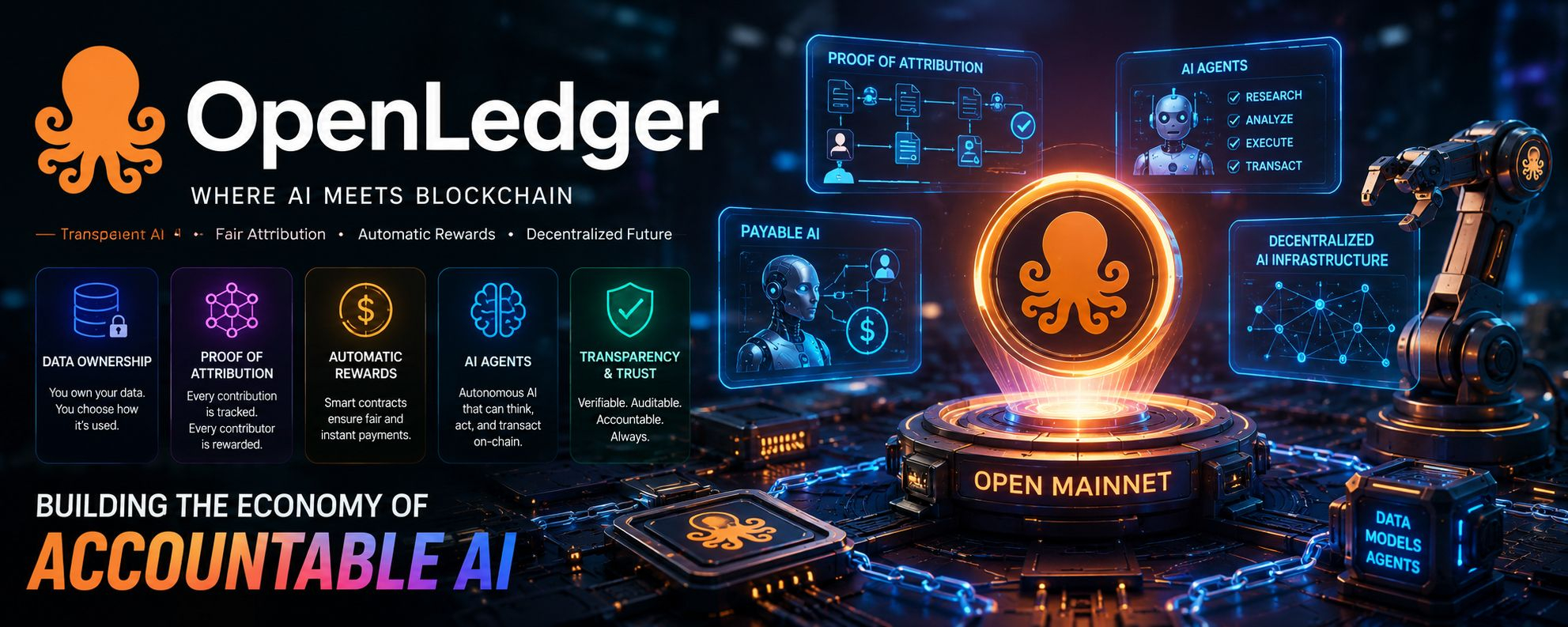
The connection between artificial intelligence and blockchain is growing faster than ever, but most projects still feel incomplete. Some focus only on hype, while others promise futuristic ideas without solving real problems. That’s why I think OpenLedger is getting so much attention lately. It isn’t trying to become “just another crypto project.” Instead, it’s building an ecosystem where AI becomes transparent, accountable, and economically fair for everyone involved.
Right now, AI systems are trained using enormous amounts of online data. Writers, artists, developers, researchers, and even everyday internet users contribute information without realizing how valuable their data has become. The biggest issue is that most people never get rewarded when AI companies use their content. I think this is exactly where OpenLedger is trying to create a real shift.
OpenLedger is often described as an AI-native blockchain. That means the blockchain isn’t simply supporting AI as an extra feature — it’s actually being designed around the needs of artificial intelligence itself. The project believes AI agents will eventually handle payments, perform tasks, automate workflows, and interact with digital systems independently. Because of that, AI needs a secure and transparent infrastructure that traditional systems can’t fully provide.
One feature that really stands out to me is OpenLedger’s “Proof of Attribution” system. This system tracks how data contributes to AI-generated outputs and automatically rewards contributors through blockchain technology. In simple terms, if someone’s data helps train an AI model, they can potentially receive compensation for that contribution. I think this idea could become extremely important in the future because the global debate around AI data ownership is only getting bigger.
Today, lawsuits and copyright concerns are growing across the AI industry. Artists are frustrated. Writers are questioning how their content is being used. Developers are demanding more transparency. OpenLedger seems to understand that these problems won’t disappear. Instead of ignoring the issue, it’s building tools that could create a more balanced relationship between AI companies and data contributors.
Another reason I find OpenLedger interesting is its focus on something called “Payable AI.” The idea is simple but powerful: AI shouldn’t operate freely on unpaid human contributions forever. If creators help power AI systems, they deserve rewards. OpenLedger wants compensation to happen automatically through blockchain-based systems and smart contracts.
Honestly, I think this concept could completely reshape the digital economy over time. The internet has already evolved from static websites to creator-driven platforms like YouTube, TikTok, and streaming services where creators can monetize content directly. OpenLedger is trying to bring that same reward structure into the AI industry. Instead of only tech giants benefiting from AI growth, contributors could also share the value they help create.
The launch of the OPEN Mainnet became a major milestone for the project because it transformed OpenLedger from an idea into a functioning ecosystem. Developers, AI applications, contributors, and users can now interact directly on-chain. This made the project feel far more serious in my opinion because many blockchain projects spend years talking about vision without delivering real infrastructure.
I’ve also noticed that OpenLedger is positioning itself around long-term utility rather than short-term speculation. That doesn’t mean the token market isn’t volatile — crypto always moves unpredictably — but the core narrative behind the project feels stronger than most temporary blockchain trends. It’s trying to solve a real issue tied to one of the fastest-growing industries in the world.
The partnerships OpenLedger has built also show that it’s thinking bigger than just crypto trading. Its collaboration with Story Protocol caught my attention because it focuses on rights-cleared AI training and creator compensation. This could become extremely important if governments introduce stricter AI regulations in the future. I think platforms that prioritize transparency early will have a major advantage later.
Another area where OpenLedger looks ambitious is autonomous AI agents. The project believes future AI systems won’t just answer questions like chatbots do today. Instead, they’ll execute blockchain transactions, negotiate services, perform research, and manage workflows independently. OpenLedger wants to create infrastructure where these AI agents can operate securely and transparently.
Personally, I think this idea sounds futuristic right now, but the direction actually makes sense. AI is evolving rapidly, and automation is becoming more advanced every year. Eventually, businesses may rely heavily on autonomous AI systems to manage operations. If that happens, blockchain verification could become essential for trust and accountability.
The release of tools like OctoClaw also shows that OpenLedger is moving toward practical AI automation instead of staying theoretical. The platform is clearly trying to build real utility around decentralized AI execution. That’s important because users are becoming tired of projects that only survive on marketing narratives without usable products.
Of course, OpenLedger still faces challenges. Competition in AI and blockchain is intense, and the project will need strong adoption to succeed long term. Scalability, regulation, user growth, and developer activity will all play major roles in determining whether the ecosystem truly expands. Crypto markets are also unpredictable, so short-term price movements don’t always reflect long-term value.
Still, I think OpenLedger has positioned itself in one of the strongest sectors possible. AI is becoming more powerful every year, and governments are already demanding better accountability and transparency from AI companies. OpenLedger sits directly in the middle of those conversations.
What I appreciate most is that the project seems focused on future infrastructure instead of temporary excitement. Many people only focus on how intelligent AI can become, but fewer people ask deeper questions like who owns the data, who gets rewarded, and how AI systems can remain transparent. OpenLedger is trying to answer those questions before they become global crises.
In my opinion, that’s why OpenLedger could become far more important over the next few years. If decentralized AI continues growing, platforms that combine transparency, attribution, automation, and fair compensation may become essential parts of the digital economy. OpenLedger isn’t just following the AI trend — it’s trying to build the foundation underneath it.
The connection between artificial intelligence and blockchain is growing faster than ever, but most projects still feel incomplete. Some focus only on hype, while others promise futuristic ideas without solving real problems. That’s why I think OpenLedger is getting so much attention lately. It isn’t trying to become “just another crypto project.” Instead, it’s building an ecosystem where AI becomes transparent, accountable, and economically fair for everyone involved.
Right now, AI systems are trained using enormous amounts of online data. Writers, artists, developers, researchers, and even everyday internet users contribute information without realizing how valuable their data has become. The biggest issue is that most people never get rewarded when AI companies use their content. I think this is exactly where OpenLedger is trying to create a real shift.
OpenLedger is often described as an AI-native blockchain. That means the blockchain isn’t simply supporting AI as an extra feature — it’s actually being designed around the needs of artificial intelligence itself. The project believes AI agents will eventually handle payments, perform tasks, automate workflows, and interact with digital systems independently. Because of that, AI needs a secure and transparent infrastructure that traditional systems can’t fully provide.
One feature that really stands out to me is OpenLedger’s “Proof of Attribution” system. This system tracks how data contributes to AI-generated outputs and automatically rewards contributors through blockchain technology. In simple terms, if someone’s data helps train an AI model, they can potentially receive compensation for that contribution. I think this idea could become extremely important in the future because the global debate around AI data ownership is only getting bigger.
Today, lawsuits and copyright concerns are growing across the AI industry. Artists are frustrated. Writers are questioning how their content is being used. Developers are demanding more transparency. OpenLedger seems to understand that these problems won’t disappear. Instead of ignoring the issue, it’s building tools that could create a more balanced relationship between AI companies and data contributors.
Another reason I find OpenLedger interesting is its focus on something called “Payable AI.” The idea is simple but powerful: AI shouldn’t operate freely on unpaid human contributions forever. If creators help power AI systems, they deserve rewards. OpenLedger wants compensation to happen automatically through blockchain-based systems and smart contracts.
Honestly, I think this concept could completely reshape the digital economy over time. The internet has already evolved from static websites to creator-driven platforms like YouTube, TikTok, and streaming services where creators can monetize content directly. OpenLedger is trying to bring that same reward structure into the AI industry. Instead of only tech giants benefiting from AI growth, contributors could also share the value they help create.
The launch of the OPEN Mainnet became a major milestone for the project because it transformed OpenLedger from an idea into a functioning ecosystem. Developers, AI applications, contributors, and users can now interact directly on-chain. This made the project feel far more serious in my opinion because many blockchain projects spend years talking about vision without delivering real infrastructure.
I’ve also noticed that OpenLedger is positioning itself around long-term utility rather than short-term speculation. That doesn’t mean the token market isn’t volatile — crypto always moves unpredictably — but the core narrative behind the project feels stronger than most temporary blockchain trends. It’s trying to solve a real issue tied to one of the fastest-growing industries in the world.
The partnerships OpenLedger has built also show that it’s thinking bigger than just crypto trading. Its collaboration with Story Protocol caught my attention because it focuses on rights-cleared AI training and creator compensation. This could become extremely important if governments introduce stricter AI regulations in the future. I think platforms that prioritize transparency early will have a major advantage later.
Another area where OpenLedger looks ambitious is autonomous AI agents. The project believes future AI systems won’t just answer questions like chatbots do today. Instead, they’ll execute blockchain transactions, negotiate services, perform research, and manage workflows independently. OpenLedger wants to create infrastructure where these AI agents can operate securely and transparently.
Personally, I think this idea sounds futuristic right now, but the direction actually makes sense. AI is evolving rapidly, and automation is becoming more advanced every year. Eventually, businesses may rely heavily on autonomous AI systems to manage operations. If that happens, blockchain verification could become essential for trust and accountability.
The release of tools like OctoClaw also shows that OpenLedger is moving toward practical AI automation instead of staying theoretical. The platform is clearly trying to build real utility around decentralized AI execution. That’s important because users are becoming tired of projects that only survive on marketing narratives without usable products.
Of course, OpenLedger still faces challenges. Competition in AI and blockchain is intense, and the project will need strong adoption to succeed long term. Scalability, regulation, user growth, and developer activity will all play major roles in determining whether the ecosystem truly expands. Crypto markets are also unpredictable, so short-term price movements don’t always reflect long-term value.
Still, I think OpenLedger has positioned itself in one of the strongest sectors possible. AI is becoming more powerful every year, and governments are already demanding better accountability and transparency from AI companies. OpenLedger sits directly in the middle of those conversations.
What I appreciate most is that the project seems focused on future infrastructure instead of temporary excitement. Many people only focus on how intelligent AI can become, but fewer people ask deeper questions like who owns the data, who gets rewarded, and how AI systems can remain transparent. OpenLedger is trying to answer those questions before they become global crises.