
I still remember when my friend got totally wrecked by an AI trading bot in 2024. Not because it was dumb or anything, it was actually kinda smart. But the problem was nobody really knew what it was doing. It made some weird moves, blew past his stop losses like they didn’t even exist, and when he asked the devs why it happened they just said “the model decided”. That line honestly stuck with me. Like… what does that even mean? It’s not that AI is useless. It’s that nobody is really accountable for it.
So when I finally read the OpenLedger whitepaper last night, I was kinda surprised. Not because it was hard to understand, but because the idea felt so simple I couldn’t believe it wasn’t already standard.
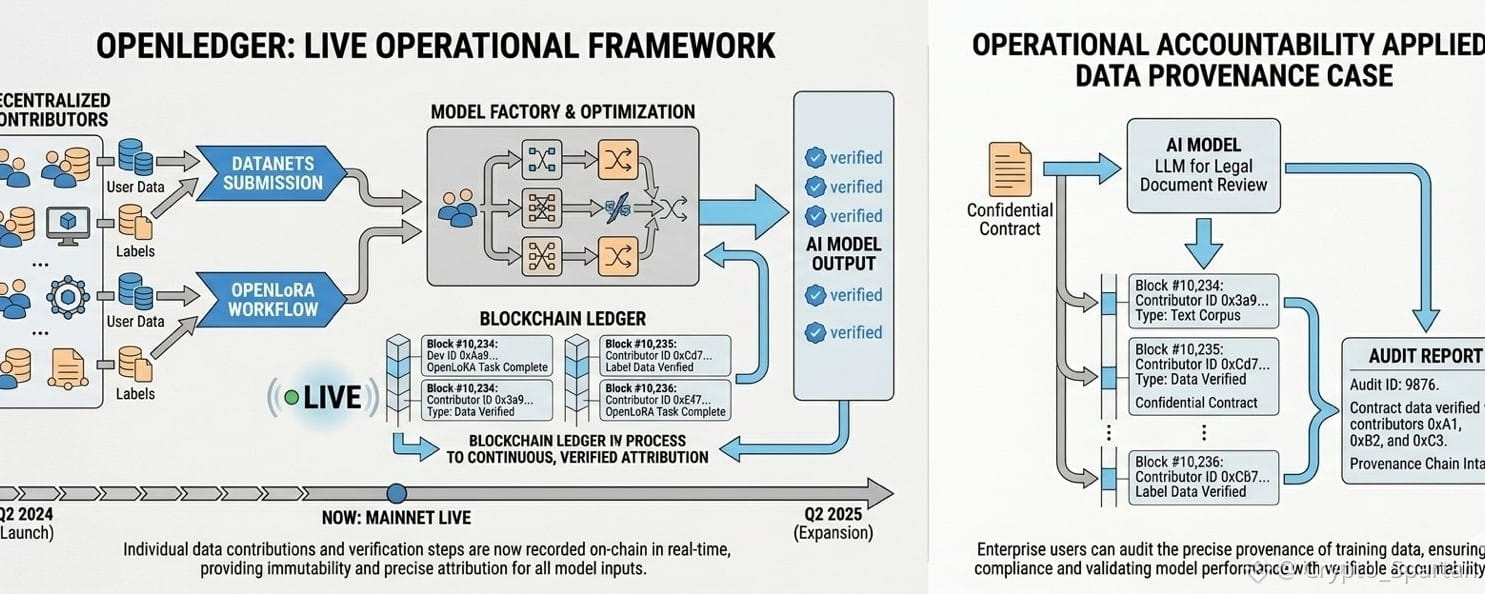
Basically, if you contribute data to train AI models, OpenLedger tracks it on-chain. Proof of Attribution. So your work doesn’t just disappear into some big corporate black box. It actually gets recorded and you can see it.
Right now most AI training feels very closed off. You throw data in, models get better, and then… nothing. You don’t really know what your contribution did or where it went. OpenLedger doesn’t magically fix everything, but it opens that system a bit, and even that feels important.
They talk about stuff like Datanets, Model Factory, OpenLoRA… yeah it sounds kinda heavy and technical. But the main idea is pretty clear: people who actually contribute data and value should get some credit for it. Not just big companies or investors.
And honestly the AI economy right now is huge, but the way it’s built feels kinda messy. Data gets scraped everywhere, artists don’t get paid, code gets reused, and when AI systems mess up or make bad decisions, nobody really takes responsibility. Like who do you even blame? That’s the problem.
I’ve been watching OpenLedger because they’re trying to deal with that exact issue. While most projects are just focused on faster models and better chatbots, OpenLedger is focused on the “receipts” side of AI. Who contributed what, and how do we track it.
They also started rolling out partnerships and their roadmap stuff recently. One thing I saw was their focus on attribution and fairness layers, where if a dataset is used in training, the original contributor can actually get paid automatically. No long contracts or legal mess, just code handling it.
They also connected with AI agent projects, which is kinda interesting. These agents can actually do tasks like trading or automating things, but now their actions can be tracked on-chain. So if something goes wrong, you can actually see what happened instead of just guessing. That feels like a big deal if AI keeps getting more involved in real money systems.
On the token side, OpenLedger isn’t huge yet. Market cap is still pretty small compared to the problem they’re trying to solve. And most of the supply is still locked or vesting, so it’s not like everything is fully circulating already. It still feels early.
But the bigger point for me isn’t even price or hype. It’s that AI is becoming something people will actually rely on for serious stuff like finance, healthcare, legal work, etc. And in that world, you can’t just have black box systems making decisions with no explanation.
So yeah, I don’t think OpenLedger is perfect or anything. But at least it’s trying to make AI more accountable. Like actual traceability, actual credit for people who contribute, and less “trust the model bro” energy.
And after seeing my friend get destroyed by a system nobody could explain… I think that matters more than people realize.#OpenLedger $OPEN
