
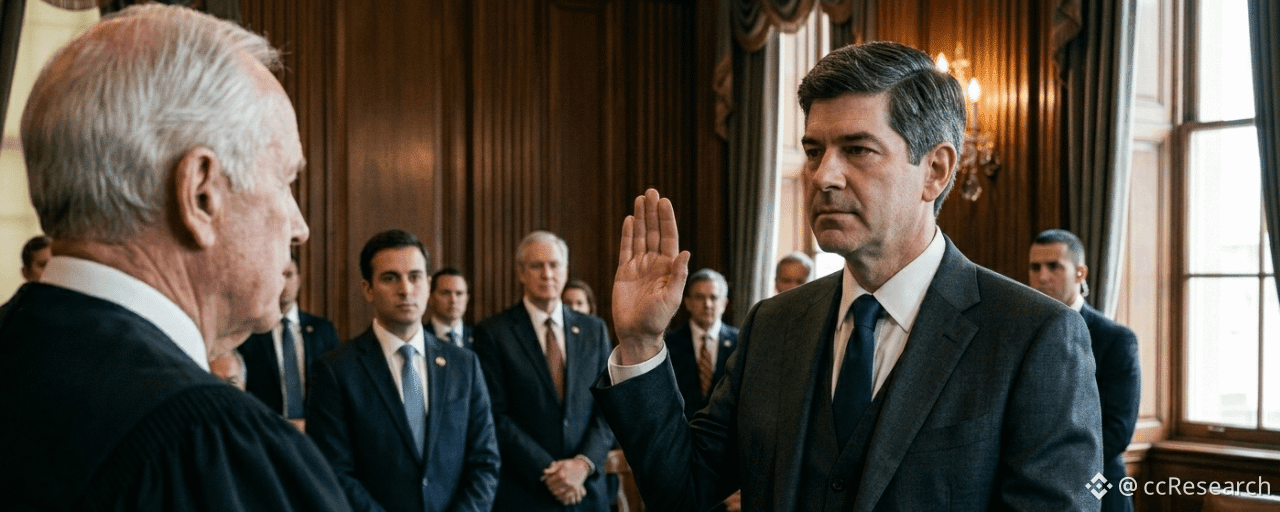
It’s official. Today, Friday, May 22, 2026, Kevin Warsh has formally taken office as the new Chairman of the Federal Reserve, replacing Jerome Powell following a narrow Senate confirmation (54-45).
For those of us who closely follow macroeconomics, this was no ordinary change of command. Today's event broke nearly 40 years of institutional tradition and redefines the global financial landscape for the second half of the decade.
Below, ccResearch breaks down the 3 key takeaways from the day and their latent impact on the markets:
A Historic Protocol Breach (The Shadow of Independence) For the first time since Alan Greenspan in 1987, a Fed Chairman was sworn in directly at the White House by the executive branch, rather than at the Federal Reserve’s own headquarters.
Although President Donald Trump declared during the ceremony that he wants Warsh to be "fully independent," the choice of location has not gone unnoticed by Wall Street analysts. The symbolism is heavy, especially following a year of intense political pressure to accelerate interest rate cuts.
The Powell Factor: Remaining on the Board Unlike other transitions where the outgoing Chairman steps down completely, Jerome Powell has decided to remain as a Governor on the Fed Board (his term as a committee member runs until 2028).
Why does this matter from a technical standpoint? Warsh takes the helm of an ideologically divided Federal Open Market Committee (FOMC). Powell’s presence as a pivotal vote means Warsh will not have an easy path if he seeks to implement radical changes or force aggressive rate cuts without the backing of the technical majority.
Warsh’s Economic Vision: Productivity and AI Departing from the traditional stance, Warsh has championed the thesis that the Artificial Intelligence (AI) boom is elevating structural productivity across the economy. Theoretically, this could allow solid growth to persist while keeping inflation in check, potentially opening the door for policy easing. Nonetheless, markets remain cautious: global geopolitical tensions and stable energy prices continue to put upward pressure on core inflation.
📊 Market & Crypto Implications (ccResearch View):
Wall Street (Equities): Stocks reacted with moderate optimism today. The market prefers the certainty of having a confirmed new leader, but the ultimate litmus test will be the upcoming FOMC meeting on June 16 and 17, where we will get Warsh's first interest rate guidance.
Crypto Assets: While Bitcoin Pizza Day commands retail attention today, the institutional crypto sector is keeping a close eye on Warsh. A Fed that gives in even slightly to liquidity pressures will inject heavy fuel into the crypto market over the medium term. However, if inflation spikes again, monetary tightening will hit risk assets hard.
Conclusion: The "Warsh Effect" has officially begun. The narrative of a Fed entirely insulated from Washington politics will be heavily tested in the coming months. At ccResearch, we will continue monitoring macro data to anticipate global liquidity shifts.
Do you think Warsh will successfully maintain the Fed's independence amid pressures for lower rates, or will we see a drastic shift in monetary policy this June? Leave your analysis in the comments below!
#FederalReserve #KevinWarsh #ccResearch #BinanceSquare #FinanceNews