
Last night I was going through some material on OpenLedger while half-distracted by a few other tabs I never really finished. Lately, that’s been turning into a habit. AI is moving so fast that I sometimes can’t tell whether I’m actually learning or just collecting updates the way people save unread bookmarks.
But one idea about OpenLedger stayed with me longer than the usual wave of “next big AI thing” posts.
The shift isn’t just about making AI more powerful. It’s about making it more focused.
For a long time, the dominant direction was toward massive models designed to do everything at once—write code, respond to emails, generate images, explain scientific concepts, and hold human-like conversations. Bigger models, larger infrastructure, and bigger funding rounds. The narrative was simple: scale equals capability.
Now that direction seems to be quietly changing.
There’s increasing interest in smaller, specialized models trained for specific domains—medicine, law, finance, research, and internal enterprise workflows that rarely get public attention. They may not sound as impressive, but they tend to be more reliable and consistent in practice.
And that reliability matters more than people usually admit.
Most everyday users don’t really care whether an AI can write poetry and debug code in the same session. They care whether it performs one task consistently without unpredictable behavior on the fifth attempt. Many current AI systems still feel like assistants that are confident but occasionally inconsistent.
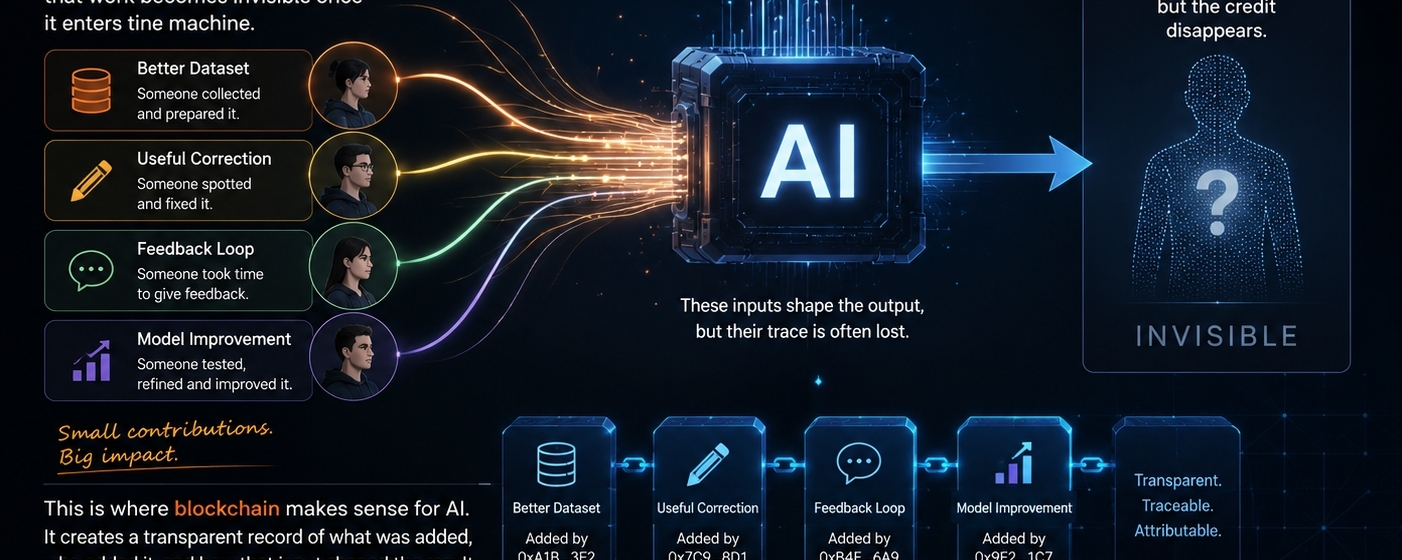
OpenLedger’s approach—where contributors, validators, and developers participate in a token-incentivized ecosystem—fits into this broader shift in an interesting way. Instead of relying purely on centralized platforms or opaque algorithms, it tries to distribute value back to the people who supply data and improve the system.
It’s an appealing idea, though not without uncertainty. It could work well, or it could become complicated quickly. It’s still hard to tell.
Because once financial incentives are deeply embedded at every layer of a system, behavior starts to change. People stop contributing purely out of curiosity or interest and begin optimizing their contributions for reward. We’ve already seen a version of this with SEO, where entire websites gradually shifted from human-centered content to algorithm-optimized content. AI systems could repeat that pattern, possibly at a faster pace.
Still, it’s understandable why projects like this are gaining attention.
General AI feels like a headline story—big, bold, and universal. Specialized AI feels more like infrastructure—quiet, practical, and foundational. And historically, the quieter systems often end up being the ones that actually last.
That’s why this direction feels more grounded to me than yet another claim of an all-purpose model that can do everything.@Pixels $OPEN #OpenLedger