Most people in crypto talk about AI like it's one clean thing. A model, a tool, an assistant. But the messier question the one most projects quietly skip is: where did the data come from, and does anyone actually know?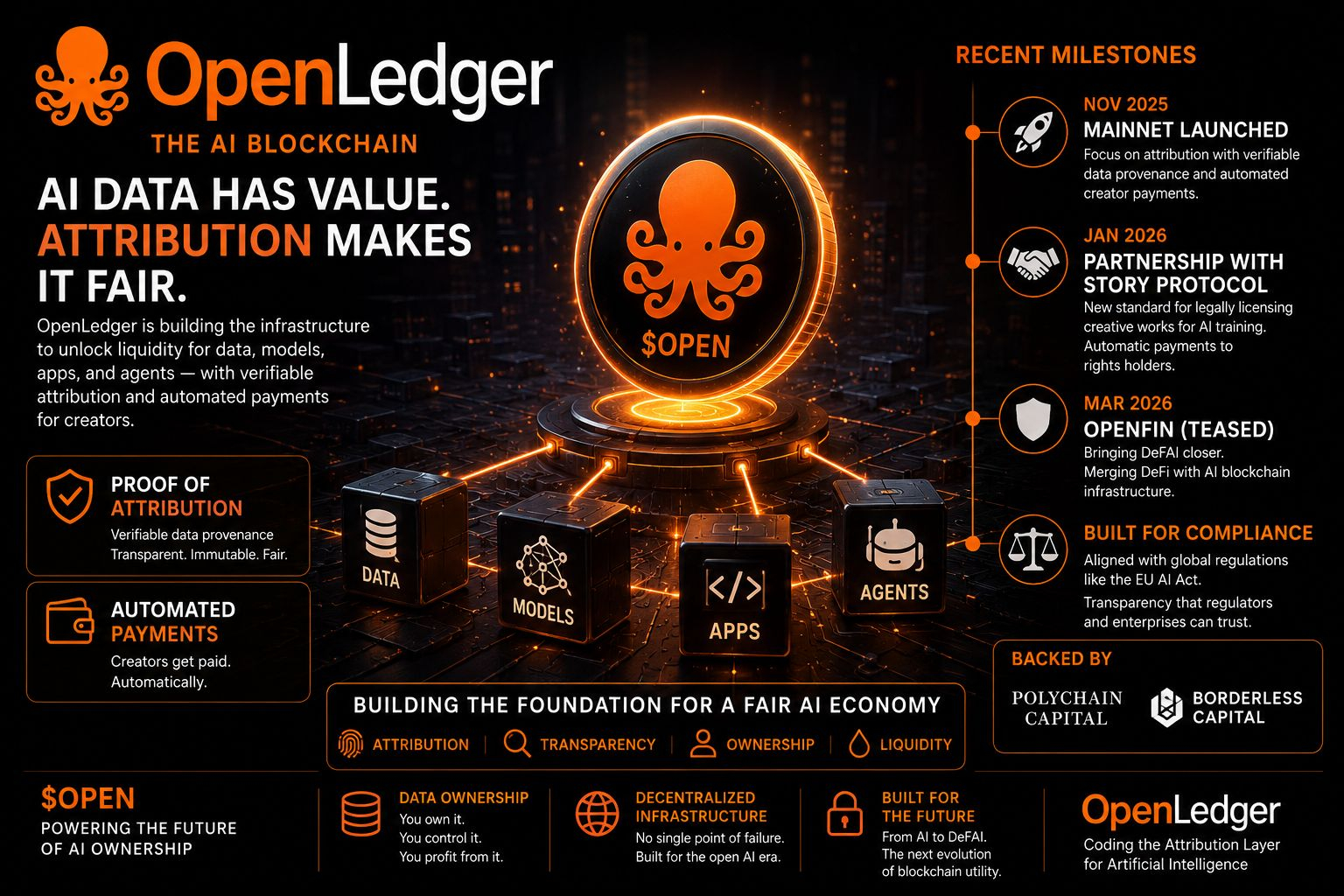
That's not philosophical. It's structural. And it's the gap that @OpenLedger (https://www.binance.com/en/square/profile/openledger) is building directly into.
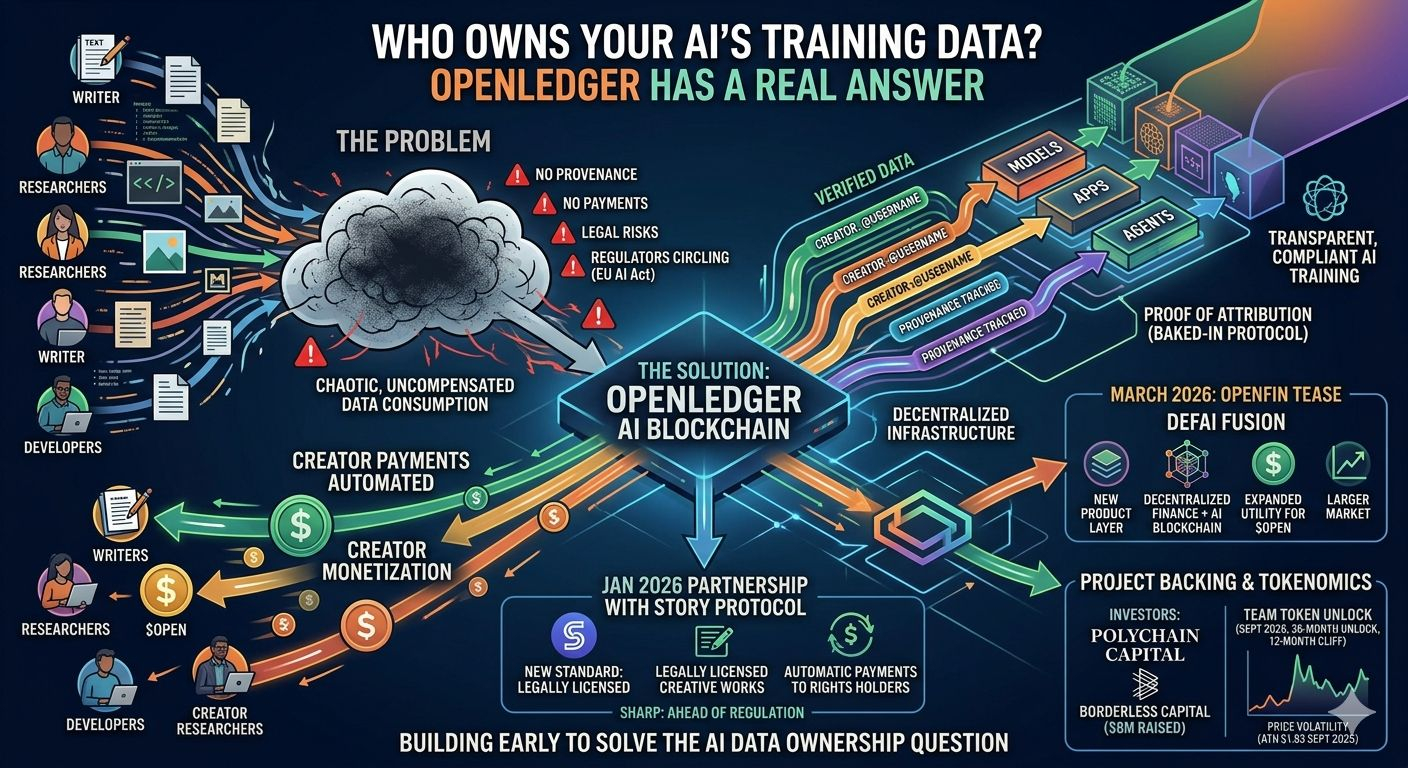
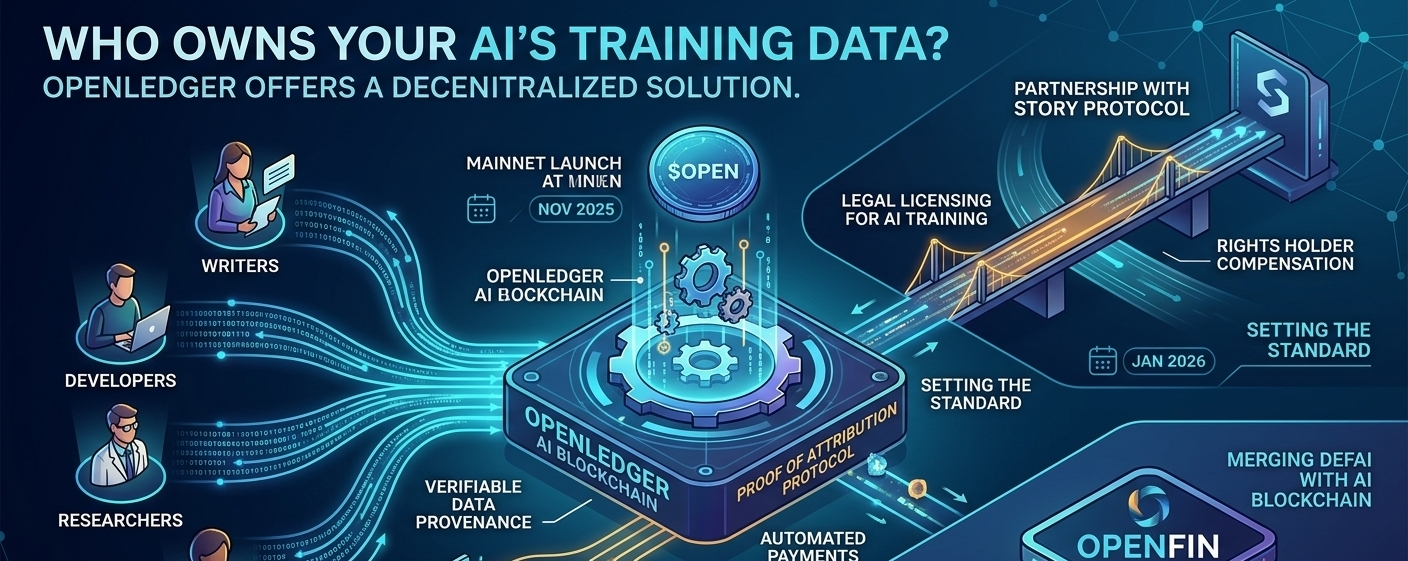
OpenLedger describes itself as the AI blockchain infrastructure designed to unlock liquidity for data, models, apps, and agents. (CoinMarketCap) It sounds abstract until you see what it's actually solving. AI systems consume enormous volumes of data to train. Writers, researchers, developers, domain experts they all feed this machine, usually without compensation, often without knowledge. OpenLedger's approach is to make that contribution visible and payable.
The mainnet launched in November 2025 with a specific focus on attribution decentralized infrastructure that enables verifiable data provenance and automates creator payments. (CoinMarketCap) That last part matters. Automated. Not "we'll figure out monetization later." Baked into the protocol from day one.
Then in January 2026, things got more concrete. A partnership with Story Protocol established a new standard for legally licensing creative works for AI training, with automatic payments flowing to rights holders. (CoinMarketCap) That's not a whitepaper promise. That's a functioning pipeline for something the entire AI industry is currently being dragged into court over.
The timing is sharp. Regulators are circling. The EU AI Act is already creating pressure for transparency around training data, and enterprises are beginning to look for compliant data solutions. (CoinMarketCap) OpenLedger's "Proof of Attribution" sits squarely in that lane not as a reaction, but as something they were building before the lawsuits started piling up.
And now there's a hint of something new. In March 2026, the team teased "OpenFin" described as bringing DeFAI closer, suggesting a new product layer merging decentralized finance with the existing AI blockchain infrastructure. (CoinMarketCap) Details are still thin, but if it delivers, $OPEN's utility expands well beyond data attribution into DeFi territory a significantly larger market.
The project previously raised $8 million from backers including Polychain Capital and Borderless Capital, (Bitget) which says something about the caliber of people who looked at this early and decided it was worth betting on.
There's still real risk here. A 36-month team token unlock begins in September 2026 following a 50month cliff, (CoinMarketCap) which introduces supply dynamics worth watching. Price has been volatile down significantly from its all-time high of $1.83 in September 2025 (CryptoRank.io) , which is either a cautionary tale or an entry point depending on your read of the roadmap.
What doesn't feel uncertain is the problem they're solving. The question of AI data ownership is not going away. If anything, it's getting louder. The builders who laid down attribution infrastructure before it became mandatory are going to have a real advantage and OpenLedger laid it down early.