

Habibies, Do you know? I've been watching bridge exploits accumulate like a slow leak in the floor, and at some point you stop patching and start asking why the pipe was designed that way in the first place.
Cross-chain bridges have now lost $328.6 million to attackers across eight separate incidents in May 2026 alone. That's not a bad month. That's a structural indictment. Defillama's cumulative tracking puts total bridge exploits at roughly $2.9 billion since tracking began, with April 2026 confirming the highest attack volume on record, nearly one exploit per day. When I first looked at those numbers, the thing that struck me wasn't the scale. It was the consistency. Same pattern, different protocol, different quarter.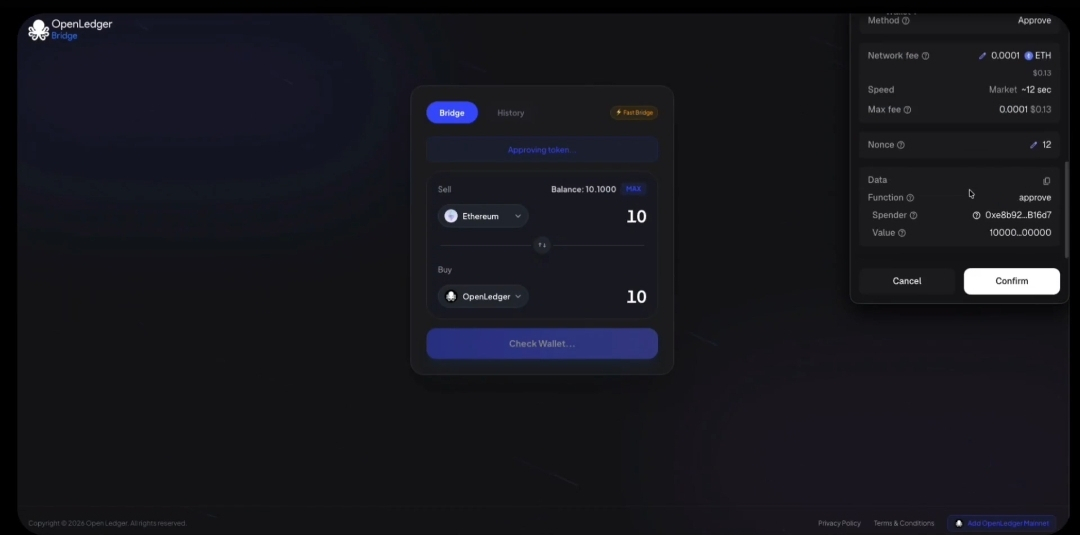
The reason bridges keep breaking is straightforward once you understand the model underneath. Traditional bridges work by locking tokens on one blockchain and minting equivalent assets on another, creating high-value attack surfaces where exploiters need only compromise the bridge's verification mechanism to access pooled liquidity. The locked reserve is the honeypot. The verification layer is the door. And the door, repeatedly, has had a weak lock.
That's the backdrop against which the OPEN Network's EVM Bridge launch needs to be read.
OpenLedger is EVM-compatible and built as an OP Stack rollup. The OPEN Network itself is positioned as an AI-focused chain, but what they've shipped here is infrastructure. Specifically, a bridge between Ethereum and the OPEN Network where assets move natively at the protocol layer, with no custodians and no external contracts holding reserves. That's a different architecture than what most people have become accustomed to. And different architecture means different risk surface.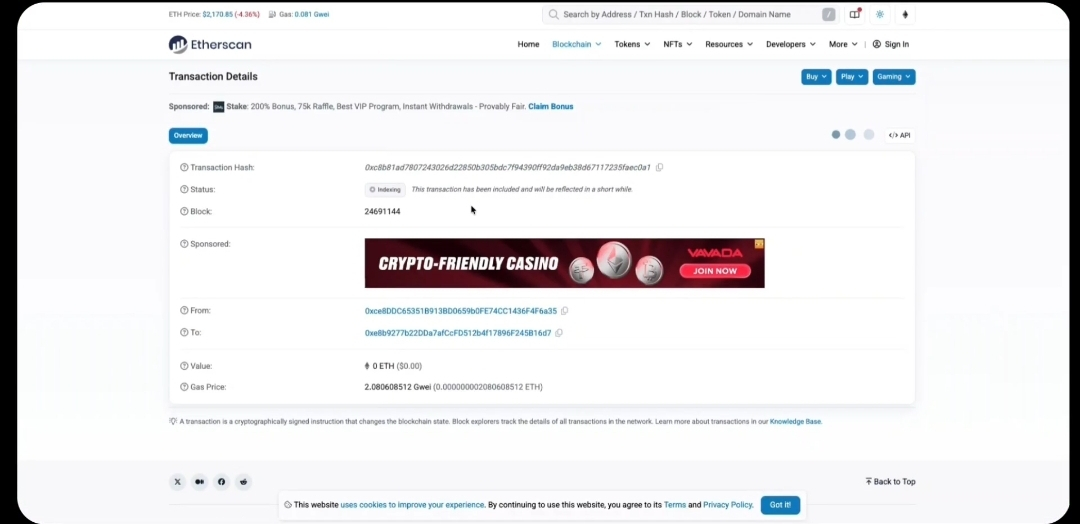
Understanding that helps explain why the "no custodians" framing matters so much right now. On February 21, 2026, a single compromised private key gave an attacker full control over IoTeX's ioTube bridge on Ethereum, draining roughly $4.3 million in tokens within hours. Before that, Drift Protocol lost $285 million after a North Korean hacking group spent six months socially engineering its way into the Solana-based exchange, targeting the people who controlled admin keys. Smart contract audits protect against code flaws. They don't protect against human beings with patience and motive. When a bridge relies on external validators or custodial key holders, you're trusting that those humans are always uncorrupted, always alert, always unreachable. History has answered that assumption clearly.
Protocol-layer settlement is the quiet response to that problem. If there's no custodian, there's no custodian to compromise. If there are no external contracts holding reserves, there's no reserve pool to drain in a single transaction. The attack surface collapses considerably. Whether OPEN Network's specific implementation executes this cleanly remains to be seen, and early-stage bridges have their own failure modes. But the architectural direction is meaningful.
The timing of this launch isn't incidental. OpenLedger is built with the OP Stack and EigenDA, settling transactions on Ethereum while offering low transaction fees and EVM-compatible tooling for developers. The Ethereum bridge makes the OPEN Network accessible to the largest pool of on-chain capital and developers in the ecosystem. That's a liquidity question as much as a security question. A technically elegant chain that's hard to get assets into remains isolated. Bridges are adoption infrastructure first.
The OPEN token launched in September 2025, and the project's roadmap pointed toward a hardened mainnet with production-ready economic flows by 2026. The EVM bridge represents that maturation phase. What's worth watching is whether volume follows. The DeFi market is projected to grow from $30 billion in 2024 toward $42 billion in 2025, and as more networks launch and liquidity spreads across ecosystems, reliable bridging becomes as important as wallet choice or exchange liquidity. That momentum creates another effect: projects that solve bridging credibly, early in a multi-chain environment, tend to become the quiet foundations that others build on top of.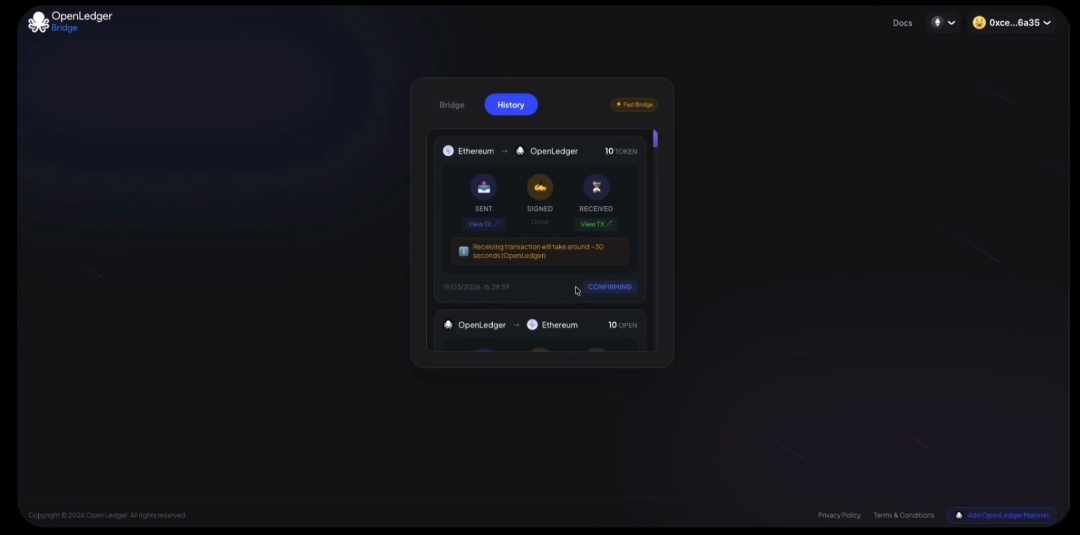
The counterargument is real and worth stating plainly. "No custodians, no external contracts" is a design claim, not a proof. Bridge security vulnerabilities in 2026 have underscored the urgent need for multi-layer verification systems and real-time anomaly detection across interconnected blockchain ecosystems. A bridge can be custodian-free and still have a vulnerable message-passing layer, as KelpDAO demonstrated in April when an attacker extracted 116,500 rsETH from Ethereum without burning tokens on the source chain, because LayerZero had a low verification quorum that allowed a single poisoned node to authorize fraudulent cross-chain messages. The devil in bridge security is always in the verification mechanism. Protocol-layer settlement removes one class of risk, not all of them.
That said, the pattern emerging across 2026 is that the projects earning trust are the ones visibly reducing their attack surface rather than adding complexity to it. Losses from bridge hacks exceeded $2.8 billion through 2025, accounting for roughly 40% of all Web3 exploits. The market is beginning to price security architecture into its preferences, even if slowly. Early signs suggest that bridges without custodial intermediaries are attracting more serious development activity, not just retail curiosity.
What this reveals, more broadly, is a shift in what interoperability means in practice. The early-era cross-chain bridges were wrappers, workarounds, duct tape between chains that weren't designed to talk to each other. What's being built now, including what OPEN Network appears to be building here, is a different category of thing: native movement, settled at the layer where both chains already agree on truth. It's less bridge and more shared language.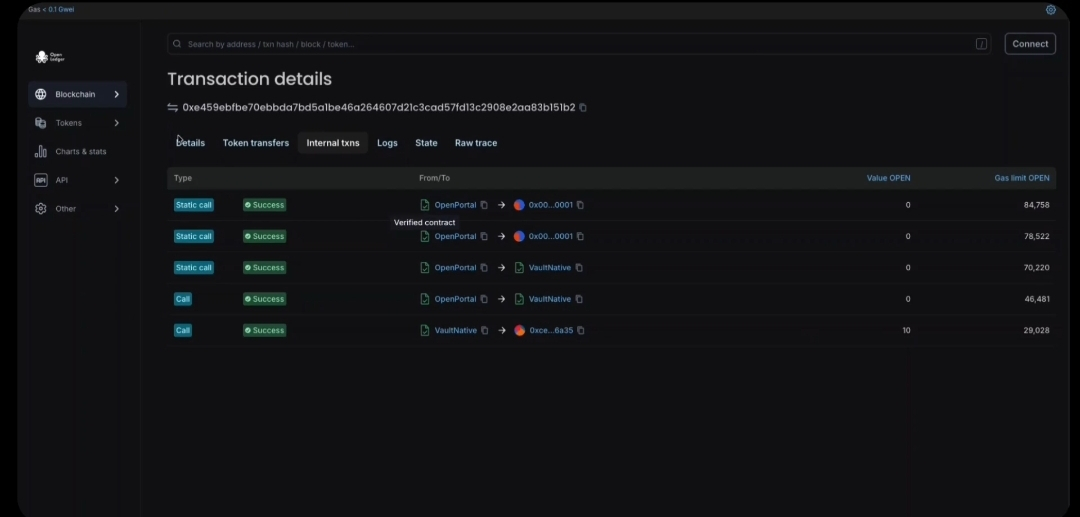
The industry spent years chasing throughput and yield. It's now being forced, by accumulated losses, to care about the foundation. And the foundation question, when it comes to multi-chain assets, is always: who, or what, is actually holding this?
If this bridge holds under real volume, the more interesting question isn't what it does for OPEN. It's what it reveals about what every other bridge is still getting wrong.

