
For a long time, I assumed most trading infrastructure was really about speed.
Faster execution. Faster information. Faster reactions.
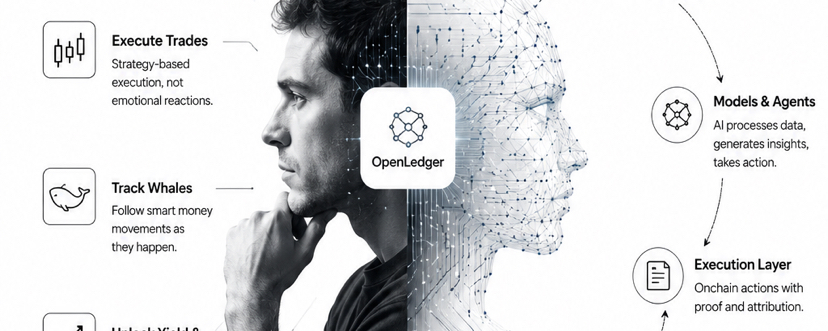
And on the surface, that still seems true. Every new platform talks about real-time sentiment, automated strategies, whale tracking, yield flows. The language always circles around efficiency, as if markets are mainly a problem of delay.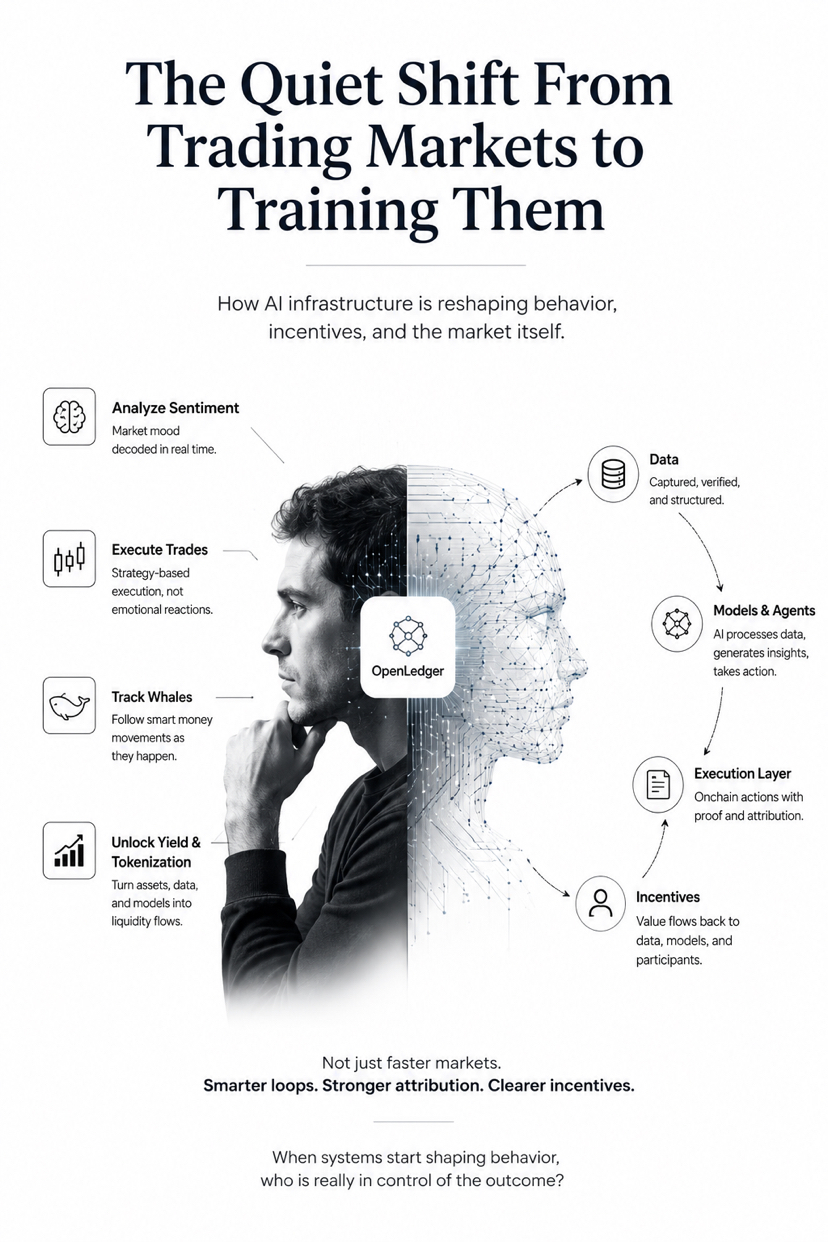
But lately I’ve started noticing something quieter underneath it.
The systems people return to are usually not the ones with the most features. They are the ones that reduce uncertainty just enough to keep people engaged.
That feels important.
Most users are not constantly making large decisions. They are making dozens of small ones throughout the day. Checking sentiment before sleeping. Watching one wallet too closely. Copying a trade half-convincingly. Opening dashboards during moments of boredom rather than conviction.@OpenLedger
Over time, these small behaviors start shaping the market itself.
The interesting thing about AI infrastructure is that it seems to understand this better than traditional financial systems do.
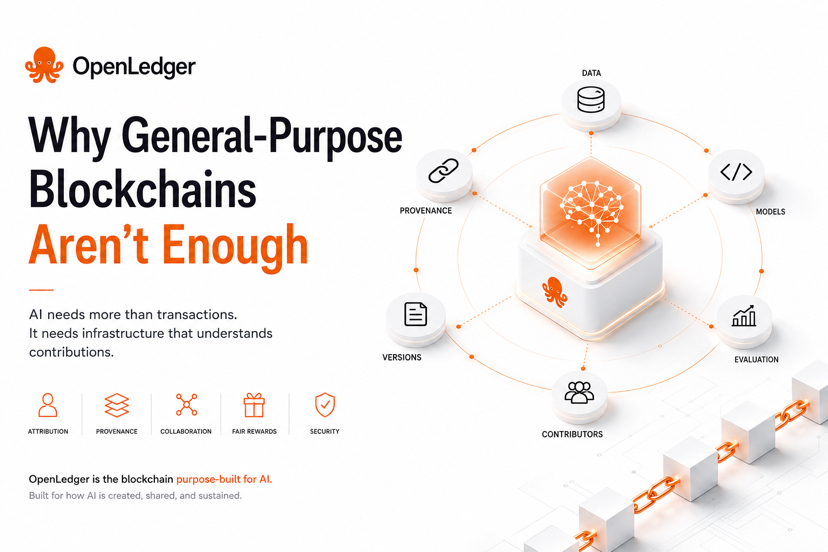
Reading about #OpenLedger I kept coming back to the idea that the platform is not simply trying to help AI operate onchain. It is trying to create an execution layer where data, models, agents, and incentives continuously interact with each other in a traceable way.
At first, that sounds mostly technical.
But the behavioral layer underneath it is harder to ignore.
If an AI agent can analyze sentiment, execute trades, monitor wallets, and react faster than humans, then the value is no longer just in information itself. It shifts toward coordination. Timing. Attribution. Knowing which signals influenced which actions, and who benefits from them afterward.
That changes the texture of participation.
People begin reacting not only to markets, but to systems reacting to markets.
And once that loop starts, demand becomes harder to separate from the mechanisms generating it.
I think that is where a lot of current conversations around AI and blockchain still feel incomplete. Most discussions focus on outputs — better models, smarter agents, more liquidity. But the more interesting shift may be behavioral.
How often do people follow AI-generated conviction instead of their own?
How much market activity is genuine interest versus automated reinforcement?
At what point does prediction itself start influencing the outcome it predicted?
The strange part is that this probably won’t happen dramatically.
 It will happen through repetition.
A few users rely on AI signals during volatile hours. Then more users stop researching independently because the system feels “good enough.” Eventually the habit becomes invisible. People trust the loop because everyone else inside the loop seems to trust it too.
Markets have always contained psychology.
What feels different now is how infrastructure itself is starting to participate in shaping that psychology in real time.
I’m not sure whether that leads to better coordination or just more efficient reflexes.
Maybe those two things slowly become difficult to separate.$OPEN