
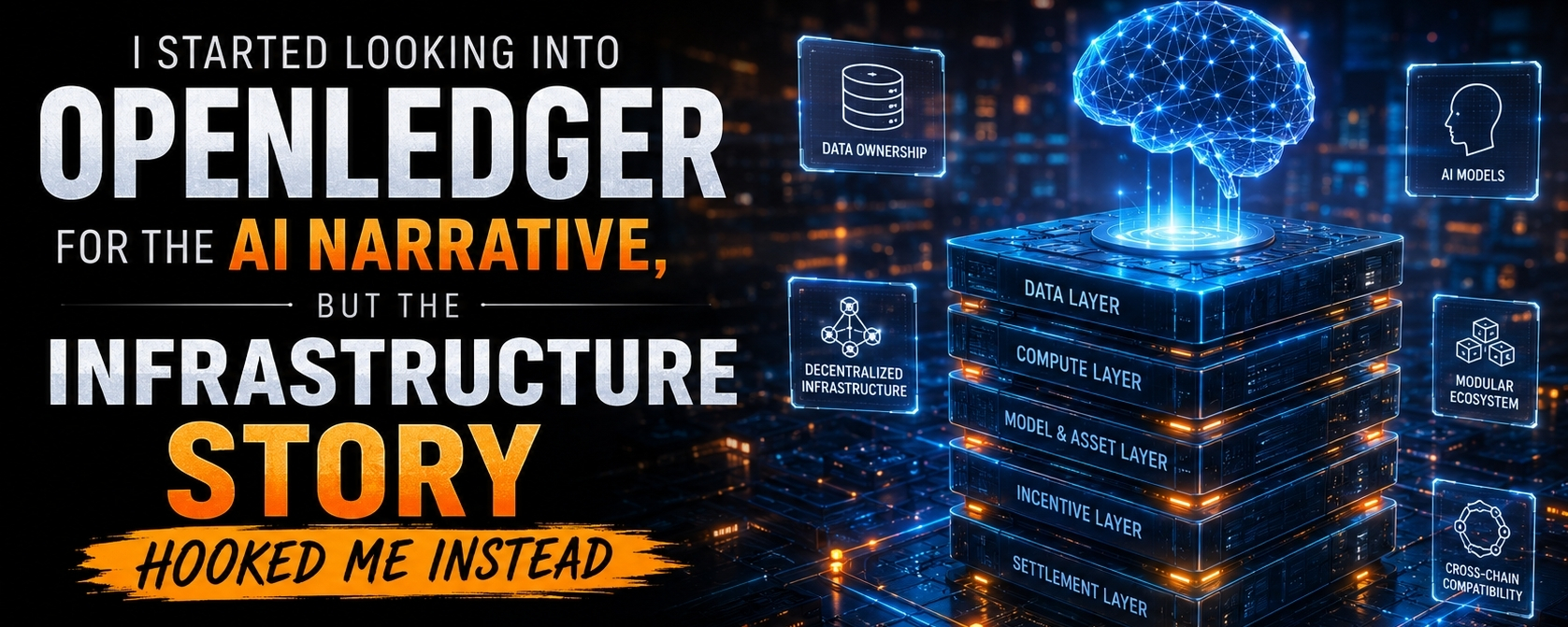
I’ll admit it — the first reason I looked into OpenLedger was the same reason most people probably did.
AI.
Over the past year, the market has been flooded with AI-related tokens, agent frameworks, decentralized compute narratives, and endless promises about autonomous economies. After a while, everything started blending together. Every project claimed it was building “the future of AI,” but most of them felt more like branding exercises than actual infrastructure.
So when I first came across OpenLedger, I expected more of the same.
At surface level, it checked all the familiar boxes: AI narratives, decentralized coordination, data ownership discussions, token incentives. Interesting enough to watch, but not enough to take seriously right away.
What changed my perspective wasn’t the AI angle.
It was the infrastructure underneath it.
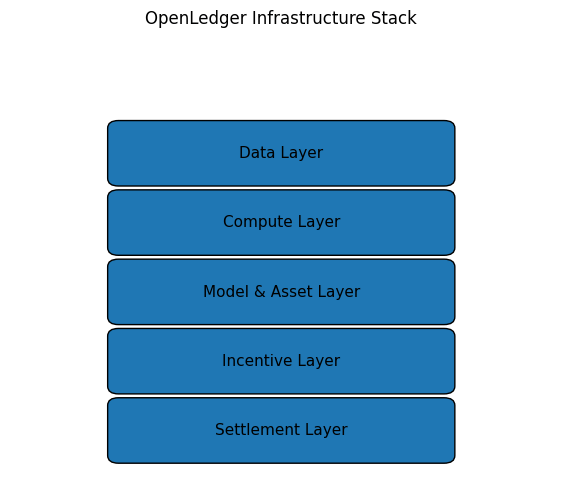
The deeper I looked, the more I realized OpenLedger might actually be trying to solve a problem most people in crypto barely talk about: how AI systems coordinate value, ownership, attribution, and interoperability at scale.
That’s a very different conversation from simply launching another “AI coin.”
And honestly, I think the market still underestimates that distinction.
Most people are obsessed with the visible layer of AI — the models, the agents, the apps, the automation. But infrastructure rarely gets attention early because it’s less exciting. It’s easier to market a futuristic AI assistant than a coordination framework sitting underneath an ecosystem.
Yet history keeps showing the same pattern.
The applications people remember are usually built on top of infrastructure most users never noticed while it was being developed.
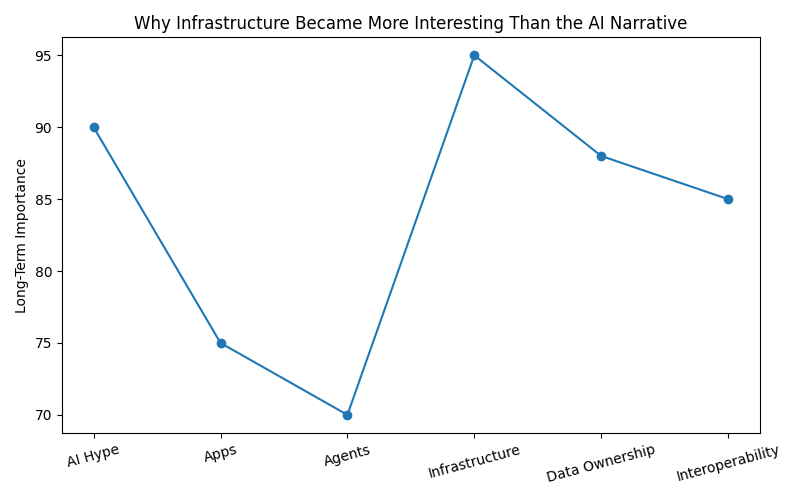
That’s the part of OpenLedger that started pulling me in.
Not because it guarantees success. Far from it. Infrastructure plays are slow, messy, and brutally difficult to execute. But because the design direction feels more foundational than narrative-driven.
The more I researched decentralized AI systems, the more one issue kept appearing everywhere: ownership.
Who owns the data?
Who gets compensated when models use that data?
How do contributors verify attribution?
How do different systems interact across ecosystems instead of becoming isolated silos?
And maybe most importantly — what coordinates incentives once AI agents start interacting economically rather than just computationally?
That’s where OpenLedger became interesting to me.
It started looking less like an AI trend trade and more like an attempt to build rails for future AI economies.
I think a lot of crypto investors still underestimate how important coordination layers are going to become if AI ecosystems actually scale. Everyone talks about intelligence itself, but intelligence without infrastructure eventually hits walls.
You need systems for attribution.
Systems for interoperability.
Systems for value exchange.
Systems for decentralized participation.
Systems for sustainable incentives.
Without those layers, most AI ecosystems eventually centralize around whoever controls the compute, the data, or the distribution.
And ironically, that recreates the exact problems decentralization was supposed to challenge in the first place.
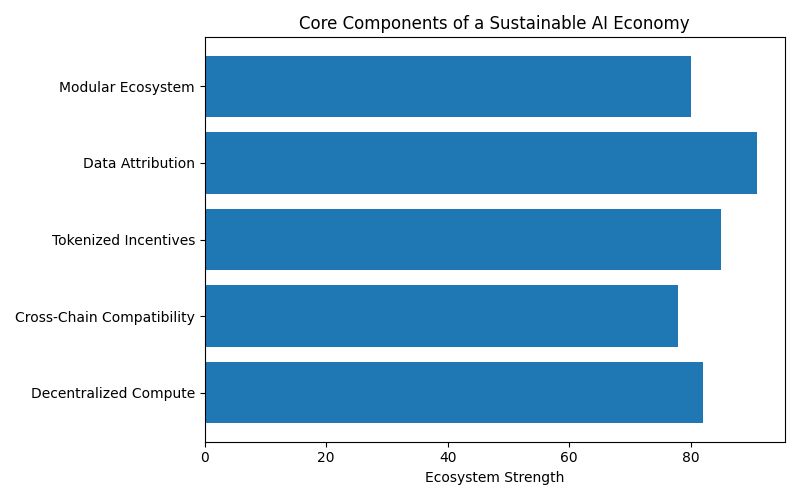
What caught my attention with OpenLedger was how many of these infrastructure pieces seemed connected rather than isolated. The modular architecture, the interoperability direction, the emphasis on tokenized coordination — it all started feeling less speculative and more structural.
Even the DePIN-style participation mechanics made more sense through that lens.
Not as a buzzword.
As a coordination model.
That distinction matters.
Crypto has a habit of rewarding narratives long before functionality exists. We’ve seen it with DeFi, gaming, metaverse projects, and now AI. Sometimes the market prices in futuristic outcomes before basic infrastructure is even stable.
That’s why I’ve become more skeptical of projects that only optimize for visibility.
Infrastructure tends to move differently.
It compounds quietly.
It usually looks boring before it looks important.
And honestly, most people won’t care about backend systems until they become impossible to ignore.
That’s partly why OpenLedger stayed in my head longer than I expected.
Not because everything is guaranteed to work. There are still massive execution risks. Building decentralized AI infrastructure is incredibly hard. Coordinating incentives across contributors, developers, data providers, and applications is not a simple problem. Cross-chain ecosystems alone introduce enough complexity to break weaker projects.
But at least the focus appears aimed at a deeper layer of the stack.
That matters to me more than polished marketing narratives.
I also think the market is slowly realizing that sustainable AI economies probably won’t emerge from closed systems alone. The future may belong to ecosystems where ownership, attribution, and participation can operate more openly across networks.
That doesn’t mean decentralization automatically wins.
But it does mean infrastructure becomes harder to ignore.
And maybe that’s the real reason OpenLedger kept pulling me back into research threads late at night.
I started looking into it because of the AI narrative.
I stayed because the infrastructure story felt far more important than the narrative itself.
Whether OpenLedger succeeds or not, I think the bigger takeaway is this:
The next phase of AI may not just be about building smarter models.
It may be about building the systems that allow entire AI economies to coordinate fairly, transparently, and sustainably underneath them.
That’s a much bigger challenge.
And probably a much more important one too.