
A few weeks ago I honestly kinda gave up on AI. Not because I think AI is useless or anything, but because every time I tried using one of those “AI agents” everyone keeps hyping up, I just got confused and annoyed. I thought it would be simple. Like you connect your wallet, press a few buttons, and the AI starts helping you trade or write or research stuff automatically. But nah, reality was very different.
One platform wanted me to understand coding. Another one kept talking about deployment infra and APIs like normal people are supposed to know what that means. Then suddenly there’s GPU compute, model hosting, fine tuning, all this complicated stuff. After like 15 minutes my brain was already done. And honestly that’s when I realized something. Most normal people still cant actually use AI properly yet, even if they are into crypto. The tech still feels locked behind complexity.
So when I first heard about OpenLedger I was pretty skeptical. Another “future of AI” project? We hear that every single week. But the more I looked into it, the more it actually felt different from the usual hype projects.
Most AI projects only talk about what the AI can do. OpenLedger seems more focused on the stuff underneath that actually makes the whole thing work. They have this thing called Model Factory and OpenLoRA. The names sound super technical at first but the idea is honestly pretty simple. They’re trying to make it easier for builders to train, fine tune, and host AI models without needing to be some crazy expert developer.
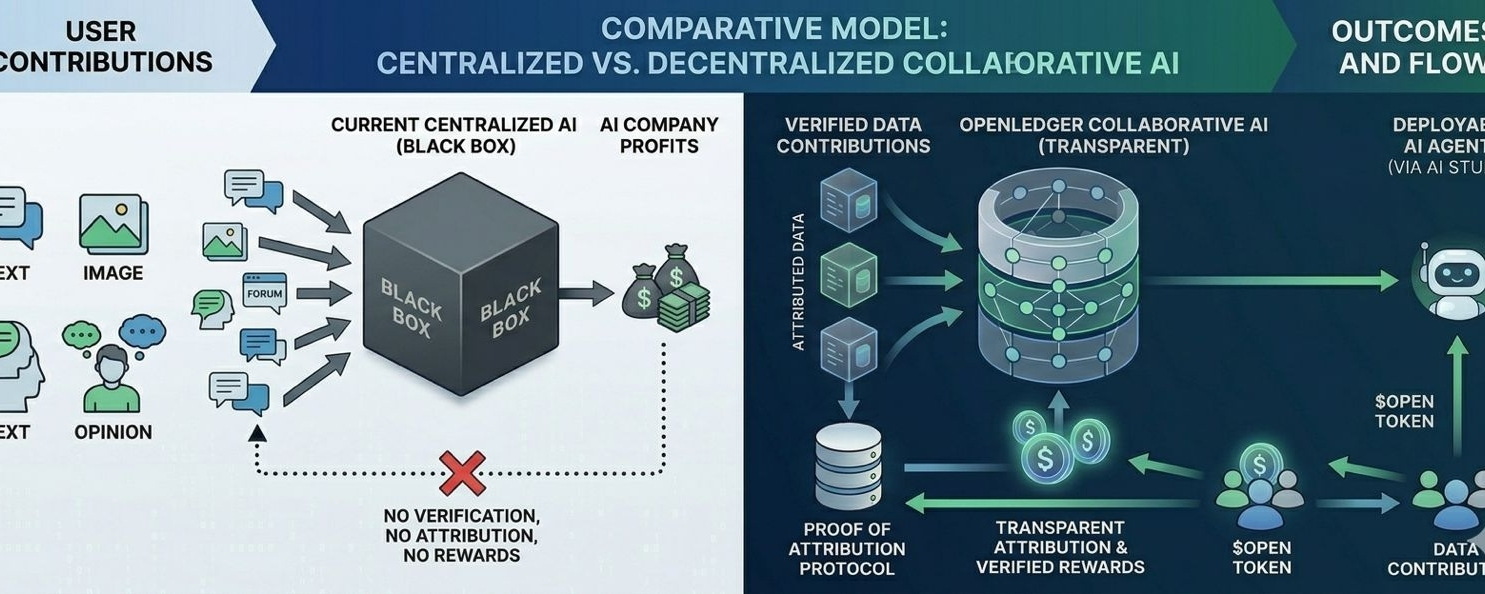
The thing that really caught my attention though was the on-chain verification part for LoRA adapters. Basically right now most AI systems are complete black boxes. You ask something, it gives you an answer, but you have no clue where that answer really came from or what data influenced it. OpenLedger is trying to put that process on-chain so it can actually be verified. In crypto where everybody keeps saying “dont trust, verify,” that actually feels important.
Then I came across something called Proof of Attribution and thats when the whole vision started making more sense to me.
Because if you think about it, humans are feeding AI every single day already. We post online, make comments, answer questions, upload art, share opinions, write guides, argue on forums… all of that eventually becomes training data for AI models. But once those AI companies start making money, regular people get basically nothing back. No credit, no rewards, nothing.
That always felt kinda unfair to me honestly.
OpenLedger’s Proof of Attribution tries to fix that by tracking how data contributes to a model and rewarding people through $OPEN if their data helped train it. So instead of your contributions disappearing forever into some giant AI black box, there’s at least an attempt to track and reward them.
And yeah maybe it’s still early, maybe it’s not perfect yet, but at least someone is actually trying to solve the problem instead of pretending it doesnt exist.
Another thing I found interesting was Datanets. People always focus on the AI models themselves, but good data is what actually makes models smart in the first place. Bad data = bad AI. Simple as that.
Right now the best datasets are mostly controlled by huge companies. Everybody else is fighting over leftovers. Datanets are supposed to let communities collect and prepare their own datasets together so they can train models for their own needs instead of depending on giant corporations all the time. I honestly think that idea could become way more important later than people realize right now.
And then there’s AI Studio, which honestly might be the most important part for normal users like me. From what I understand, it’s supposed to make building and deploying AI agents way easier without needing to understand every technical detail from day one.
That matters because mass adoption never comes from complexity. It happens when regular people finally feel comfortable enough to actually use something. Most people dont wanna learn machine learning infrastructure or spend weeks watching tutorials just to build a simple AI agent.
They just want tools that work.
That’s kinda why OpenLedger stood out to me compared to a lot of the other AI crypto projects I’ve seen lately. A lot of projects right now are just throwing “AI” into their branding because it’s trending. Slap a token onto a chatbot and suddenly its “the future.” We’ve seen this cycle before.
But OpenLedger feels more like infrastructure for a future where AI becomes collaborative instead of fully centralized. And honestly that bigger idea keeps sticking in my head.
If AI is learning from millions of people every single day, shouldn’t the value eventually go back to those people too? Why should only a few companies own everything when the knowledge came from everybody?
That’s the part I think most people are underestimating right now. Attribution.
Today most people dont even realize their data is training AI systems already. But later on I think transparency and attribution are gonna become a huge deal. Users will care about it. Regulators will probably care about it too. And projects building those systems early could end up being way ahead later.
Maybe OpenLedger succeeds, maybe it doesnt. Nobody knows in crypto honestly. But for the first time in a while I found an AI project that actually made me curious instead of making me feel dumb for not understanding all the technical stuff.
And weirdly enough, that alone already feels like progress to me.#OpenLedger $OPEN
