
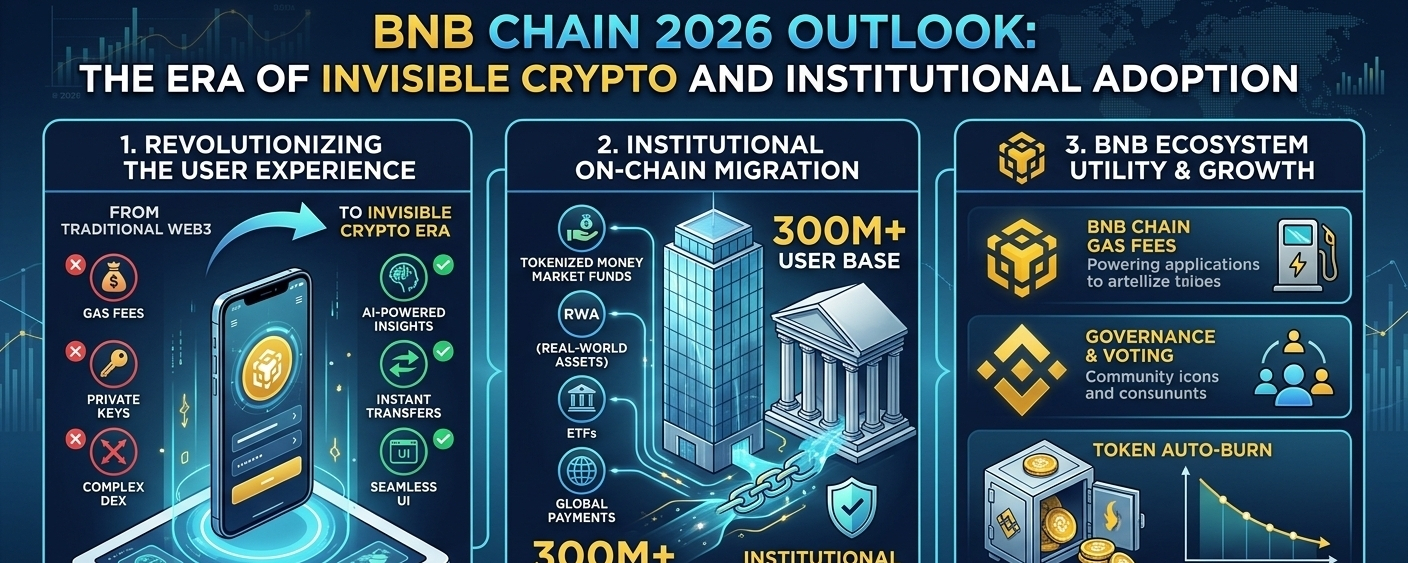
For years, the crypto industry has chased a holy grail: mass adoption. The working theory was that if you taught enough people how to manage private keys, navigate decentralized applications (dApps), and understand gas fees, the world would eventually adopt digital assets.
Binance is shifting that narrative entirely. The trend dominating the ecosystem is "Invisible Crypto"—a push toward a user experience so seamless that everyday users won't even realize they are utilizing blockchain infrastructure.
1. Reaching the 300 Million User Milestone
Binance recently crossed a historic threshold, surpassing 300 million registered global users. To put that in perspective, that represents roughly 1 in 20 adults globally.
This explosive growth isn't coming from hyper-technical traders. It is being driven by a profound transformation in the platform's product pipeline:
AI-Driven UX: Deep integration of machine learning and large language models (LLMs) to handle complex token analysis, fraud prevention, and personalized trading insights in real-time.
Expanded Asset Classes: Moving beyond traditional crypto pairs into pioneering terrain, including gold/silver perpetuals and tokenized traditional stocks (like Tesla perpetuals) driven by strong user demand.
The Rise of AI Agents: On-chain activity is increasingly being managed by autonomous AI agents that handle instant, low-cost stablecoin transfers and automated portfolio balancing.
2. The Institutional On-Chain Migration
The days of major corporations viewing crypto with skepticism are firmly over. There is a record number of institutional players onboarding onto Binance, driven by two major catalysts: regulatory maturity and the explosion of tokenized Real-World Assets (RWAs).
With monumental regulatory frameworks stabilizing globally, institutional confidence has hit an all-time high. Major asset managers are no longer just offering crypto ETFs; they are working directly with Web3 infrastructure to utilize tokenized money market funds as eligible collateral. This bridges traditional finance (TradFi) with 24/7 blockchain liquidity flywheels.
To cater to this massive influx of corporate capital, the platform has scaled out heavy-duty ecosystem offerings, such as Binance Wealth, Binance Prestige, and advanced tri-party custodial arrangements designed to mitigate counterparty risk.
3. BNB Ecosystem Resilience and the "Auto-Burn"
At the center of this ecosystem lies the BNB token. While short-term macroeconomic pressures and geopolitical factors continue to bring volatility to the broader crypto market, BNB's fundamental utility remains its strongest anchor.
Unlike speculative tokens, BNB functions as the primary economic fuel for the high-throughput BNB Chain network. Its long-term valuation model relies heavily on its automated Auto-Burn Mechanism. By systematically destroying a portion of the circulating supply relative to overall network volume, the asset builds an ecosystem-backed deflationary pressure that contrasts sharply with inflationary fiat systems.
The Takeaway: The current state of Binance reflects a maturing industry. The focus has decisively shifted from clunky, frontier-style technology to an institutional-grade, AI-assisted super-app. Mass adoption won't happen because everyone becomes a blockchain developer—it will happen because the blockchain becomes invisible.
For a deeper dive into these major milestones, institutional trends, and an official breakdown of the platform's vision for the future, check out this comprehensive outlook from leadership:
Richard Teng's 2026 Binance Outlook
This interview features the Binance Co-CEO unpacking the macro factors, regional regulations, and specific product pipelines driving the platform's 300-million-user ecosystem.$BTC
