
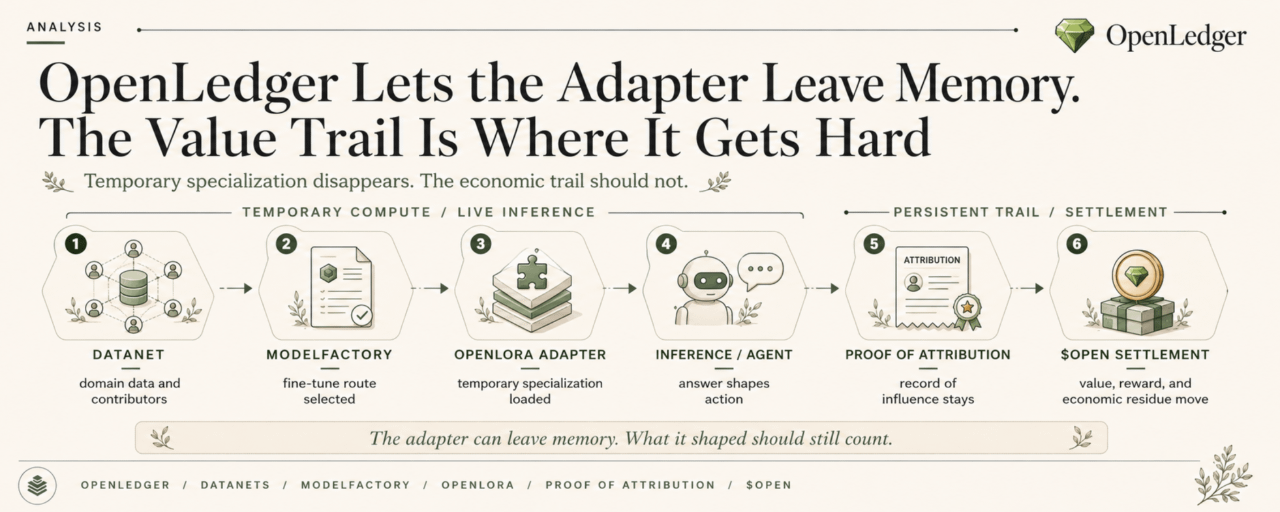
What makes OpenLedger (@OpenLedger ) interesting to me is not just that an agent can help before a trade. Plenty of tools try to do that. The part I actually care about is what happens after the trade is already done, when the position is closed, the candle has printed, and one question refuses to leave:
What exactly made this OpenLedger agent trust the setup?
That is where most AI trading tools become useless. During the trade, they can look smart. Clean interface, strong signal, a confident summary, maybe some urgency mixed in. But once the trade is over, the whole thing usually collapses into vibes. You get the outcome, but not the trail behind the outcome.
OpenLedger feels different when I look at it through that post-trade moment.
If an OpenLedger-powered trading agent gives a setup, the useful part should not end at “bullish” or “bearish.” The useful part is whether the system can still point back to what fed that confidence. Not in a vague way. In a usable way.
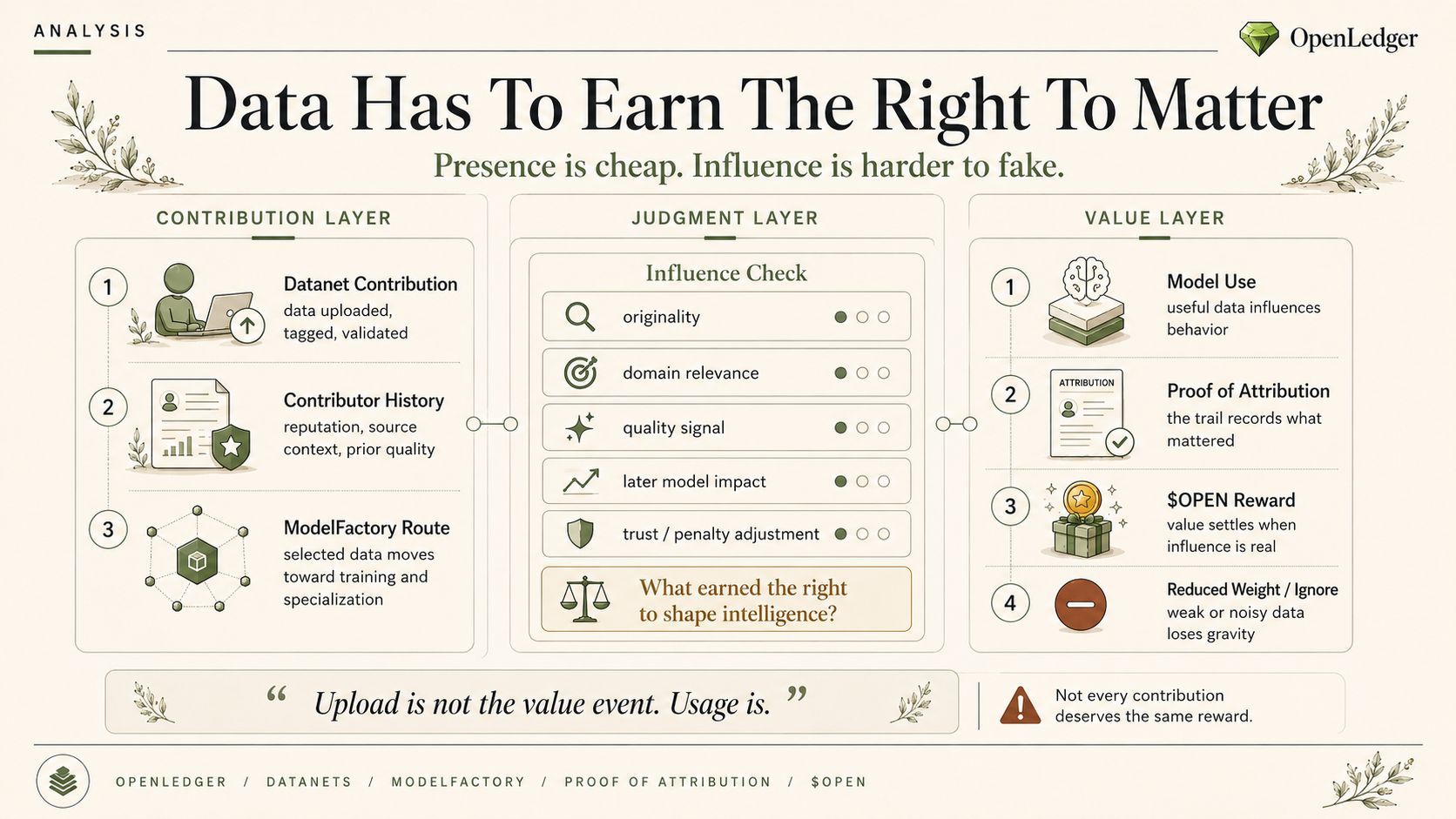
That is why Datanets matter here.
For a trader, Datanets are not some abstract AI feature. They decide whether the agent was thinking with real market memory or random market noise. If the model was built on focused trading context, token flows, liquidity behavior, DeFi activity, vault signals, protocol updates, then the post-trade review means something. If the memory came from recycled chatter and messy sentiment, then the review is just a prettier version of the same confusion.
Then Proof of Attribution becomes the real core of the whole story.
After the trade, I do not only want to know that the agent liked the setup. I want to know why it liked it. Which signal mattered most? Was the confidence coming from token movement? Was vault behavior overweighted? Did protocol news shift the model? Did contributor research influence the final read? Proof of Attribution is what makes that question serious, because it turns the output into something that can be traced instead of something that only has to sound convincing.
That matters even more once OpenLedger moves deeper into agent workflows. The more Octoclaw and related agent tooling push AI closer to real execution, the less acceptable it becomes for the reasoning to stay hidden. Commentary is cheap. Action is not. If an agent is moving closer to real DeFi rails and trader workflows, then the ability to inspect what shaped the decision becomes part of the product, not a bonus feature.
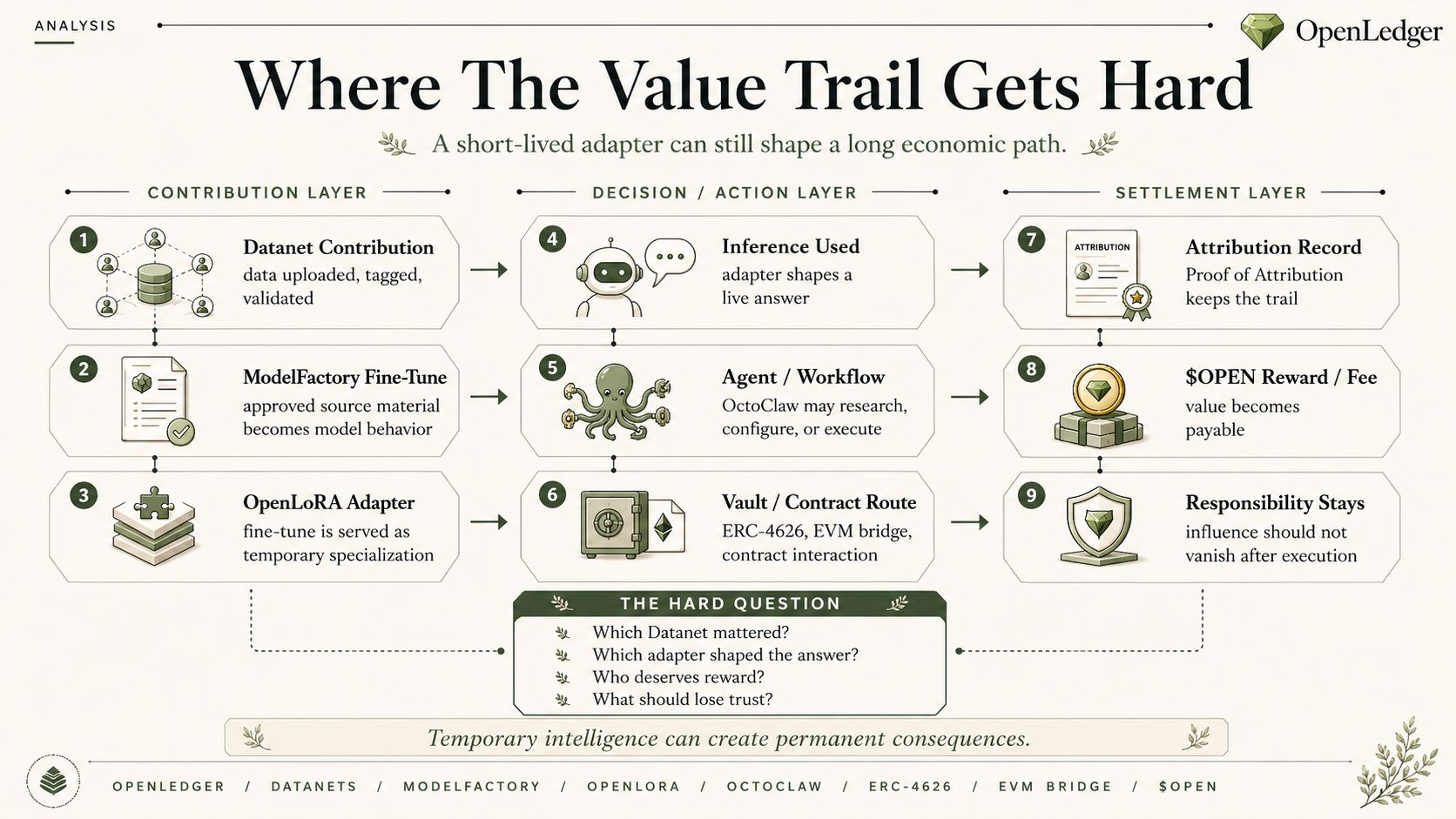
That is also why OpenLedger only gets more interesting to me if this becomes real usage. Not because “AI” is a hot label. Because if trader agents on OpenLedger are using stronger data memory, leaving attribution trails, and becoming useful enough that people actually trust the system after the trade, then the network starts earning relevance through behavior, not narrative.
A lot of AI tools want to help traders enter.
What I think OpenLedger can make more valuable is the moment after the trade, when confidence is no longer enough and the only thing that matters is whether the system can show its work.
For traders, that is not a small feature.
That is trust.