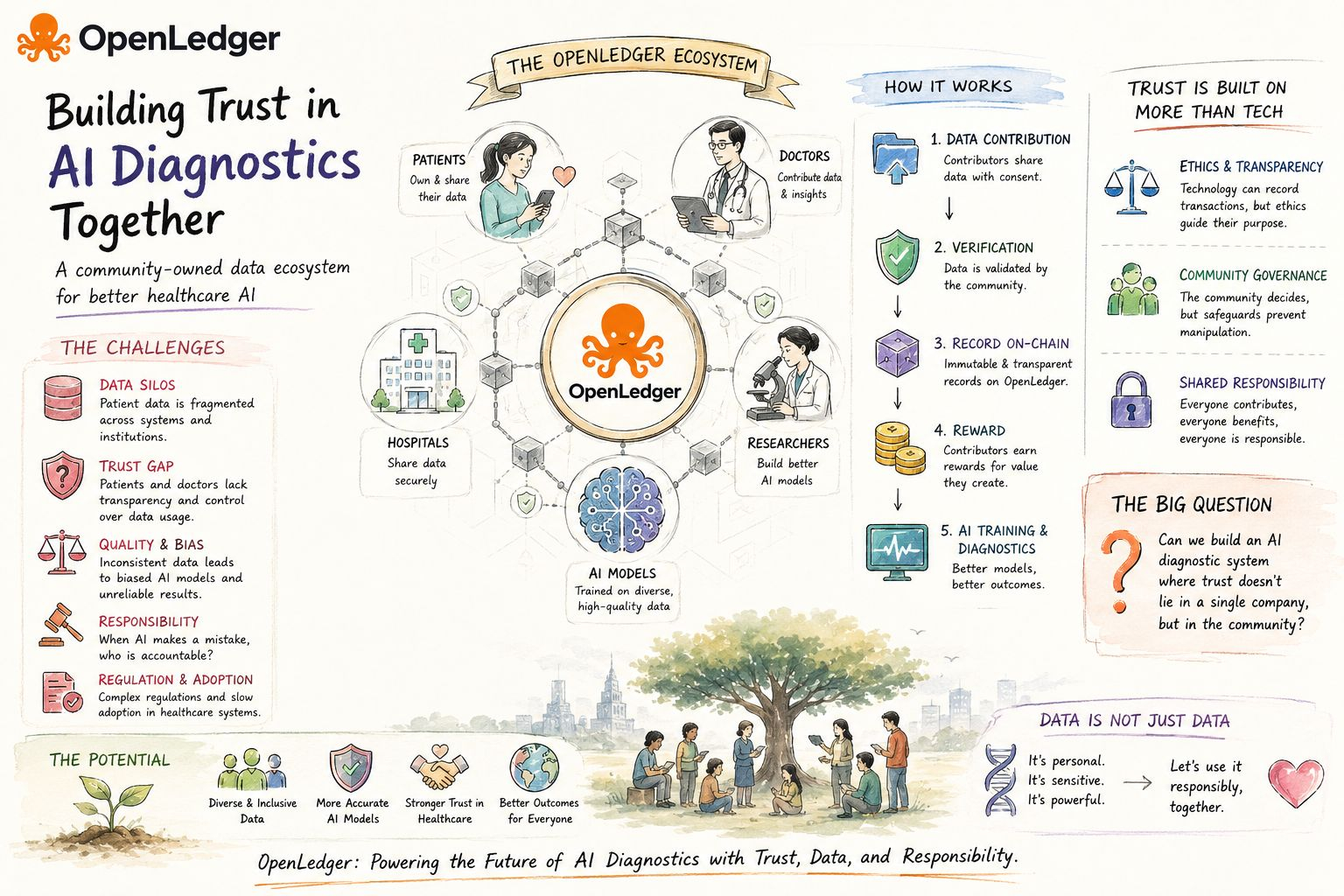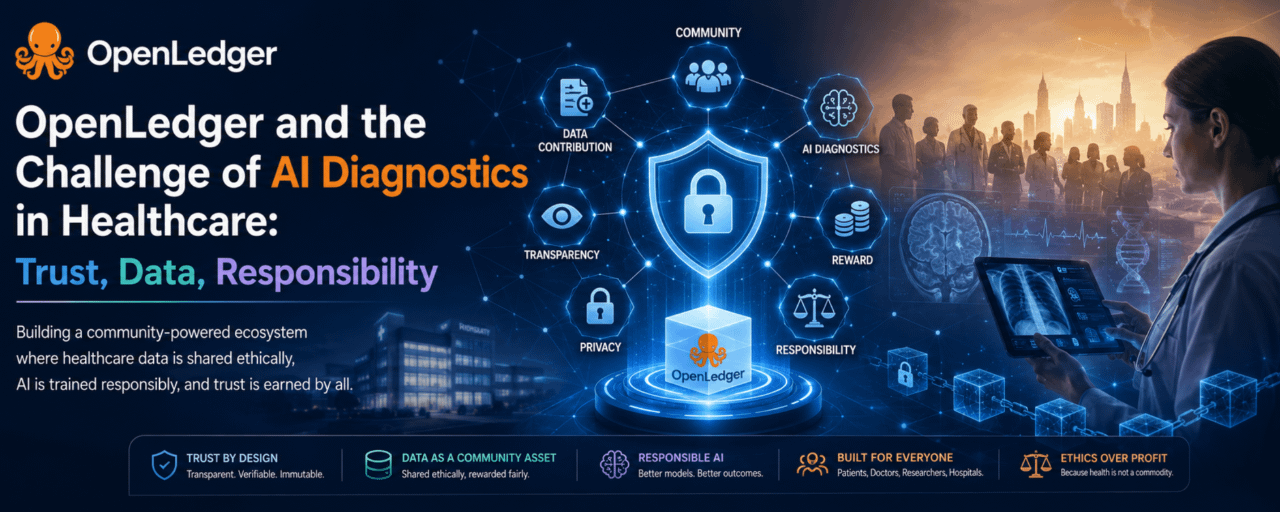
I’ve been thinking about the application of OpenLedger in healthcare, specifically AI diagnostics, for a while now. At first, it felt quite familiar, almost like just adding another blockchain layer to record medical data, nothing too new. I mean, there have already been plenty of projects talking about “data transparency” and “secure sharing.” But when I looked a bit closer… it seems they’re trying to do something different: not just storing, but turning data into a kind of community asset, rewarded, verified, and then used to train specialized AI models.
To be honest, in healthcare the problem isn’t the lack of data. Patient records, test results, medical imaging… all of that exists. The issue is that data is fragmented, locked inside hospital systems, and people rarely trust how it’s being used. What’s interesting is that OpenLedger wants to solve this trust gap with blockchain: every data contribution is recorded, immutable, and contributors get rewarded. Sounds fine. But not necessarily. Because if you think more carefully, community-driven AI diagnostics could open a new path. Instead of just a few big companies training models on their private datasets, now you could have a network where doctors, small hospitals, even patients contribute. That means the model could be more diverse, less biased. But then, who ensures data quality? A miscalibrated X-ray, an incomplete medical record… if fed into the system, blockchain can record it, but AI will learn it wrong. And then, who takes responsibility?
Another point is power. Technology is never neutral. If data is recorded on blockchain, then who defines “valid data”? Who has the right to reject contributions? If the answer is a group of validators, then we’re back to centralized power. If the answer is community voting, then manipulation becomes possible. The issue lies in trust: patients trust doctors, doctors trust systems, systems trust blockchain… but this chain of trust can break easily.
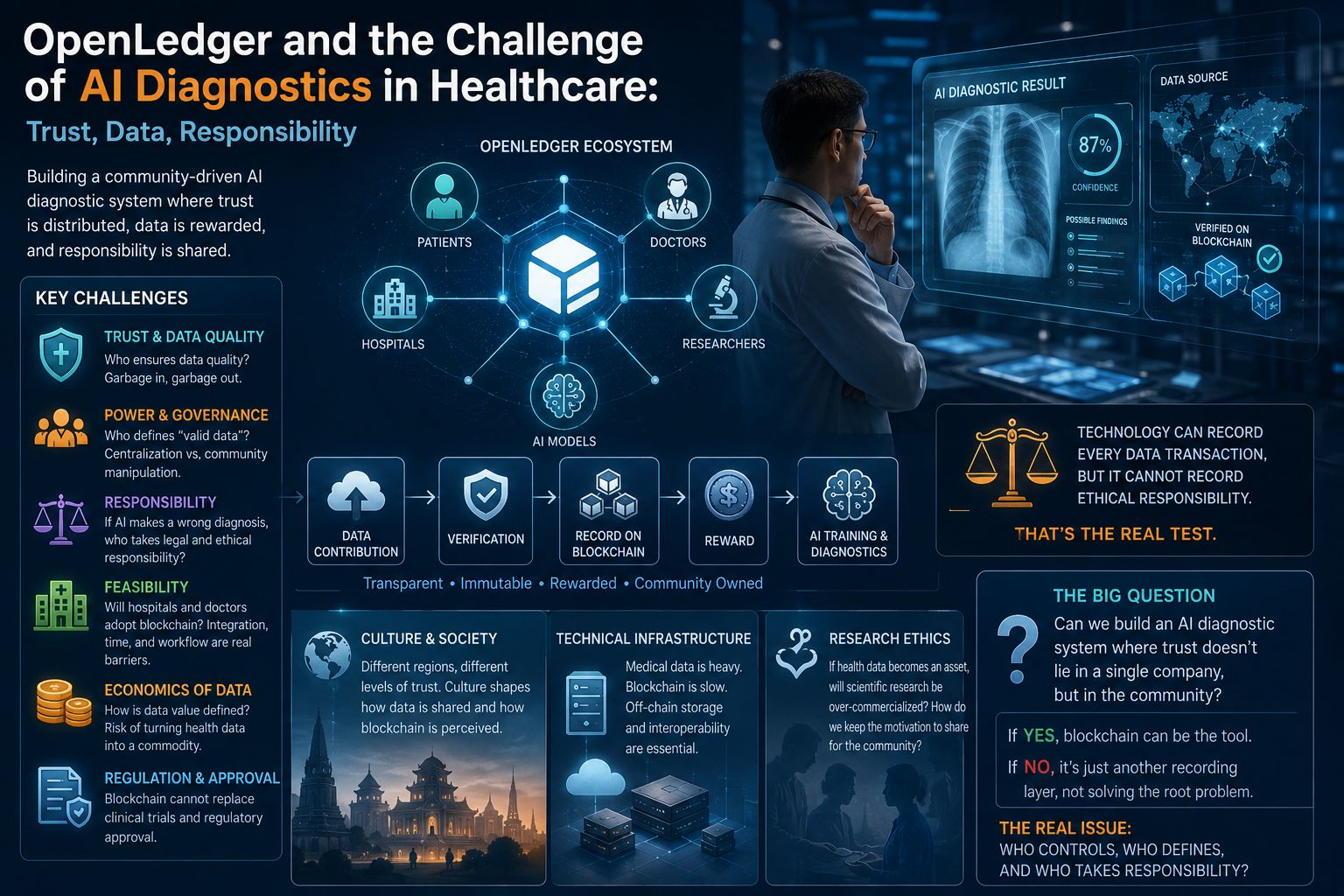
What’s also interesting is the long-term implication. If AI diagnostics are trained on community data, then diagnostic results themselves become a kind of “shared ownership.” So will hospitals accept using that model instead of commercial ones? And if errors occur, who bears legal responsibility? Technology can record every data transaction, but it cannot record ethical responsibility. That’s the real test.
One thing I haven’t mentioned much is feasibility. Honestly, blockchain looks neat on paper, but hospitals already have their own management systems, often complex and conservative. Will they be willing to integrate a new blockchain layer? And doctors, already overloaded, do they have time to “contribute data”? What about patients—will they agree to share health data in exchange for tokens? Sounds reasonable, but in practice it’s tough.
Then comes the economics of data. If medical data becomes an asset, how is value defined? Is a rare medical record worth more than a common one? If patients are rewarded with tokens, there’s a risk of turning health data into a commodity, and then the motivation to share shifts from public health to personal gain. That could distort the system.
And finally, regulation. AI diagnostics can’t rely on technology alone. It must be validated, comply with medical standards, and be approved by regulators. Blockchain can record every transaction, but it cannot replace clinical trials. Without official approval, even the most transparent model will struggle to be used in practice.
But there’s another layer: culture and society. In the US, people may accept AI diagnostic trials faster, but in Vietnam or Europe, hesitation could be stronger. Culture shapes how data is shared and how blockchain is perceived. And then, the technical side can’t be ignored: medical data is heavy, blockchain is slow, without off-chain storage solutions it’s hardly feasible. Finally, research ethics: if health data becomes an asset, will scientific research be over-commercialized, and will that reduce the motivation to share for the sake of community?
Honestly, I don’t think OpenLedger will immediately change healthcare. But it raises a big question: can we build an AI diagnostic system where trust doesn’t lie in a single company, but in the community? If yes, then blockchain could be the tool. If not, then it’s just another recording layer, not solving the root problem. The real issue lies in who controls, who defines, and ultimately, who takes responsibility. The rest depends on how society chooses to trust this technology. That’s the real test.