
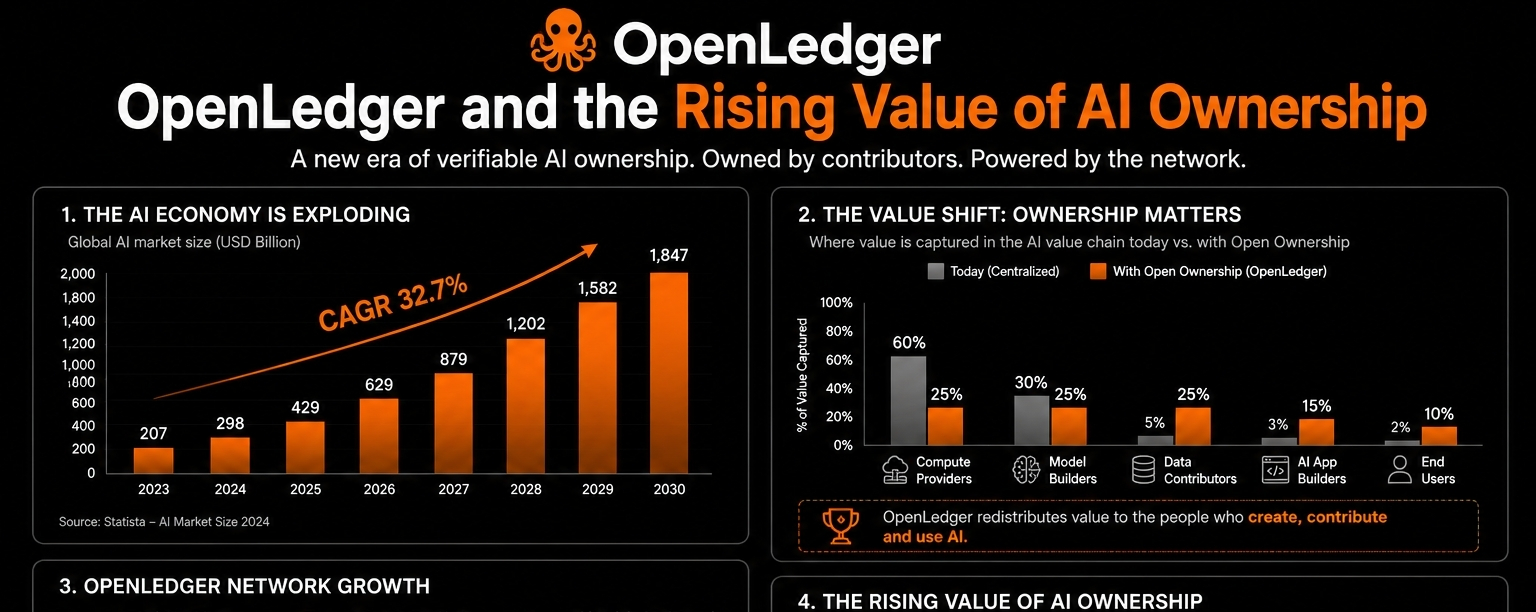
OpenLedger feels like one of those projects that arrived quietly while everyone else was busy chasing louder narratives. At first glance it looks like another AI blockchain trying to attach itself to the future, but the more time people spend understanding it, the more it starts to feel connected to a deeper problem that has been growing across the internet for years. Artificial intelligence is becoming more powerful every month, but the ownership around it is becoming smaller and smaller. A few large systems control the infrastructure, the models, the computing power, and most of the value being created. Meanwhile millions of people are contributing data, ideas, creativity, and behavior every single day without really owning any part of the machine they are helping build.
That imbalance is becoming harder to ignore now.
OpenLedger is trying to build around the idea that data, models, and AI agents should not only exist as resources for giant companies. They are treating intelligence almost like a living economy where contributors deserve visibility and participation instead of silent extraction. That emotional difference changes how the project feels compared to many others entering the AI space right now.
For a long time the internet trained people to give everything away without thinking much about it. Every click, search, conversation, preference, and habit slowly became valuable information feeding larger systems in the background. Most users never realized how important their data actually was because the process felt invisible. Artificial intelligence changed that perception. Suddenly people understand that information is not just information anymore. It trains systems. It improves models. It creates automation. It becomes fuel for billion dollar industries.
OpenLedger seems to understand that shift very clearly.
The project focuses heavily on creating liquidity around data, models, and agents because they believe the future digital economy will revolve around intelligence itself. That sounds futuristic at first, but honestly we are already watching it happen in real time. AI is moving into education, content creation, software development, automation, research, customer support, finance, gaming, and almost every online environment imaginable. The systems becoming most valuable are the ones capable of learning, adapting, and generating output at scale.
The problem is that most of this value currently flows upward into centralized structures.
That is where OpenLedger is trying to position itself differently. Instead of building closed environments where only a few players control the network, they are exploring open infrastructure where contributors can potentially monetize the intelligence economy they help create. Data providers, model builders, and developers are no longer treated like invisible background resources. The project wants participation to become measurable and economically active.
There is something emotionally important about that idea because many people already feel disconnected from the technology shaping their future. AI excites people, but it also creates quiet anxiety. A lot of individuals look at the speed of artificial intelligence growth and wonder where ordinary users fit into all of it. They see giant corporations becoming stronger while smaller creators struggle to maintain ownership over their work and ideas.
OpenLedger feels like a response to that fear.
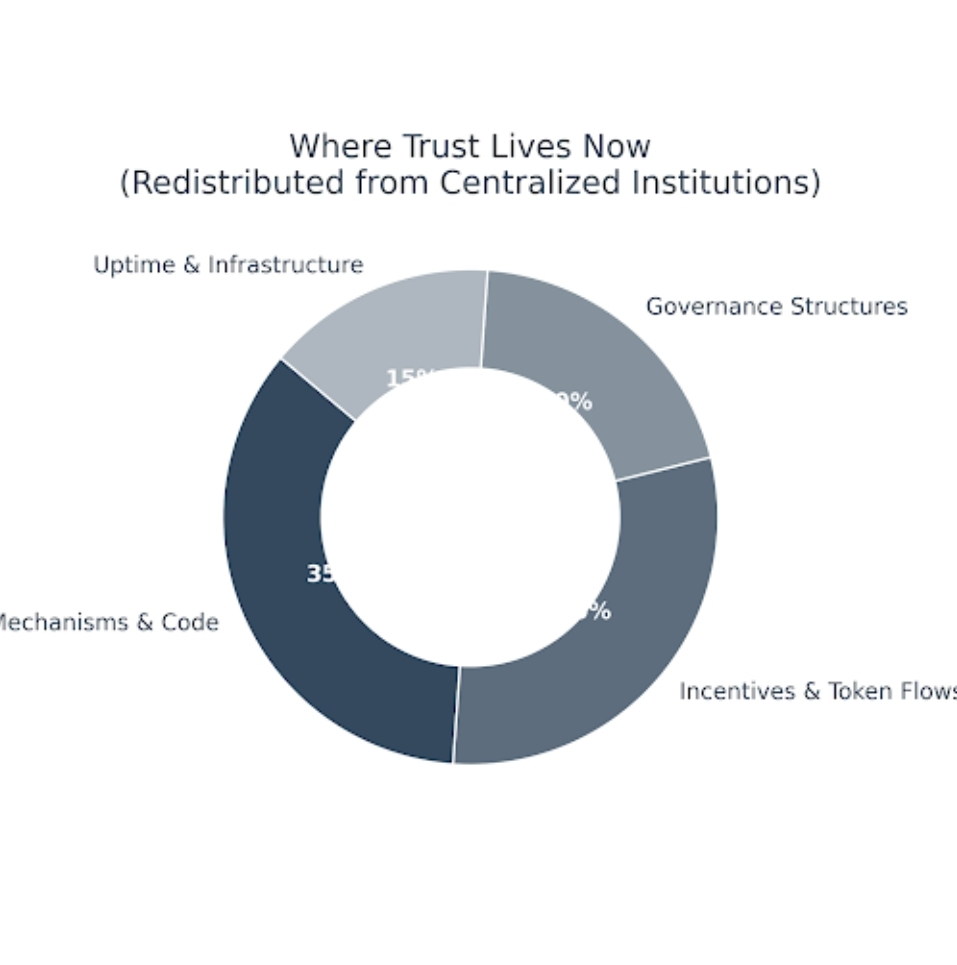
The blockchain side of the project matters because blockchains were originally built around transparency and ownership. Artificial intelligence revolves around intelligence generation and automation. OpenLedger is combining those worlds in a way that tries to make participation visible instead of hidden. If someone contributes useful data, develops a valuable model, or builds an effective AI agent, the network aims to create systems where that contribution can carry economic value openly rather than disappearing inside private platforms.
The focus on AI agents is especially interesting because agents are becoming one of the fastest growing discussions in the AI sector. We are moving beyond simple chat systems now. Agents can complete tasks, automate workflows, interact with environments, make decisions, and operate with increasing independence. As those systems evolve, ownership questions become impossible to avoid.
Who owns an AI agent.
Who receives rewards when it generates value.
How do developers maintain rights over what they create.
How do open ecosystems compete against centralized giants with massive resources.
OpenLedger is trying to build infrastructure around those questions before the market fully matures. That timing could become important later because once technological systems become deeply centralized, changing them becomes extremely difficult.
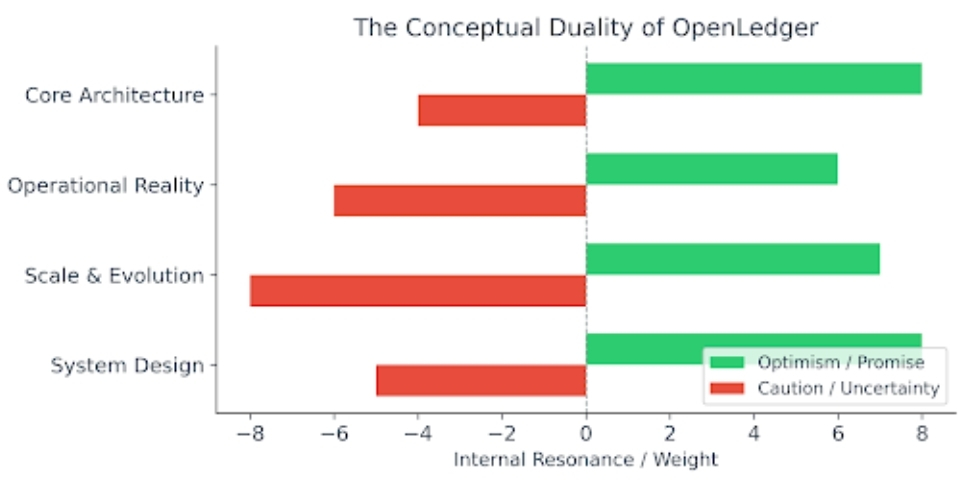
At the same time, the project is entering one of the hardest sectors in technology today. AI infrastructure is complicated. Blockchain infrastructure is complicated. Combining both creates even bigger challenges around scalability, governance, incentives, adoption, and trust. A strong narrative alone is never enough to sustain long term ecosystems. OpenLedger will eventually need developers building real applications, communities contributing real activity, and systems capable of functioning beyond speculation cycles.
Still, there is something about the project that feels connected to a larger cultural shift happening online. More people are questioning who owns digital value. More creators are becoming frustrated with platforms extracting attention and creativity without returning meaningful ownership. More developers are searching for open systems instead of closed corporate environments. Artificial intelligence is intensifying all of those conversations at once.
That is why OpenLedger feels bigger than just another blockchain narrative.
The project is stepping into a future where intelligence itself may become one of the world’s most important economic resources. Whoever controls intelligence infrastructure could eventually influence communication, automation, creativity, decision making, and digital economies on a massive scale. OpenLedger appears to believe that future should remain more open before concentration becomes impossible to reverse.
There is also a realism surrounding the project that makes it feel more grounded. They are not pretending AI will slow down. They are accepting that artificial intelligence will continue spreading into every part of online life. The real question is whether ordinary contributors will still have ownership inside that system or whether value will continue concentrating into smaller circles of power.
That question sits underneath almost everything OpenLedger is trying to build.
And honestly, it connects with something deeply human. People want to feel included in the future they are helping create. They do not want to spend years feeding systems that eventually replace or ignore them completely. They want transparency. They want recognition. They want participation to matter again.
OpenLedger is trying to build around those emotions while the AI economy is still taking shape.
Whether the project fully succeeds or not, it is already participating in one of the most important conversations happening in technology right now. The future of AI is not only about intelligence. It is about ownership, incentives, openness, and who benefits from the systems now becoming powerful enough to reshape digital life itself.
That is why projects like OpenLedger continue attracting attention quietly even without constant noise. Underneath the technical language, people are responding to the possibility of a different structure for the internet economy. One where intelligence does not only belong to the biggest players. One where contributors are not invisible. One where data, creativity, and participation can finally carry transparent value instead of disappearing silently into centralized systems.
And if artificial intelligence keeps growing at the pace we are seeing now, those ideas may eventually matter far more than most people realize today.