
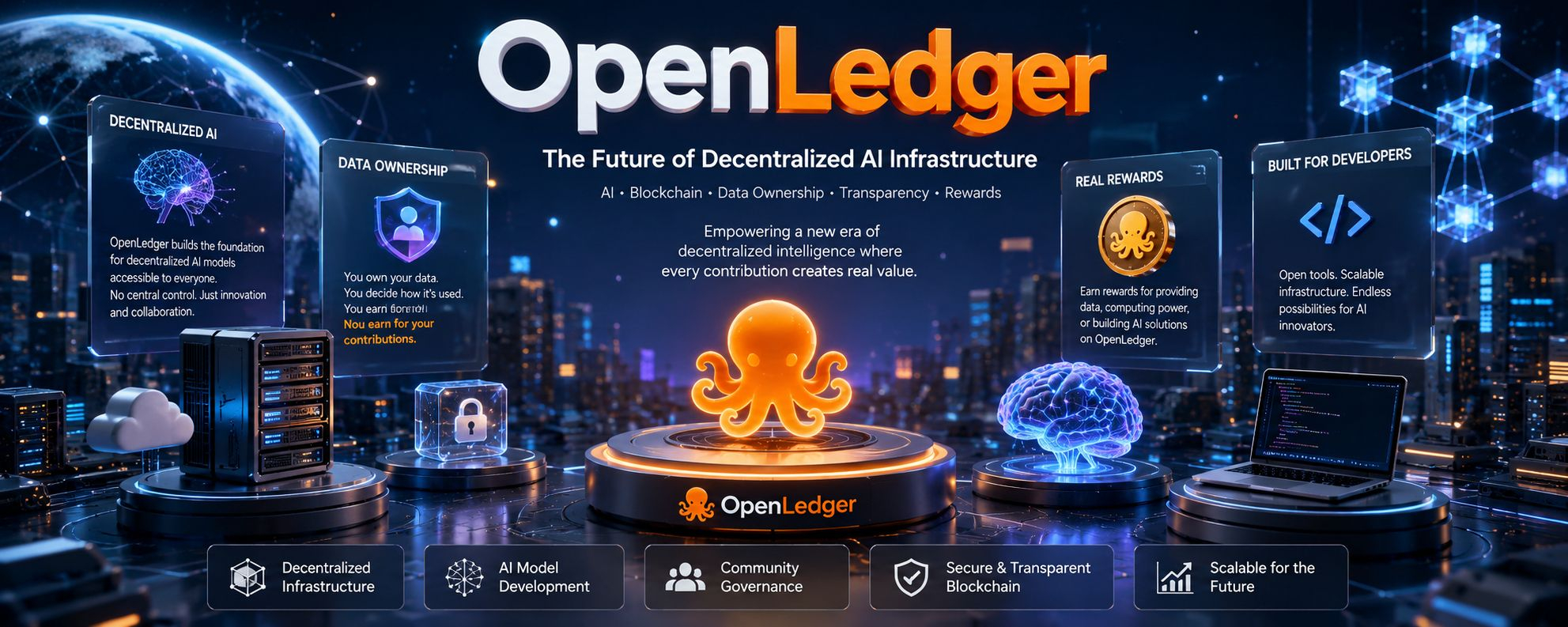
The world of technology is changing faster than ever, and I think two industries are leading this transformation more than anything else right now: artificial intelligence and blockchain. Over the last few years, I’ve seen hundreds of crypto projects trying to combine these sectors, but most of them only focus on hype instead of real innovation. That’s why OpenLedger feels different to me. It isn’t just trying to ride the AI trend. It’s building infrastructure that could actually become useful in the future digital economy.
What immediately caught my attention about OpenLedger is its focus on decentralized AI. Today, most AI systems are controlled by large centralized corporations. They collect user data, train powerful models, and generate enormous profits while ordinary users rarely benefit from the value they create. I think this imbalance is becoming one of the biggest problems in the AI industry. OpenLedger is trying to change that model by creating an ecosystem where people can contribute data, computing resources, and development support while still maintaining ownership and transparency.
I believe this idea matters because data has become one of the most valuable assets in the modern world. Every day, millions of users generate information through apps, websites, and digital platforms. Big tech companies use this information to improve AI systems, but users usually don’t receive anything in return. OpenLedger’s decentralized approach introduces a more community-driven structure where contributors may actually benefit from the ecosystem they help build. In my opinion, that creates a fairer digital economy.
Another thing I appreciate about OpenLedger is how it combines blockchain technology with AI infrastructure in a practical way. Sometimes blockchain projects force unnecessary utility into their ecosystems just to sound innovative. OpenLedger feels more strategic. Blockchain technology naturally supports transparency, verification, and decentralized participation, which are all important for AI systems that rely heavily on data integrity and trust.
I think transparency is becoming increasingly important as AI adoption grows globally. People are becoming more concerned about how companies collect data and how AI models are trained. OpenLedger’s blockchain-powered structure can help create accountability because contributions and transactions can be verified on-chain. That level of openness could become extremely valuable in the future, especially as governments begin introducing stricter AI regulations.
One of the biggest reasons OpenLedger is gaining attention right now is because the market narrative around AI has become incredibly strong. Investors are no longer looking only for meme coins or short-term speculation. They’re searching for projects with long-term utility and real-world potential. OpenLedger sits directly at the intersection of two major technological revolutions: AI and Web3. I think that positioning alone gives the project significant long-term potential.
I’ve also noticed that decentralized AI is becoming one of the most discussed sectors in crypto communities. Developers want alternatives to centralized AI platforms because they don’t want innovation controlled entirely by a few corporations. OpenLedger appears to understand this shift very well. Its ecosystem is designed to support developers, contributors, and users in a more open environment. That could encourage innovation from smaller teams that normally wouldn’t have access to expensive AI infrastructure.
From my perspective, timing is another major advantage for OpenLedger. The crypto industry is slowly moving back toward utility-focused ecosystems after years of speculative cycles. Investors now pay more attention to infrastructure, scalability, and adoption potential. OpenLedger’s focus on AI infrastructure makes it feel more sustainable compared to projects built purely around market hype.
I also think the future applications for OpenLedger could become massive if development continues successfully. AI-powered decentralized applications may eventually need secure networks for computation, data sharing, and intelligent automation. OpenLedger is positioning itself as part of that future infrastructure. If AI integration expands across industries like healthcare, finance, gaming, education, and content creation, decentralized systems could become increasingly important.
Another interesting aspect is community participation. I’ve always believed the strongest blockchain ecosystems are the ones where communities feel directly connected to growth and governance. OpenLedger appears to encourage participation instead of relying solely on centralized control. That creates stronger loyalty because people feel like stakeholders rather than just users or investors.
The economic opportunities inside the ecosystem could also become significant over time. Contributors who provide useful datasets or computational resources may benefit from reward systems connected to the network. I think this model represents the broader evolution of Web3, where users actively participate in ecosystems instead of simply consuming products created by corporations.
Of course, I don’t think the journey will be easy. The AI industry is highly competitive, and blockchain scalability still remains a challenge for many projects. OpenLedger will need strong execution, continuous innovation, and developer adoption to maintain momentum. Competition from other decentralized AI projects will also increase as the market grows. But honestly, projects with real utility and strong infrastructure usually have better survival potential during difficult market conditions.
What I personally find most impressive is OpenLedger’s long-term vision. It doesn’t look like a project built only for temporary excitement. Instead, it feels like an attempt to build foundational infrastructure for the next generation of AI-powered decentralized systems. That’s a much larger ambition than simply launching another crypto token.
As artificial intelligence becomes more integrated into daily life, I think decentralized ecosystems will become increasingly important. People want transparency, ownership, security, and fairness in digital systems. OpenLedger is trying to combine all of those elements into one ecosystem. That vision aligns strongly with where I believe technology is heading over the next decade.
In the end, I see OpenLedger as more than just another blockchain platform. To me, it represents a growing movement toward decentralized intelligence and user-owned digital ecosystems. The project still has challenges ahead, but its direction feels relevant, modern, and future-focused. If adoption continues and the team executes properly, I believe OpenLedger could become one of the more important names in the decentralized AI industry in the years ahead.