
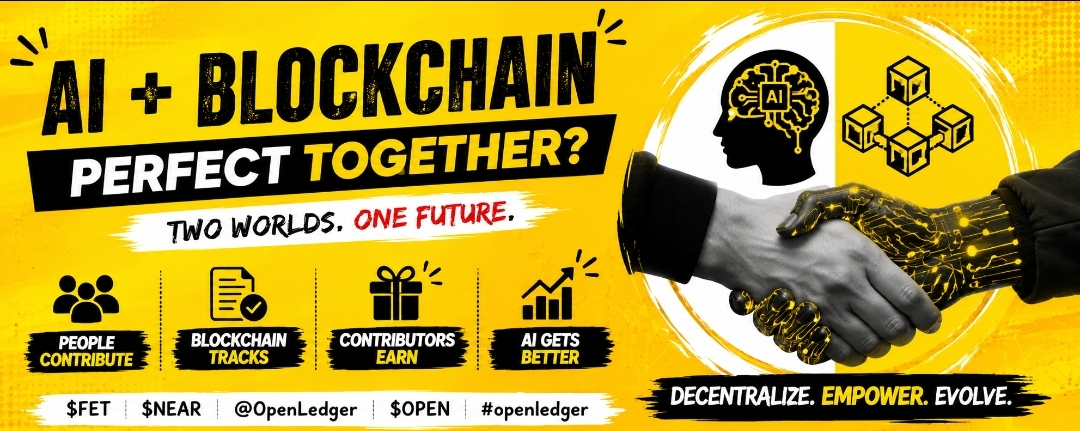
A few months ago I used to think that combining AI and blockchain was mostly a narrative. Every cycle in crypto creates new buzzwords, and sometimes different trends get pushed together even when they do not naturally fit. But after spending more time looking into decentralized AI ideas, my view started changing.
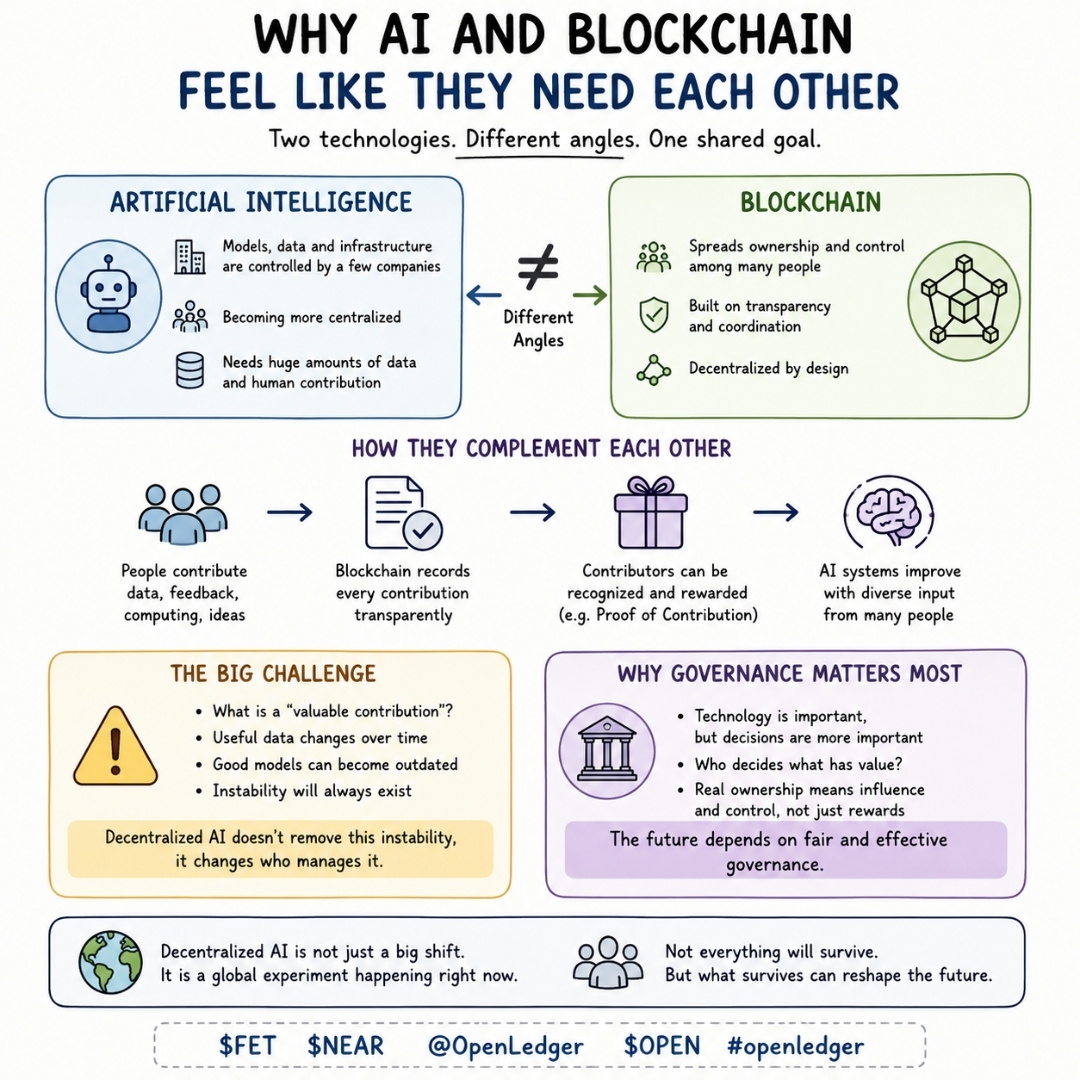
AI is growing fast, but most of that growth is happening under a small number of companies. The biggest models, huge amounts of data, and expensive infrastructure are usually controlled by a few players. That helps development move quickly, but it also means a lot of influence sits in one place.
Blockchain came from a completely different mindset. The whole idea was to avoid putting too much control in a single direction. Instead of depending on one group, it tried to spread ownership and participation across a larger network of people.
That is where things start becoming interesting.
AI needs constant input to keep improving. It needs data, feedback, testing, and people helping shape better outcomes. The question is not only how to collect those things, but also how to recognize who actually contributed.
Still, this does not magically fix everything. The difficult part is deciding what real value looks like. Useful data today may not be useful six months later. Good systems can lose relevance faster than people expect.
Maybe that is why the bigger conversation is no longer just about technology. The real challenge could be deciding who gets a voice, who gets influence, and who gets ownership as these systems continue to grow.

