

2 AM, I stared at that glaring red exclamation mark in my WeChat chat window and let out a deep sigh. Three months ago, I took on a freelance gig, burning the midnight oil to deliver the code, only to have the final payment dragged out until today. Their excuses ranged from 'finance is on leave' to 'the company account is limited', and finally, they just straight-up blocked me. Is it worth going to court over this measly 8k? The time cost is just not worth it. In that moment, I suddenly found the concept of 'commitment' utterly absurd— in the real world, the so-called spirit of contracts relies entirely on the other party's whim. Once they decide to play hardball, the chat logs you hold are laughably weak.
Thinking carefully, the essence of commercial operations in human society over the past few thousand years has been to patch up 'commitments.' Because human memory fades and greed exists, we've invented paper contracts marked with fingerprints, established banks as intermediaries charging fees, and even supported a massive judicial notarization system. The only purpose of these complex man-made institutions is to prevent someone from flipping the table and refusing to acknowledge debts. However, this system is extremely cumbersome, heavily reliant on individual moral standards and institutional efficiency. Once morals decline or institutions pass the buck, your legal rights can instantly turn into worthless paper.
In recent years, the blockchain world has provided a brutally cold yet exceptionally attractive solution. Back in the day, $BTC emerged, using exquisite cryptography to solve the trust issue of peer-to-peer assets, showing everyone that international transfers could happen without banks. Then came $ETH with smart contracts, completely transforming 'static ledgers' into 'dynamic contracts.' The logic of smart contracts is extremely simple and brutal: it’s like an unflagging cyber vending machine; as long as you put in a coin (triggered the preset conditions), a soda will definitely drop (automatically executes the result). No one can intervene in between, and no finance can make excuses to take a day off.
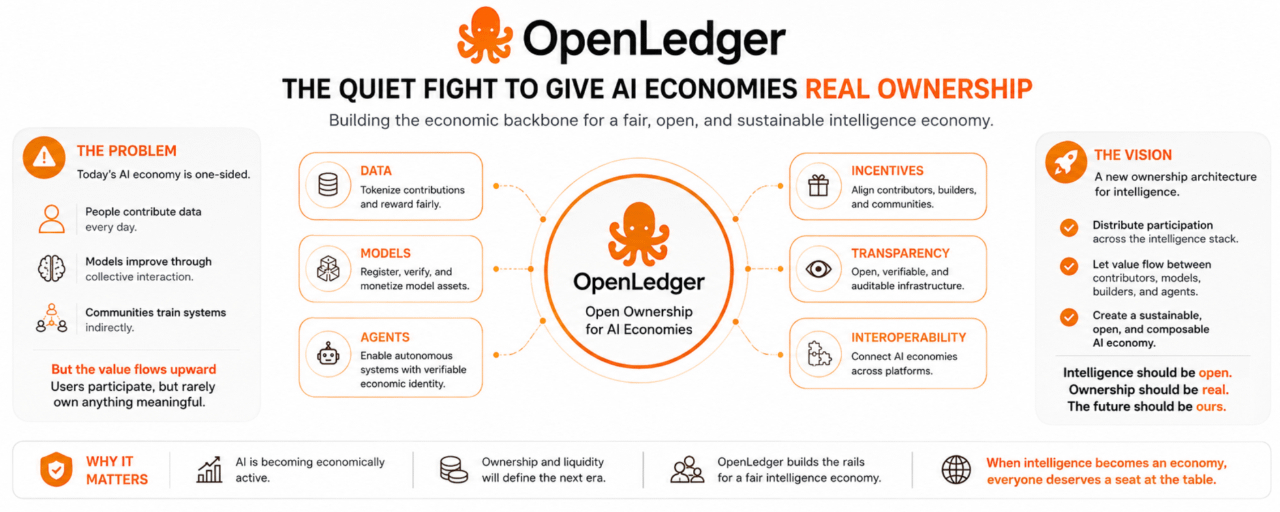
The project I've been digging into lately is @OpenLedger which precisely applies the logic of a vending machine to the pain point of AI data ownership. We all know that high-quality data is in extreme demand for training large models, but traditional methods often involve big companies scavenging user data. The core strategy of OpenLedger is to tightly bind your data provision actions with the rewards you earn through smart contracts. You feed the cleaned data to the model, and as soon as the model uses your data to create value, the contract triggers instantly, automatically completing the revenue-sharing settlement.
At the end of last month, I decided to give it a try and ran nodes in their ecosystem for over two weeks, casually uploading a batch of open-source cleaned text in a vertical field. By this Monday, I opened my digital wallet and found a nice surprise: a system-automated transfer of $OPEN token rewards quietly waiting for me. The entire process was so smooth that it felt a bit unsettling: I didn't have to fill out reimbursement forms, didn't have to pester admins in the community, and didn't even need to speculate on whether the project owner's mood would be good today. #OpenLedger #bnbguy #TrumpSaysIranDealLargelyNegotiated #BitcoinRisesOnIranPeaceDeal @OpenLedger