

today during lunch break at the office, i was just sitting quietly with my phone after finishing most of my work…
nothing serious honestly.
i was half scrolling, half resting.
a few people near me were talking about AI again.
one guy was saying: eventually only the biggest AI companies will survive.
another person disagreed immediately.
he said something like: that only works if people stop caring where intelligence actually comes from.
and honestly that line stayed in my head the entire day.
because the more i look at AI lately, the more it feels like the industry is slowly moving toward a problem most people still underestimate badly:
what happens when intelligence itself becomes economically valuable?
a few years ago AI mostly felt experimental.
fun tools.
chatbots.
image generators.
automation demos.
now it feels completely different.
AI is slowly becoming infrastructure.
companies are integrating it into workflows.
financial systems are testing it.
research depends on it more every month.
governments are discussing regulation around it.
search engines are changing because of it.
and honestly once something becomes infrastructure, the conversation changes completely.
because infrastructure eventually forces uncomfortable questions.
where did the intelligence come from?
who contributed the data
who shaped the outputs
who receives value when systems scale
who becomes responsible when something goes wrong
the strange part is most people still talk about AI like it’s only a race for bigger models.
more compute.
more parameters.
faster outputs.
but lately i keep feeling like the real long-term battle may not be model size at all.
it may be attribution.
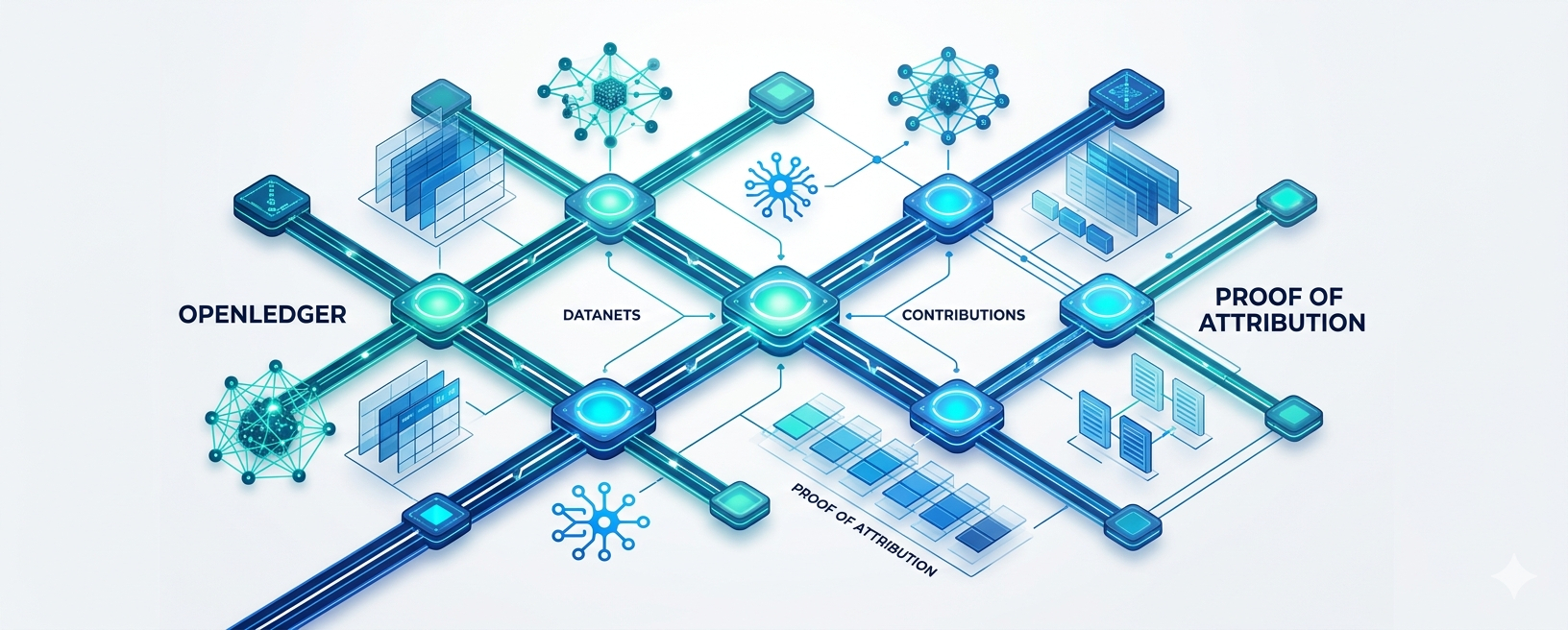
and maybe that’s why @OpenLedger started making much more sense to me recently.
because OpenLedger doesn’t really feel focused on building another AI chatbot.
it feels more focused on building infrastructure around intelligence itself: attribution, coordination, contribution tracking, transparent participation, decentralized scaling.
that’s a very different idea.
at first i honestly thought centralized AI companies would dominate forever.
they already control: cloud infrastructure,
training resources,
distribution,
capital,
research labs.
seemed obvious.
but then i started noticing something strange.
AI models are becoming increasingly dependent on external ecosystems.
community datasets.
human feedback.
specialized contributors.
real-time refinement.
domain-specific information.
the intelligence itself is no longer being created by one isolated company alone.
it’s becoming collaborative.
and collaborative systems eventually create tension around ownership.
because once millions of people contribute indirectly to intelligence systems, value distribution becomes messy very quickly.
right now most contributors barely receive visibility.
even though data itself may become one of the most valuable resources in future AI economies.
that feels unsustainable honestly.
because high-quality contributors eventually stop participating if systems continuously extract value without rewarding them fairly.
and maybe that becomes one of the biggest hidden problems in AI later.
not model capability
but contributor sustainability.
the more i think about it, the more future AI starts looking less like software and more like an economy.
an economy made of: datasets,
validators,
models,
agents,
applications,
contributors,
compute providers,
coordination systems.
all interacting continuously.
and economies usually become unstable when incentives stop aligning properly.
that’s probably why data attribution keeps becoming more important in my mind.
not because attribution sounds exciting
honestly it sounds boring most of the time.
but invisible infrastructure layers usually become the most important later.
the internet evolved exactly like that.
people noticed apps first.
but underneath everything: payment rails,
cloud architecture,
identity systems,
search indexing,
APIs,
data routing layers
quietly became the actual foundation of the internet economy.
AI may evolve similarly.
because eventually intelligence itself needs: verification,
ownership tracking,
reward systems,
coordination mechanisms,
trust infrastructure.
otherwise scaling becomes unstable.
one thing i think people still misunderstand badly is the importance of high-quality data.
everyone talks about more data.
but honestly future AI probably depends much more on reliable data than infinite data.
those are not the same thing.
large low-quality datasets create noise.
high-quality specialized datasets create precision.
and once AI systems become connected to: finance,
research,
healthcare,
governance,
automation,
enterprise systems
precision suddenly becomes extremely important.
because mistakes become expensive.
that changes the economics completely.
suddenly the most valuable contributors may not be the loudest people online
but the people providing reliable, high-context, specialized information.
and if those contributors are not rewarded properly, future AI systems may slowly degrade over time.
that possibility feels much bigger than people currently realize.
because AI models do not magically remain intelligent forever.
they require: continuous refinement,
continuous participation,
continuous validation,
continuous high-quality input.
which means sustainable contribution systems become critical infrastructure.
that’s where OpenLedger’s direction starts feeling interesting to me.
especially the focus around Datanets, decentralized participation, attribution, and transparent coordination.
it feels less like short-term AI hype
and more like an attempt to solve future economic problems around intelligence scaling.
another thing i keep thinking about is decentralization itself.
for years decentralization mostly sounded ideological in crypto.
freedom.
ownership.
anti-centralization narratives.
but AI changes the importance of decentralization in a much more practical way.
because centralized intelligence creates centralized dependency.
if only a small number of companies control: training,
data access,
verification,
distribution,
governance,
compute infrastructure
then future digital systems become fragile.
not only politically.
economically too.
one major failure point suddenly affects everything connected to it.
that becomes dangerous once AI infrastructure starts influencing real-world systems at scale.
decentralized coordination may not solve every problem
but it distributes participation more broadly.
and broad participation usually creates stronger long-term ecosystems.
especially once intelligence itself becomes economically valuable.
i also think specialized AI changes the entire direction of scaling.
right now the market still behaves like one giant general AI will eventually dominate everything.
maybe that happens partially.
but honestly… real systems rarely scale through one entity doing everything.
human civilization itself scaled through specialization.
doctors specialized.
engineers specialized.
scientists specialized.
lawyers specialized.
AI probably follows the same pattern.
instead of one giant intelligence replacing everything.
we may end up with collaborative intelligence ecosystems: medical AI,
financial AI,
research AI,
security AI,
governance AI,
automation agents.
and once intelligence becomes fragmented across many systems, another problem appears immediately: coordination.
how do these systems trust each other
how do they verify outputs
how do contributors receive value fairly
how do institutions audit decisions
how do datasets remain traceable
that coordination layer may quietly become one of the biggest markets in AI later.
and honestly i think many people are still looking at AI too narrowly to notice that shift yet.
something else happened recently that made me think more deeply about this.
a friend showed me two AI-generated research summaries side by side.
both looked intelligent.
both sounded convincing.
but one contained fabricated references that almost nobody would notice immediately.
and honestly that scared me more than the fake information itself.
because misinformation used to require effort.
AI reduces the cost of believable misinformation dramatically.
which means future internet systems may depend heavily on attribution and verification infrastructure just to maintain basic trust.
not emotional trust.
operational trust.
institutional trust.
that changes what becomes valuable.
because eventually intelligence alone stops being enough.
trusted intelligence becomes scarce.
and scarcity usually creates markets.
sometimes i wonder if future AI competition will look completely different from what people imagine today.
instead of: who built the smartest model
the bigger question may become: which systems can coordinate trustworthy intelligence sustainably
that feels like a much harder problem honestly.
and maybe that’s why OpenLedger keeps feeling more relevant the deeper i think about future AI economies.
not because it promises magical intelligence…
but because it seems focused on the economic infrastructure around intelligence itself.
contribution.
attribution.
coordination.
verification.
participation.
those ideas sound subtle right now.
but subtle infrastructure layers usually become critical only after systems scale massively.
people ignored cloud infrastructure early too.
until suddenly everything depended on it.
the strange part is i don’t even think most users care about attribution yet.
they just want useful AI.
faster answers. better outputs. more capable agents.
completely understandable.
but institutions think differently.
banks don’t deploy systems because they feel futuristic.
they deploy systems they can audit.
healthcare systems eventually require traceability.
governments don’t comfortably operate on black-box infrastructure forever.
enterprise systems need accountability chains.
that pressure changes the direction of AI development over time.
and once regulation starts interacting with autonomous systems, attribution becomes even more important.
because someone eventually needs responsibility.
especially when decisions affect real economic outcomes.
another thing that keeps bothering me is sustainability.
AI scaling currently consumes enormous resources: compute,
energy,
human refinement,
high-quality data.
but if contributor incentives weaken over time, reliable participation may decline.
and low-quality intelligence scaling creates long-term instability.
future models may become larger but less trustworthy.
more persuasive but less reliable.
that feels dangerous honestly.
which is why decentralized contribution economies might matter much more later than today’s market narratives suggest.
because sustainable intelligence requires sustainable participation.
and sustainable participation usually requires transparent value distribution.
otherwise ecosystems slowly weaken from inside.
while returning home from work today, i kept replaying that random office conversation in my head again.
that only works if people stop caring where intelligence actually comes from.
maybe that’s actually the bigger question forming underneath AI right now.
not whether intelligence becomes powerful.
that part already seems obvious.
the harder question is: who controls the intelligence economy once intelligence itself becomes infrastructure?
because if future AI systems become collaborative, distributed, economically connected, and deeply integrated into society
then attribution may stop being optional completely.
it may become foundational.
and maybe projects like OpenLedger are positioning themselves around that future earlier than most people currently realize.
maybe the next phase of AI isn’t only about building smarter systems.
maybe it’s about building systems capable of scaling trustworthy intelligence without collapsing the incentives that make intelligence valuable in the first place.
and honestly
that feels like a much bigger challenge than simply building a smarter model.
