


Artificial intelligence is evolving faster than most financial systems can adapt. Every week, newer and stronger models replace older ones, forcing companies to spend heavily just to stay competitive. Training costs rise, hardware becomes outdated within months, and centralized AI firms continue burning billions to maintain dominance. This creates a hidden problem few people discuss enough: AI infrastructure is becoming a form of technological debt.
OpenLedger ($OPEN) could completely change how this cycle works.
Instead of treating AI model upgrades as isolated corporate expenses, OpenLedger introduces a decentralized economy where data, compute, models, and AI agents become productive on-chain assets. This changes the relationship between AI development and capital itself. In many ways, it resembles how modern debt markets transformed industrial growth centuries ago.
Traditional debt markets exist because businesses need upfront capital to expand. Banks and institutions fund growth today in exchange for future returns tomorrow. AI companies now face a similar situation. Training advanced models requires enormous resources before profits appear. The current system forces a handful of centralized corporations to carry this burden alone, creating monopolies around compute power and data ownership.
OpenLedger proposes a radically different structure.
Instead of a centralized company financing every upgrade internally, the ecosystem distributes participation across contributors. Users can provide datasets, improve models, run AI infrastructure, validate outputs, or deploy AI agents directly on-chain. These contributions are transparently tracked and rewarded through the OpenLedger economy.
This creates something powerful: AI development becomes a shared financial network rather than a closed corporate process.
The reason this matters is simple. AI upgrades are expensive because innovation compounds endlessly. A model trained today may require retraining tomorrow with larger datasets, stronger inference capabilities, and more specialized fine-tuning. Under centralized systems, these upgrades become recurring liabilities. Companies constantly issue equity, raise venture funding, or accumulate operational costs to survive the race.
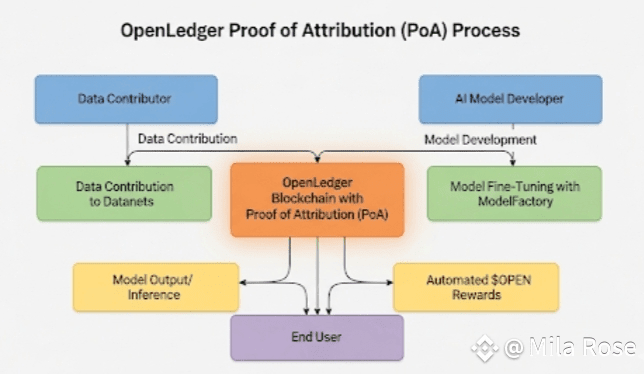
OpenLedger transforms those liabilities into decentralized productive assets.
Imagine an ecosystem where contributors collectively finance intelligence upgrades through tokenized incentives instead of corporate debt structures. Data providers earn rewards. Model trainers earn rewards. Agent developers earn rewards. Infrastructure operators earn rewards. Rather than relying entirely on giant institutional financing, the network itself sustains AI evolution.
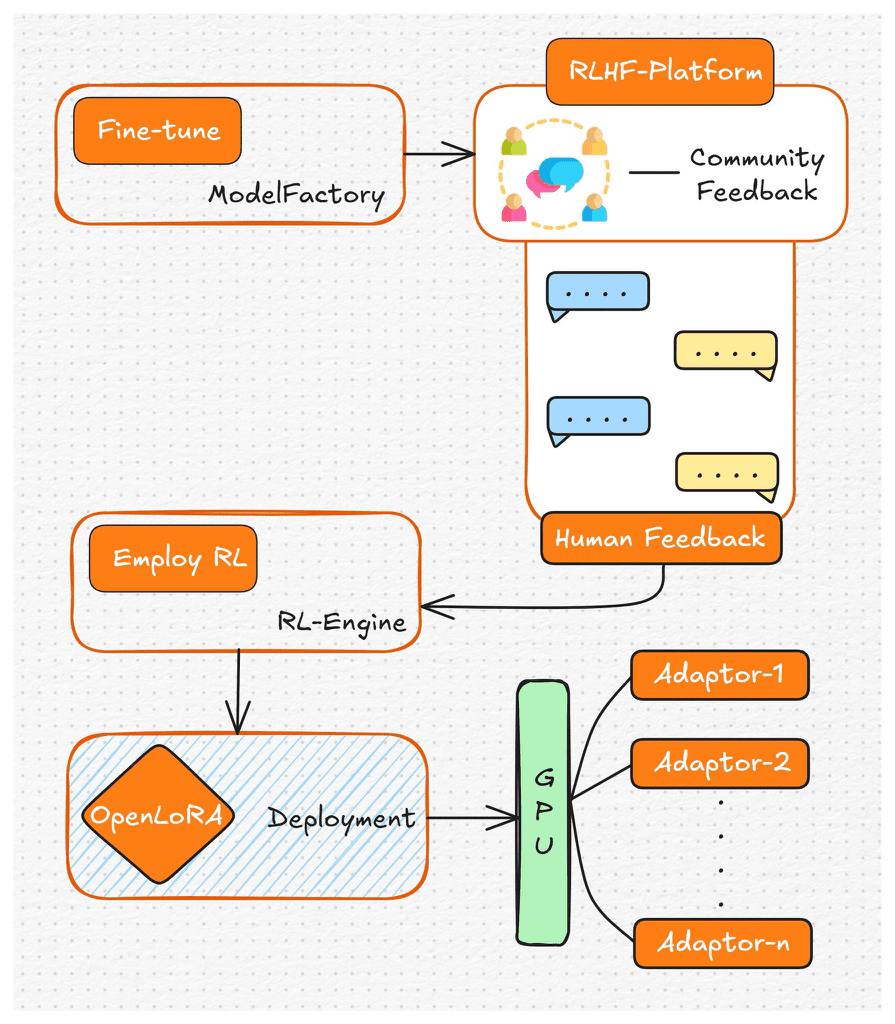
That dynamic begins resembling a decentralized debt market.
In traditional finance, debt markets allocate capital toward productive growth. In OpenLedger’s architecture, token incentives allocate computational and intellectual resources toward AI advancement. The difference is that participation becomes open, borderless, transparent, and composable.
This could have massive long-term implications.
One of the biggest bottlenecks in AI today is concentration. A few tech giants control training pipelines, proprietary datasets, and hardware access. Smaller developers struggle to compete because upgrading models requires huge financial commitments. OpenLedger lowers this barrier by turning AI contribution into an economic layer accessible to anyone.
If successful, this means innovation may no longer depend entirely on billion-dollar corporations.
Instead, decentralized communities could continuously upgrade AI systems through aligned incentives. Contributors become stakeholders in the evolution of intelligence itself. The network effectively finances its own growth through participation.
Another important factor is asset liquidity.
OpenLedger doesn’t treat AI components as static tools. Models, datasets, agents, and inference systems become liquid digital assets capable of generating value across applications. This introduces composability into AI infrastructure. Developers can combine resources, improve existing systems, and monetize contributions without rebuilding everything from scratch.
That composability mirrors how debt markets unlocked industrial expansion by increasing capital efficiency.
Factories once required enormous isolated investments. Debt systems allowed resources to circulate faster across economies. OpenLedger could create a similar acceleration layer for artificial intelligence by allowing AI infrastructure to function as reusable financialized primitives.
There’s also a deeper narrative emerging here: ownership.
Most people contributing to AI today receive little long-term value. Users generate data for free. Developers build ecosystems they do not control. Researchers contribute innovation while centralized firms capture most profits. OpenLedger attempts to rebalance this structure by rewarding contributors directly through decentralized mechanisms.
This matters because AI may become the largest economic sector of the next decade.
If intelligence itself becomes programmable infrastructure, ownership of that infrastructure becomes critically important. OpenLedger positions itself as a system where participation and rewards stay connected instead of flowing upward into centralized monopolies.
Of course, the vision is ambitious.
Decentralized AI still faces challenges involving scalability, coordination, security, inference efficiency, and adoption. Competing against centralized giants with massive capital reserves will not be easy. But markets often shift when infrastructure becomes more open and economically efficient.
The internet disrupted traditional media distribution.
Decentralized finance challenged legacy banking assumptions.
Now decentralized AI protocols like .
OpenLedger may challenge how intelligence itself is financed and upgraded.
That’s why OpenLedger is attracting attention beyond typical crypto speculation. The project isn’t merely building another blockchain narrative. It is exploring whether AI development can evolve from a centralized expenditure race into a decentralized economic network powered by contributors worldwide.
If that transition happens, AI model upgrades may no longer resemble endless corporate liabilities.
They could evolve into an entirely new kind of decentralized capital market — one where intelligence is financed collectively, upgraded continuously, and owned by the very people helping build it.