

After spending some time reading about OpenLedger, I realized I was falling right into the typical trap for crypto folks whenever a new narrative drops: reading the whitepaper, comparing it to other projects, analyzing the tokenomics, and convincing myself that was enough to understand an ecosystem—without ever actually trying anything inside it.
With most AI crypto projects today, the answer is a hard no. Either the product doesn’t exist yet, or the user experience is so brutal that only developers can tolerate it. This week, I decided to put OpenLedger to the test with that exact lens. No whitepapers, no market comparisons. Just stepping in and trying it out like a regular user.
Step 1: Creating a Wallet
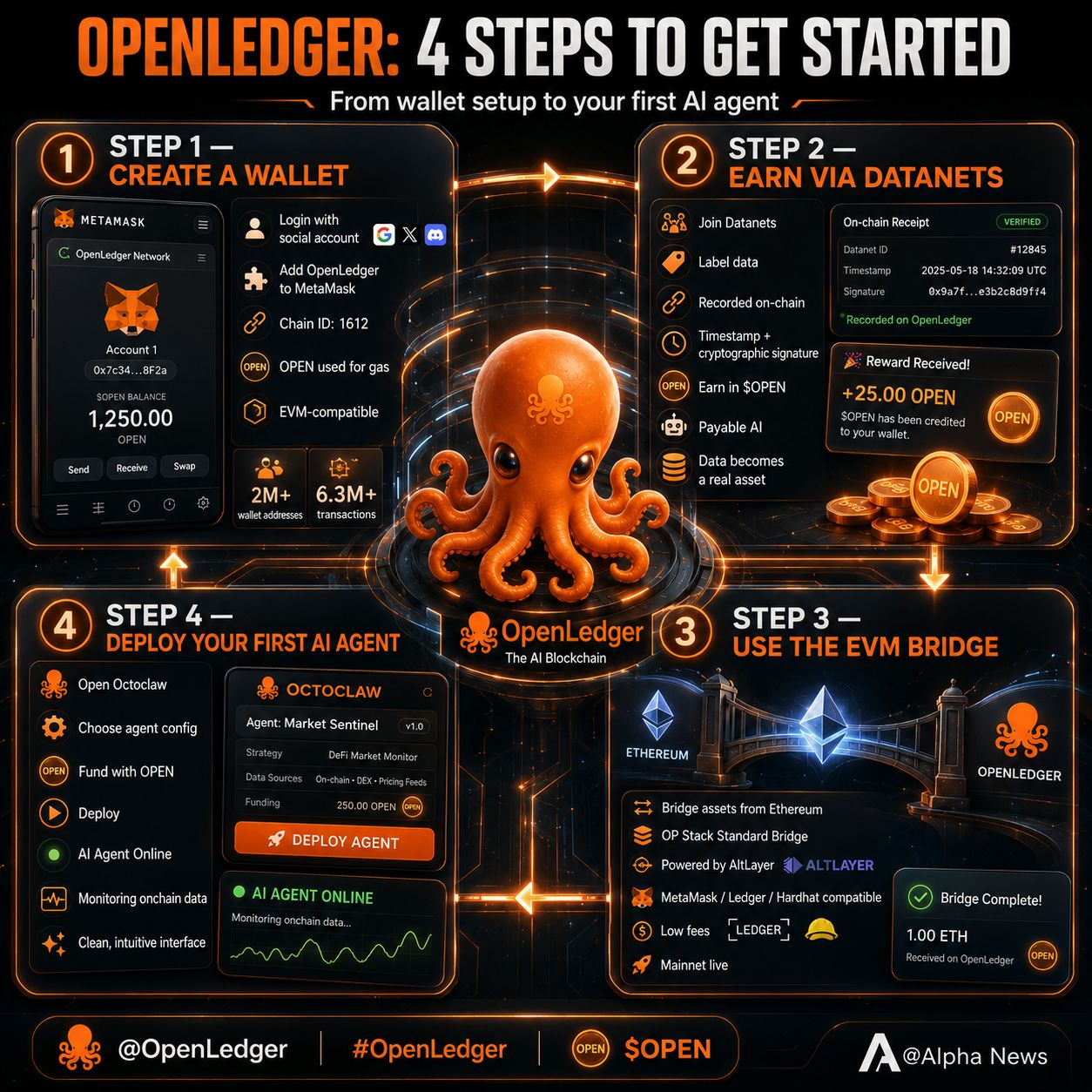
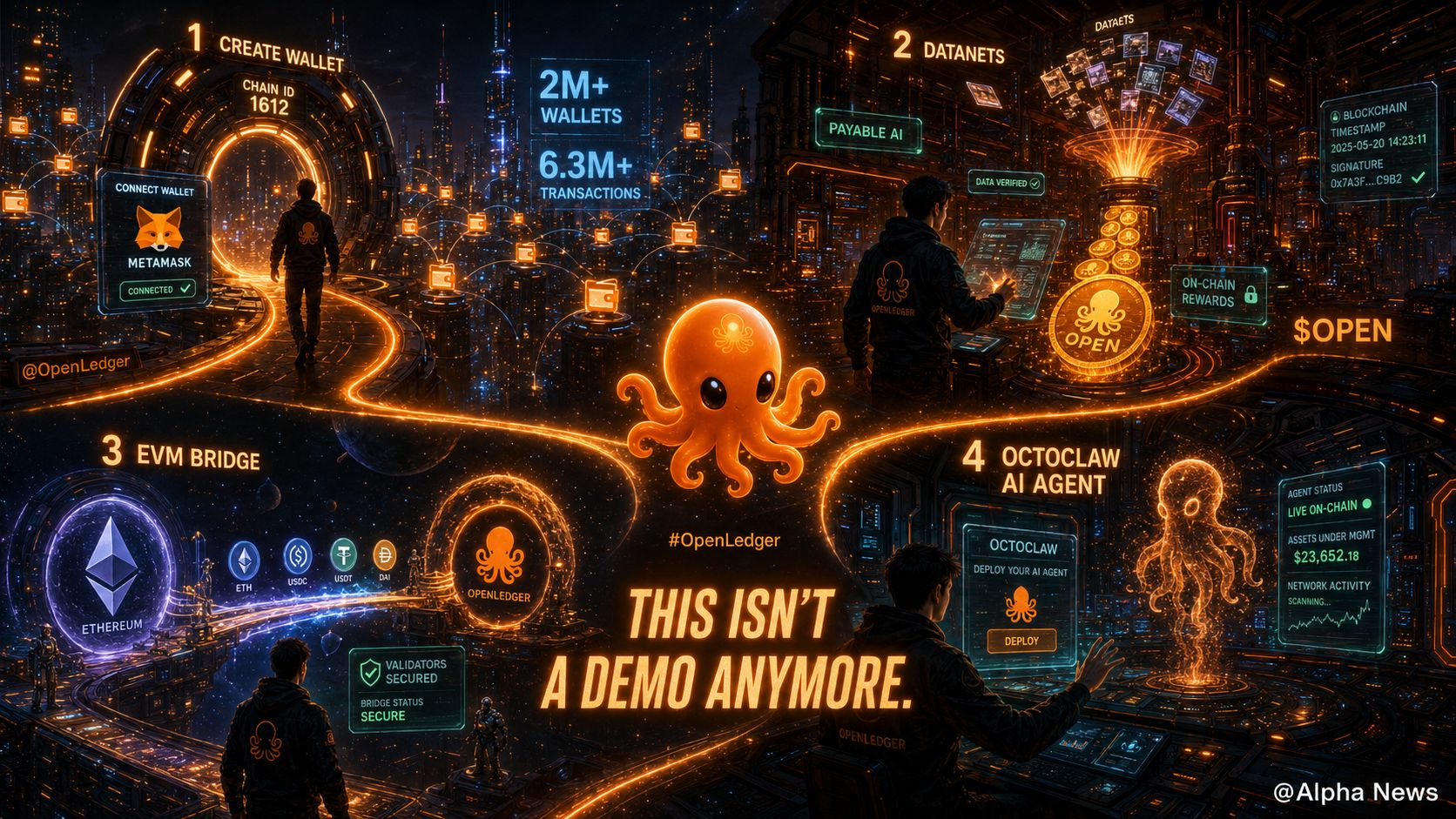
I hopped onto the OpenLedger app and logged in using a social media account. Quick and seamless—no extra installations needed. Then, I added the OpenLedger network to MetaMask using Chain ID 1612, with the native OPEN token used for gas, just like ETH on Ethereum. The network is completely EVM-compatible, so anyone who has used MetaMask or any EVM wallet will feel right at home. Zero complaints here.
But what made me pause for a few seconds wasn’t the technical process; it was a number. I checked the on-chain data and saw that the network already has over 2 million wallet addresses and more than 6.3 million transactions processed. Oh wow. It turns out I wasn’t alone here—a whole community had been quietly building and interacting long before I even noticed.
Step 2: Earning $OPEN via Datanets
This is where the experience started to diverge from anything I’ve done in crypto before. I joined Datanets—OpenLedger’s decentralized data network—and started labeling data. Sounds simple, maybe even a bit boring, right? But as soon as I finished a data batch, a notification popped up: my contribution was recorded on-chain, complete with a timestamp, a cryptographic signature, and the corresponding OPEN value. I could track exactly what I did and how much I was earning.
For the first time in my life, "data" stopped being an abstract concept. It was right there on my screen, acting like a real asset—trackable and monetizable. This isn't like contributing to Google Maps and being forgotten, or letting Facebook suck up your data for free. Every time the data I create is used to train a model, I get paid in $OPEN. This Payable AI mechanism is exactly what sets OpenLedger completely apart from anything else I’ve seen.
Step 3: Using the EVM Bridge
Once I had some $OPEN in my wallet, I wanted to move more assets over from Ethereum. OpenLedger uses the OP Stack Standard Bridge deployed by AltLayer, which is fully compatible with MetaMask, Ledger, Hardhat, and other standard Ethereum tools. I bridged over a little bit of ETH; the transaction went through in a few minutes, and the fees were dirt cheap.
I have to admit—I held my breath while waiting for the transaction to confirm. Not out of fear of losing money, but because it suddenly hit me: these are real assets, moving across a real bridge, into a real ecosystem. This isn't a testnet. This isn't a sandbox. This is a mainnet running in live production.
Step 4: Deploying My First AI Agent with Octoclaw
This was the step I was most anxious about. Octoclaw is OpenLedger’s AI Agent designed for multi-LLM orchestration and localized secure task execution. I opened the Octoclaw dashboard, selected the agent configuration, funded it with the OPEN I had just earned from Datanets, and hit "Deploy."
I had braced myself for a wall of complex technical configurations. Instead, the Octoclaw interface was incredibly clean and intuitive—far better than I expected. With just a few clicks, my agent was up and running. The screen flashed: "Agent is now live and monitoring onchain data." I froze for a second. Not because the tech was overly complicated, but because I realized that this agent was actually operating with real assets on-chain. This wasn’t the kind of smoke-and-mirrors AI demo the market usually hypes up; it was actively running on the blockchain right then and there.
Embracing the Rough Edges
I’m not going to sugarcoat everything. There were moments where I had to reread the guides two or three times to figure things out. Some sections of the technical documentation are still quite dry and can be confusing for newcomers. The Datanets UI isn't as polished as the apps I use daily. While configuring my agent, I hit a parameter I didn't understand and had to hop onto Discord to ask the community for clarity.
But here’s the kicker: it’s exactly this lack of polish that makes me believe in OpenLedger more, not less.
If everything were already perfectly packaged and glossy for retail users, I would probably be too late. This rawness is proof that we are in the ultra-early stages, where those willing to put in the effort to learn hold the biggest advantage. It takes me right back to using Uniswap in the early days, when the UI was ugly and everyone said, "This is unusable."
The Moment It All Clicks
That night, I sat back and watched my agent run. It was scanning on-chain data, analyzing trends, and waiting for signals to suggest actions.

And it made me think: in five years, everyone will probably have a few agents like this. One agent to manage finances, one to manage personal data, and one to negotiate the value of that data. And all of them will run on infrastructure like OpenLedger, where every contribution is recorded and value is distributed fairly.
I’m no longer just someone reading about the AI economy. Look, a large portion of the ideas surrounding AI economies will likely fail, just like many crypto narratives before them. And I don’t think OpenLedger is ready for mass retail adoption just yet. But after going through the entire loop myself instead of just reading about it on Twitter, I have a much clearer understanding of why people are starting to view AI infrastructure as a legitimate economic layer, rather than just a short-term speculative play.
Once you actually touch something raw but packed with this much potential, you don't want to go back to being a bystander.
I know a lot of you are still sitting on the sidelines watching OpenLedger, comparing it to Bittensor or Fetch.ai. But analyzing without experiencing is like reading the menu without ordering the food. You can read about it forever, but you will never truly get it until you set up a wallet, label some data, and deploy your own agent. Step through that door—I did, and I have no regrets.
Are you ready to dive in, or are you going to keep watching from the sidelines like I was two weeks ago? Let’s discuss below! 👇