
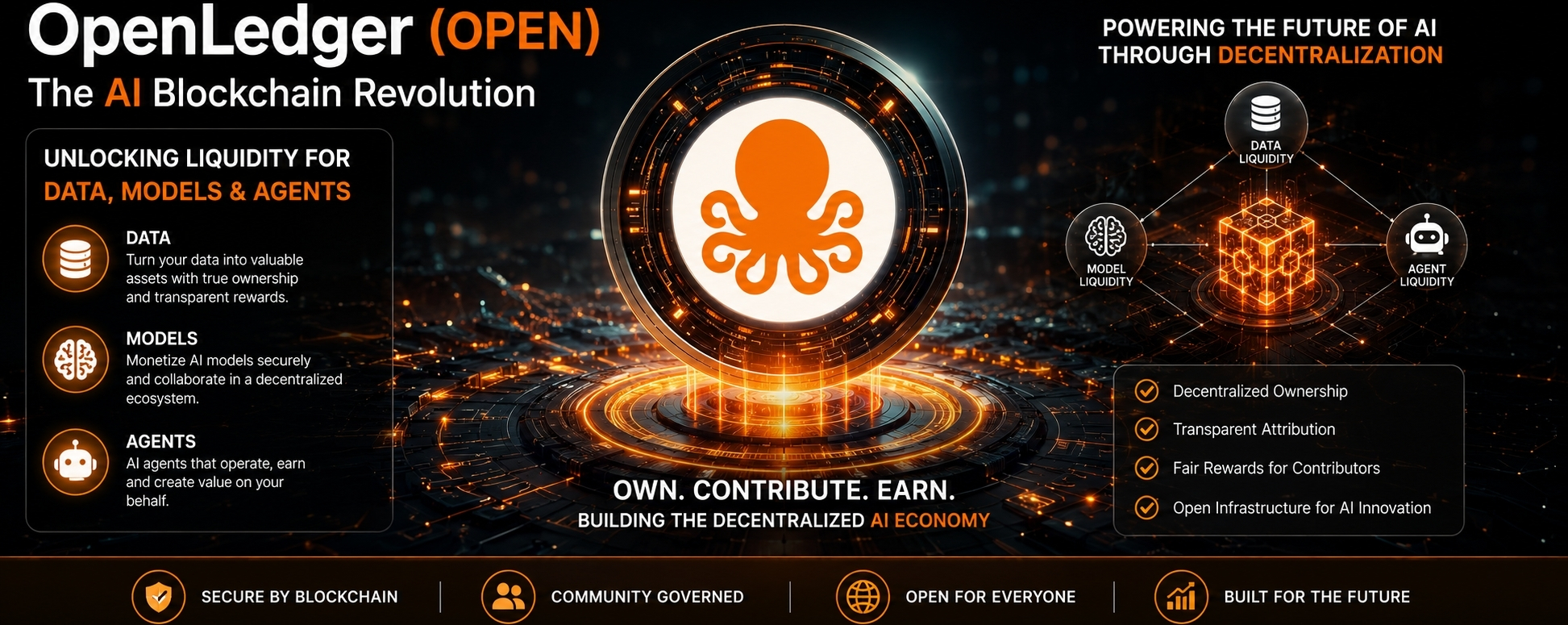
I still remember the moment i started realizing that artificial intelligence was quietly evolving into something much bigger than most people understood. At first, AI felt like a simple layer added on top of the internet, helping people write faster, automate tasks, or generate images within seconds. But the deeper i looked into the space, the more i noticed a hidden problem nobody was seriously talking about. Massive amounts of data were being used to train powerful AI systems, yet the people creating that data, improving those models, or contributing intelligence to these systems were rarely rewarded. It felt unbalanced. The companies building the infrastructure were growing rapidly while contributors remained invisible in the background. That imbalance is exactly why projects like started catching my attention.
What makes OpenLedger interesting is not just the technology itself, but the idea behind it. I think many blockchain projects focus too heavily on hype, token speculation, or short-term excitement, but OpenLedger feels connected to a larger shift that is slowly happening across the digital world. The project is trying to create an economic system where AI data, models, and even autonomous agents can become valuable assets with transparent ownership and liquidity. That changes the conversation completely. Instead of AI being controlled by a few centralized companies behind closed doors, OpenLedger introduces the possibility of an open ecosystem where contributions can actually be tracked, verified, and rewarded fairly.
The more i explored this concept, the more i realized how important data has become in modern society. Most people still think of data as something passive, almost meaningless, but in reality data is now one of the most powerful resources on earth. Every search, every interaction, every model improvement, and every digital action contributes to the intelligence of future AI systems. Yet the creators behind that information rarely receive recognition or economic value from it. I believe this is where OpenLedger’s vision starts becoming powerful because it treats data as a living asset rather than a disposable byproduct of the internet.
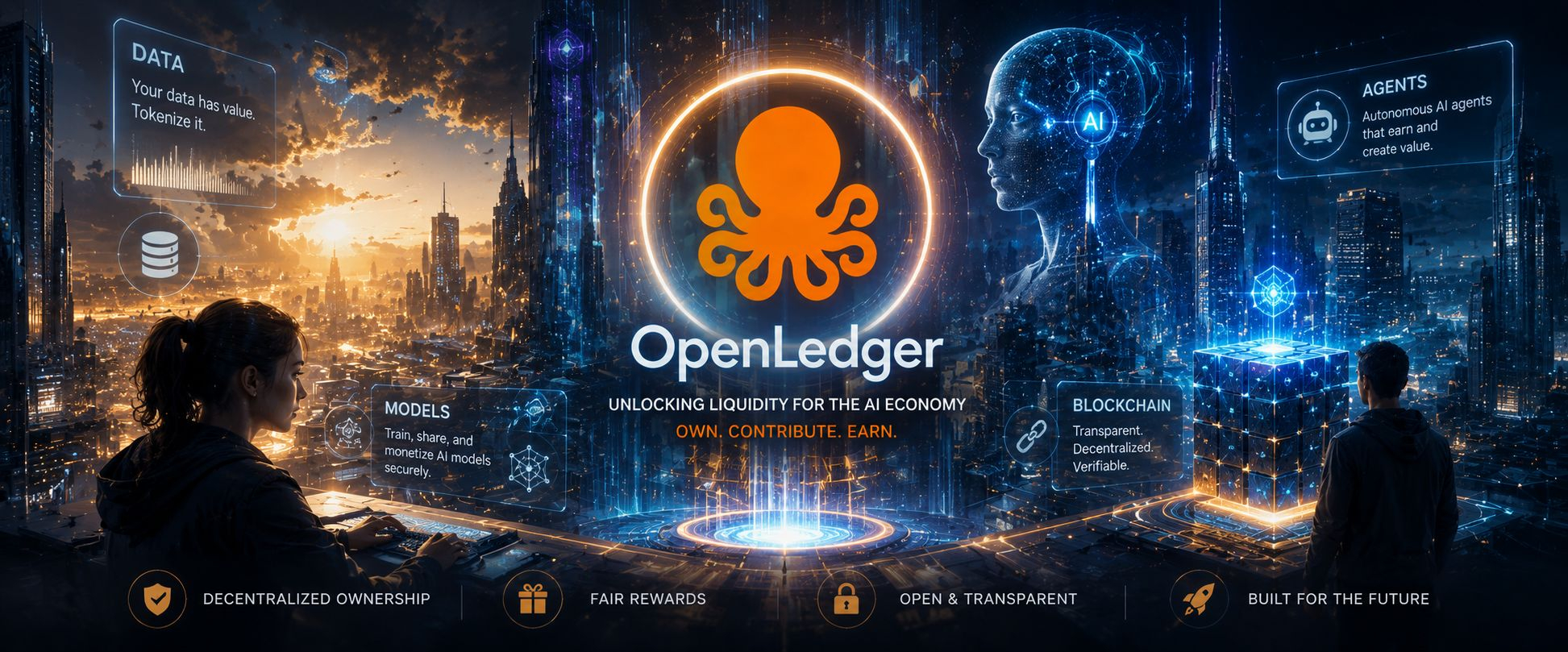
There is also something emotionally compelling about the idea of decentralizing intelligence itself. For years, technology has slowly concentrated power into smaller circles. Large platforms own the servers, the algorithms, the monetization systems, and eventually even the intelligence generated by users. What OpenLedger appears to be building is a structure where ownership can move back toward contributors instead of remaining trapped inside centralized ecosystems. I noticed that many people in crypto communities are no longer excited by empty promises or flashy narratives. They are searching for projects with long-term meaning, and AI combined with blockchain creates a narrative that feels much more connected to the future than temporary market trends.
Another reason this project stands out is because AI agents are becoming increasingly autonomous. We are moving toward a world where AI systems will not only generate content but also make decisions, execute tasks, interact with applications, and potentially operate entire digital economies. That sounds futuristic, but honestly, parts of that future are already visible today. OpenLedger seems positioned around this exact transformation by creating infrastructure where AI agents themselves can hold value, interact economically, and participate within decentralized systems. I think that idea sounds strange to many people now, but over time it may become completely normal.
One thing i appreciate is how this vision connects liquidity with intelligence. Traditionally, liquidity belongs to financial assets, but OpenLedger is exploring the possibility that models, datasets, and AI contributions can become liquid economic units as well. That is a very different approach from the older internet economy where user contributions mostly generated wealth for platforms instead of individuals. In many ways, this feels like an attempt to redesign the economic layer of AI before the industry becomes too centralized to change.
I’ve also noticed how rapidly conversations around AI ownership are evolving. A year ago, most discussions focused only on AI capabilities, but now people are beginning to ask deeper questions. Who owns the models? Who owns the outputs? Who gets rewarded when an AI system becomes successful? These questions are becoming impossible to ignore. OpenLedger enters the conversation at a time when the market is slowly realizing that the future of AI is not only about intelligence, but also about fairness, attribution, and economic transparency. $OPEN
There is definitely risk in every emerging technology sector, and i think anyone entering crypto or AI should understand that clearly. Narratives move fast, markets are emotional, and many projects disappear before achieving their promises. But sometimes certain ideas feel larger than the market cycle surrounding them. I believe OpenLedger represents one of those ideas because it is tied to structural changes happening across both blockchain and artificial intelligence at the same time. The world is entering an era where digital ownership itself is being redefined, and projects building infrastructure around that transition could become extremely important in the years ahead.
What fascinates me most is that this movement feels quiet right now. It does not yet have the mainstream attention that giant AI companies receive every day, but that silence often exists before major technological shifts become obvious to everyone. I’ve seen this pattern before in crypto. The strongest ideas usually begin in small communities where people are discussing future possibilities long before the wider market understands their significance. OpenLedger feels connected to that early-stage energy where vision matters more than noise. $OPEN
As AI continues expanding into every part of modern life, i think society will eventually face a simple but powerful question. Should intelligence remain locked inside centralized systems owned by a handful of corporations, or should the value generated by AI flow back toward the people contributing to it? That question may define the next decade of technology. Projects like OpenLedger are attempting to answer it before the future arrives completely unprepared. Whether the ecosystem succeeds or not, the direction itself feels important because it challenges the assumption that only centralized entities deserve to control the AI economy.
In many ways, OpenLedger represents more than just another blockchain project. It reflects a growing realization that data, intelligence, and digital contribution now carry real economic value. The internet created a world where information became abundant, but AI is creating a world where information becomes monetizable intelligence. I think the projects that understand this shift early will shape the foundations of the next digital era. And honestly, that is why OpenLedger feels less like temporary hype and more like the beginning of a much larger transformation quietly unfolding beneath the surface of the internet.