
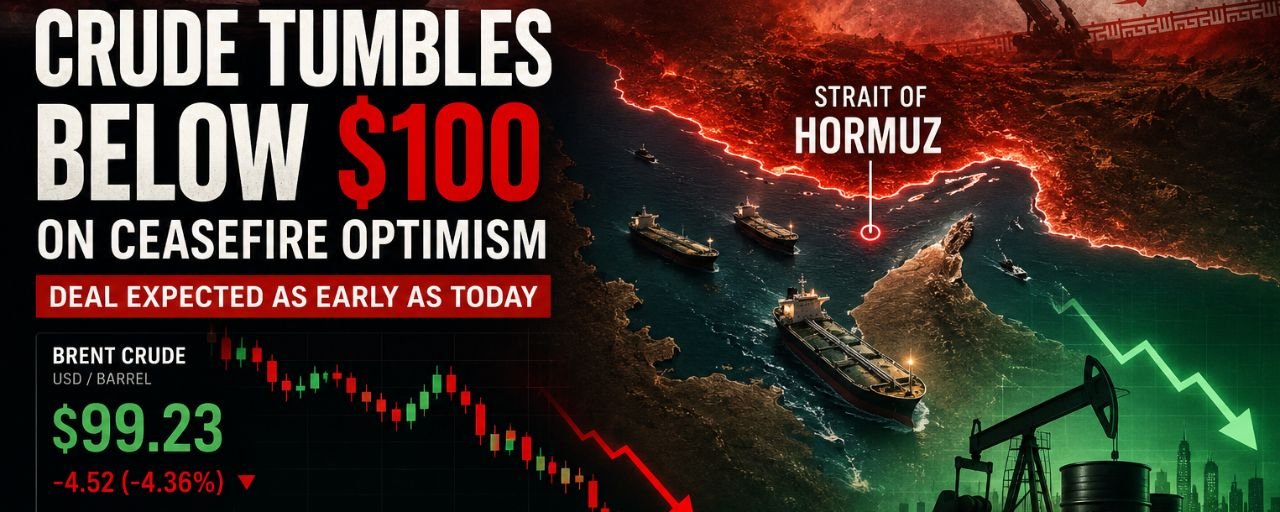
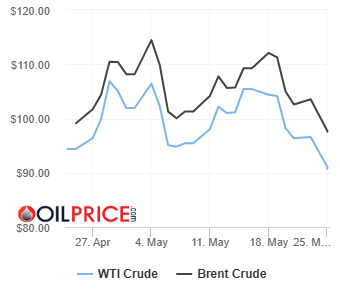
Crude prices plunged on Monday, with both Brent (benchmark for international oil) trading at 97.59, a 5.7% drop, and WTI (benchmark for U.S. oil) tumbling more than 6%, breaking below $100 per barrel after reports surfaced that the United States and Iran are close to signing a 60-day ceasefire extension that would reopen the Strait of Hormuz.
During those 60 days, the Strait stays open with no transit fees charged to passing vessels. American military forces deployed across the region over the past few months would remain in position until a final comprehensive agreement is signed.
Trump's position coming into the week is measured. He said negotiations are moving forward in an orderly manner but made a point of telling his representatives not to rush — because time, in his view, is on America's side.
He also posted on Truth Social over the weekend, laying out his expectations. If a deal gets done, he said, it will be a good and proper one — nothing like the Obama-era agreement, which he says handed Iran large sums of cash and a clear pathway to building a nuclear weapon.
The regional momentum behind a deal is real. Trump held a call with Arab and Muslim leaders on Saturday, and according to a diplomat cited by Fox, the conversation was positive.
A regional source was even more direct — every single leader on that call urged Trump to go ahead with the deal and de-escalate the conflict. The message was unanimous: stop the war for the benefit of the whole region.
That same source said negotiations are progressing well and mediators hope to finalise a one-page framework agreement as soon as Monday, the 25th, and announce it publicly. Detailed negotiations would then begin a few days after that.
Secretary of State Marco Rubio also confirmed that a deal could potentially be signed as early as Monday.
But Iran isn't celebrating yet. Even though Iran has already given oral commitments through intermediaries to suspend uranium enrichment, one of the thorniest issues on the table, state media outlet Tasnim reported that Tehran holds no optimism about an agreement.
They reported that the United States is still blocking certain clauses in the proposed deal, particularly around the release of Iran's frozen assets. Iranian officials warned the agreement could still be cancelled if those issues remain unresolved.
On the water itself, there are tangible signs of movement. Iran's Revolutionary Guard Corps Navy announced that 33 vessels — including oil tankers, commercial ships, and container ships — passed through the Strait of Hormuz in the past 24 hours with IRGC coordination and approval. Between Tuesday and Saturday, a total of 117 vessels had already crossed the strait.
Oil traders are optimistic that supply disruptions could ease and that the risk premium built into prices over the past several months might start compressing.