
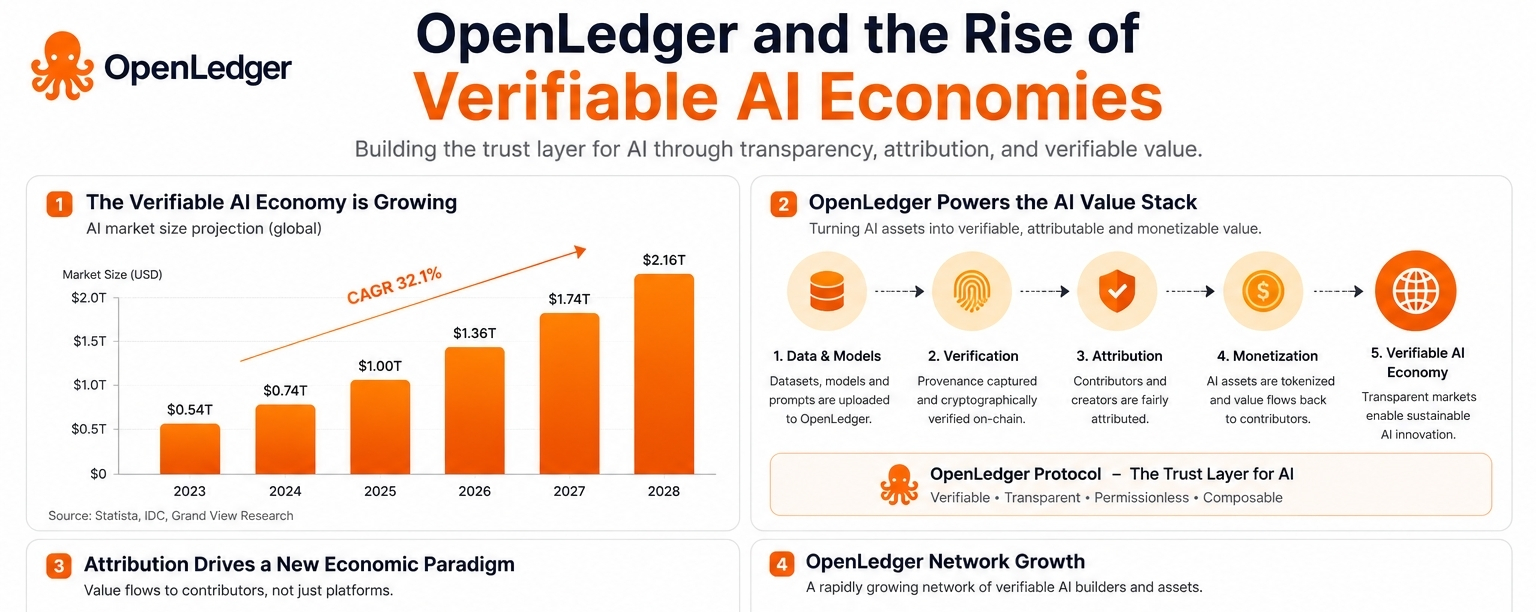
OpenLedger (OPEN) is one of the few newer AI-related crypto projects I’ve been quietly watching without rushing to form a strong opinion too early. A lot of protocols in this sector arrive with oversized promises and immediate market excitement, but I usually pay more attention to whether the underlying system makes sense outside of price action. With OpenLedger, the idea itself is what initially caught my attention more than the token movement.
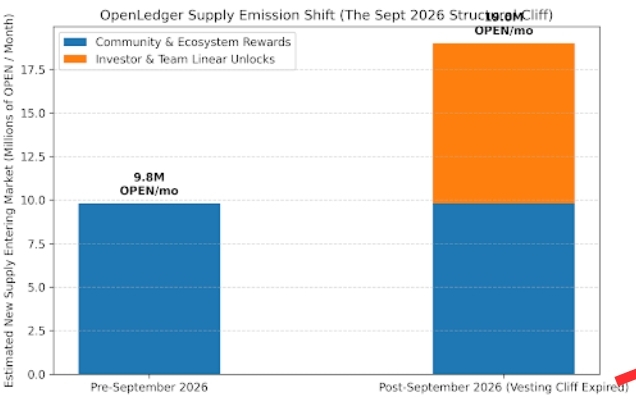
At a glance, the market already treats OPEN like a serious emerging narrative. The token has been trading with active volume, the circulating supply is still relatively early compared to total issuance, and the market cap sits in that range where momentum traders and long-term infrastructure investors often overlap. That stage can be dangerous because valuation tends to move ahead of actual adoption. Crypto markets are extremely efficient at pricing future expectations, sometimes before the product has fully proven itself in real conditions.
What makes OpenLedger interesting to me is that it is not trying to compete as just another AI token. The protocol seems to be attempting something much broader — building an economic layer around AI itself. The core idea revolves around turning data, models, and AI agents into trackable and monetizable assets where contributors can theoretically receive rewards based on measurable impact.
That sounds simple when explained in marketing language, but the implications are actually much larger.
Right now, most AI systems operate like closed environments. Massive amounts of data are collected, models are trained, value is created, and very few people outside the platform owners meaningfully participate in that upside. The people supplying useful information often disappear from the economic equation entirely. OpenLedger appears to be trying to change that dynamic by creating infrastructure where contribution can be identified, verified, and compensated more transparently.
In some ways, it reminds me less of a traditional blockchain and more of an accounting system for digital intelligence. Financial markets work because ownership, transactions, and payouts can be tracked with reasonable clarity. AI still lacks that kind of transparent economic framework. OpenLedger seems to believe that if attribution becomes verifiable, then data itself can behave more like productive property rather than something extracted freely behind closed systems.
That idea matters far beyond short-term speculation.
At the same time, this is where I become more cautious rather than more bullish. Building attribution systems for AI is much harder than it sounds in theory. Once models become large and complex, identifying which inputs genuinely influenced an outcome becomes extremely difficult. Measuring contribution is not the same as measuring value. A network can reward activity very easily. Rewarding meaningful activity consistently is the real challenge.
That distinction is important because crypto has a long history of confusing engagement with utility.
Early ecosystems often look active because incentives temporarily manufacture participation. Wallet counts rise, transaction numbers increase, dashboards look impressive, and token velocity creates excitement. But sustainable systems eventually need behavior that exists independently of emissions and speculation. That is the part I am still waiting to see with OpenLedger.
The project’s architecture suggests it wants to create accountable infrastructure rather than just another speculative AI narrative. If the protocol can genuinely connect contributors, models, and AI-driven applications through verifiable economic relationships, then it could eventually occupy a meaningful position in decentralized AI infrastructure. But right now, the market is still mostly pricing possibility rather than proven demand.
I also think the timing of the project explains part of the current attention. AI remains one of the strongest narratives in global technology, while crypto continues searching for sectors that can generate activity beyond simple trading. OpenLedger sits directly between those two themes. Naturally, that attracts liquidity quickly. Traders see AI exposure, investors see infrastructure potential, and the token begins absorbing speculation from both directions.
The risk is that narratives can become overcrowded long before the underlying systems mature.
That is why I spend less time watching social media excitement and more time watching signals underneath the surface. Are developers actually building on the network? Are contributors earning value tied to real usage instead of temporary incentives? Are AI agents performing economically meaningful tasks, or is activity still mostly experimental? Those questions usually matter more over time than launch momentum ever does.
I do not think OpenLedger needs to become dominant overnight to justify attention. What matters is whether the protocol can gradually accumulate evidence that the system works under real conditions. Strong infrastructure networks rarely reveal themselves immediately. They usually grow through slow verification — more users, more repeat activity, more dependency, more trust in the underlying mechanisms.
For now, OPEN still feels like an early observation rather than a finished conclusion.
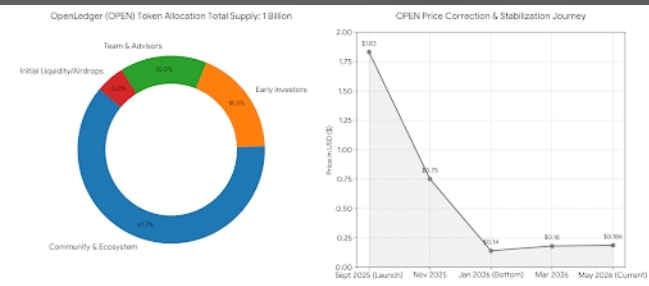
The market has already noticed the narrative, but the harder part begins after that initial attention fades. What I’ll continue watching is whether OpenLedger can turn abstract ideas about attribution and AI economics into something measurable and durable. In crypto, launch excitement is common. Verifiable usage is rare. Over time, that difference is usually what separates temporary speculation from networks that actually matter.