
Vitalik Buterin’s Vision for Ethereum’s Next Phase: AI, Formal Verification & the Future of Secure Code
Introduction
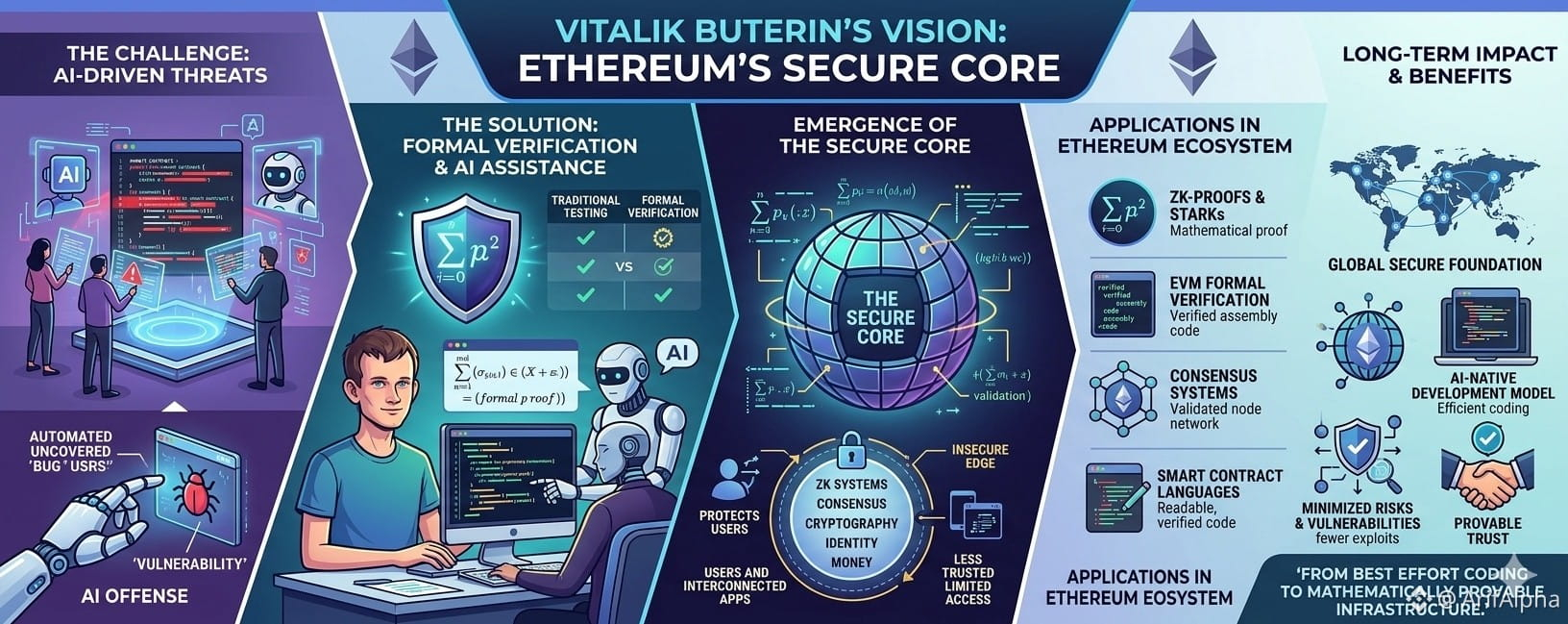
Vitalik Buterin believes Ethereum’s next evolution will not be defined only by scalability or transaction throughput. Instead, the defining battle will revolve around software correctness, provable security, and AI-assisted formal verification.
In his latest deep technical essay, Buterin explores how Ethereum can survive an era where artificial intelligence becomes powerful enough to automatically discover vulnerabilities in smart contracts, cryptographic systems, and infrastructure code. His conclusion is clear:
The future of Ethereum depends on building software systems that are mathematically provable, auditable, and secure against increasingly advanced AI-driven attacks.
This marks a major philosophical shift in blockchain development — from “best effort coding” toward “mathematically verified infrastructure.”
What Is Formal Verification?
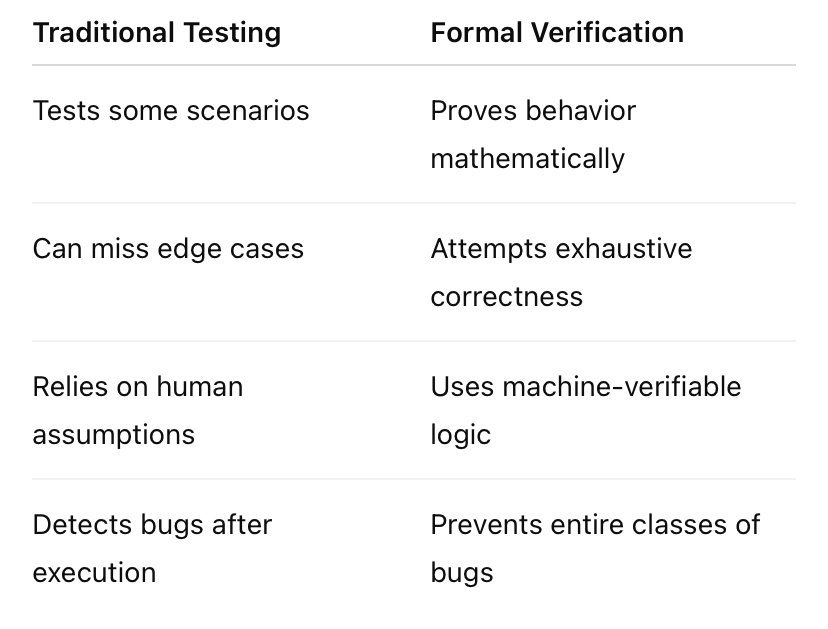
Formal verification is a method of proving that software behaves exactly as intended using mathematical logic.
Instead of merely testing code with sample inputs, developers create proofs that can be automatically checked by systems like Lean.
Traditional Testing vs Formal Verification
Vitalik explains this using the Fibonacci sequence example:
Fn=Fn−1+Fn−2Fn=Fn−1+Fn−2
By mathematically proving patterns in Fibonacci numbers, computers can verify logic with near-perfect consistency.
Ethereum researchers now want to apply similar proof systems to:
Smart contracts
ZK systems
Consensus mechanisms
Cryptographic protocols
Ethereum Virtual Machine implementations
Why Ethereum Needs Formal Verification
The Rising Threat of AI-Powered Exploits
Buterin warns that future AI systems may become extremely effective at discovering vulnerabilities automatically.
This creates a dangerous imbalance:
Attackers can scan millions of lines of code rapidly
Smart contract exploits become easier
Zero-day vulnerabilities become more common
Complex DeFi protocols become harder to secure
Ethereum’s response is not to abandon decentralization.
Instead, Vitalik argues Ethereum must move toward:
“Provably Secure Infrastructure”
This means critical systems should be mathematically verified instead of merely tested.
Ethereum’s Security Crisis
Why Bugs Are Becoming More Dangerous
In traditional software, bugs may cause inconvenience.
In blockchain systems, bugs can instantly destroy billions of dollars.
Examples include:
Smart contract drains
Bridge exploits
Consensus failures
ZK proof vulnerabilities
Cryptographic implementation flaws
Vitalik emphasizes that:
Bugs inside ZK systems are especially dangerous because failures may become invisible.
If a ZK proof system breaks incorrectly, users may not even realize assets were stolen.
AI + Formal Verification = Ethereum’s New Security Model
Vitalik presents AI and formal verification as complementary technologies.
AI Strengths
AI can:
Generate code rapidly
Optimize low-level systems
Write assembly efficiently
Discover vulnerabilities
Automate proof construction
AI Weakness
AI-generated code is often unreliable and error-prone.
Formal Verification Solves This
Formal verification restores correctness by proving:
The code behaves properly
Security assumptions hold
Optimized implementations equal readable implementations
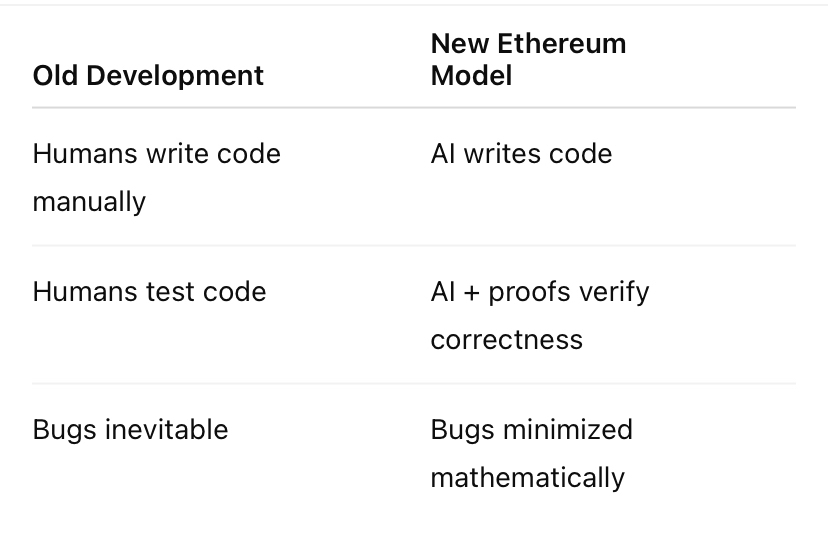
This creates a new development model:
The “Secure Core” Philosophy
One of the most important ideas in Vitalik’s essay is the concept of a secure core.
Future Software Architecture
Ethereum and future operating systems may split into:
1. Secure Core
Small, heavily verified infrastructure responsible for:
Money
Identity
Cryptographic operations
Consensus
Private data
2. Insecure Edge Components
Less trusted applications operating with minimal permissions.
If edge applications fail, the secure core still protects users.
This resembles modern cybersecurity architecture but pushed to an extreme mathematical level.
Formal Verification in Ethereum’s Ecosystem
Vitalik highlights several major areas where Ethereum is already moving toward formal verification.
1. ZK-Proofs & STARK Systems
Zero-Knowledge Proof systems are among the most complex components in crypto infrastructure.
Ethereum developers are working on formally verified STARK implementations that mathematically guarantee:
Correct proof generation
Correct verification
Resistance to manipulation
The key principle becomes:
If a valid proof exists, either the math is broken or the computation is correct.
2. EVM Formal Verification
The Ethereum Virtual Machine itself may eventually become fully verified.
Projects like evm-asm attempt to:
Build EVM logic directly in low-level assembly
Verify equivalence mathematically
Optimize for ZK proving efficiency
Vitalik believes future EVM implementations may become:
Faster
Smaller
More secure
Easier to audit
3. Consensus Systems
Ethereum’s consensus layer remains one of the most sensitive security components.
Formal verification could help prove:
Byzantine fault tolerance
Liveness guarantees
Safety guarantees
Resistance to denial-of-service attacks
Consensus bugs are catastrophic, making mathematical verification highly valuable.
4. Smart Contract Languages
Languages like:
Vyper
Verity
Lean-integrated systems
may become increasingly important.
The future smart contract stack may prioritize:
Readability
Mathematical proof generation
AI-assisted auditing
Reduced attack surfaces
The Limits of Formal Verification
Vitalik also strongly warns against treating formal verification as magic.
Formal Verification Cannot Prove Human Intent
A proof only confirms:
“The software matches the specification.”
But if the specification itself is flawed, the system can still fail catastrophically.
This introduces a major limitation:
Human intentions are difficult to formalize.
Even perfectly verified software can still:
Misunderstand user expectations
Ignore edge cases
Fail against real-world attacks
Break under hardware vulnerabilities
Real Examples of Verified Systems Failing
Vitalik references several cases where formally verified systems still contained vulnerabilities.
Common causes included:
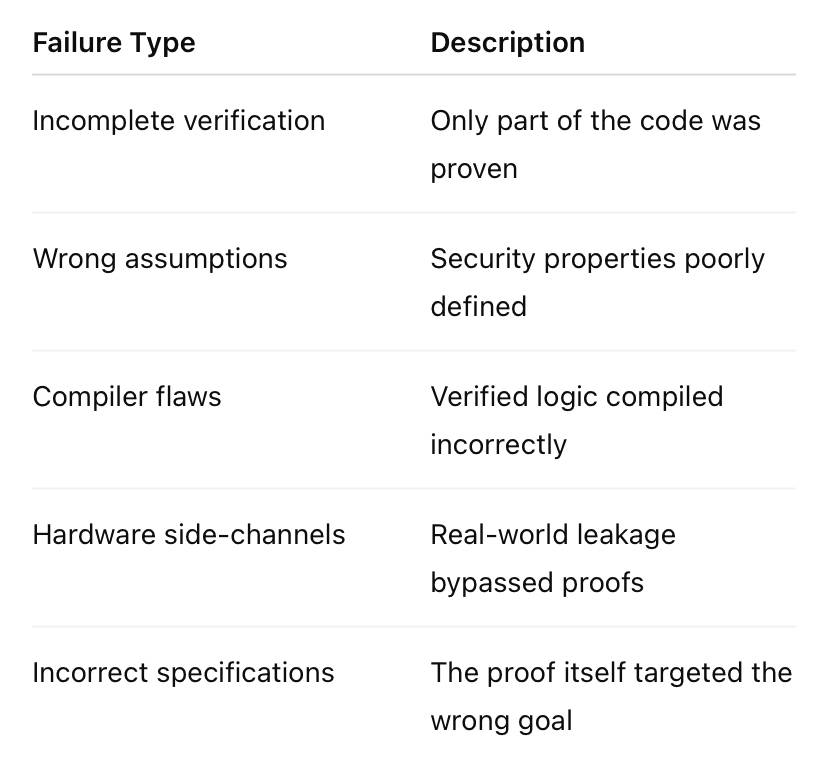
This demonstrates that:
Formal verification reduces risk — it does not eliminate risk entirely.
Ethereum’s Long-Term Vision
Vitalik’s broader vision extends far beyond blockchain.
He sees formal verification becoming foundational infrastructure for:
Operating systems
Cryptographic hardware
Internet of Things devices
AI systems
Financial infrastructure
Digital identity networks
Ethereum may become one of the world’s largest “secure cores” — a foundational trust layer for digital civilization.
Why This Matters for Crypto Investors
For crypto markets, this evolution has major implications.
Projects focusing on:
ZK technology
Formal verification
Cryptographic infrastructure
AI-assisted security
Scalable proof systems
could become increasingly important in Ethereum’s ecosystem.
Potential long-term beneficiaries include:
Ethereum scaling solutions
ZK rollups
Proof infrastructure projects
Security-focused developer tooling
AI-assisted auditing platforms
Key Takeaways
Ethereum’s next phase is not just about scaling
It is about building mathematically secure infrastructure capable of surviving an AI-driven future.
Formal verification may become standard
Critical blockchain infrastructure could increasingly rely on machine-verifiable proofs.
AI changes both offense and defense
AI can create vulnerabilities — but also help eliminate them through automated proofs and verification.
Ethereum aims to become a “secure core”
A highly trusted foundation layer protecting users even when external applications fail.
Final Thoughts
Vitalik Buterin presents a future where blockchain security evolves from reactive patching into proactive mathematical assurance.
The combination of:
AI-generated development
Formal verification
ZK cryptography
Minimal trusted systems
could fundamentally reshape how secure software is built.
Ethereum’s next era may not simply be faster or cheaper.
It may become one of the first globally deployed systems where trust increasingly comes not from institutions — but from provable mathematics.