
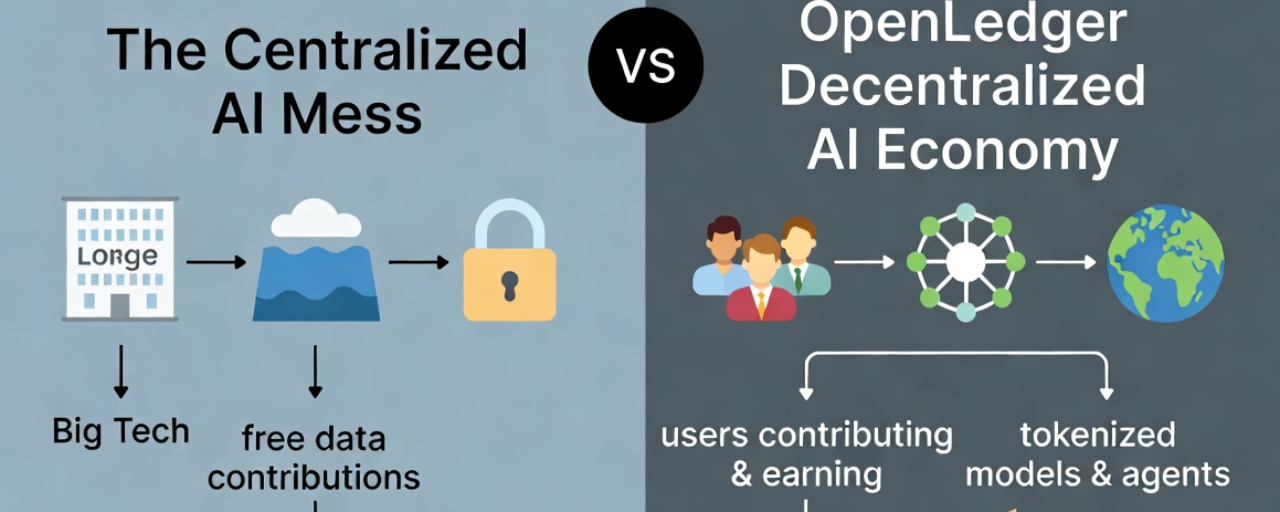
Everybody keeps talking about how revolutionary AI is. New models, smarter agents, mind blowing tools dropping nonstop. But if you zoom out for a second, something feels deeply off.
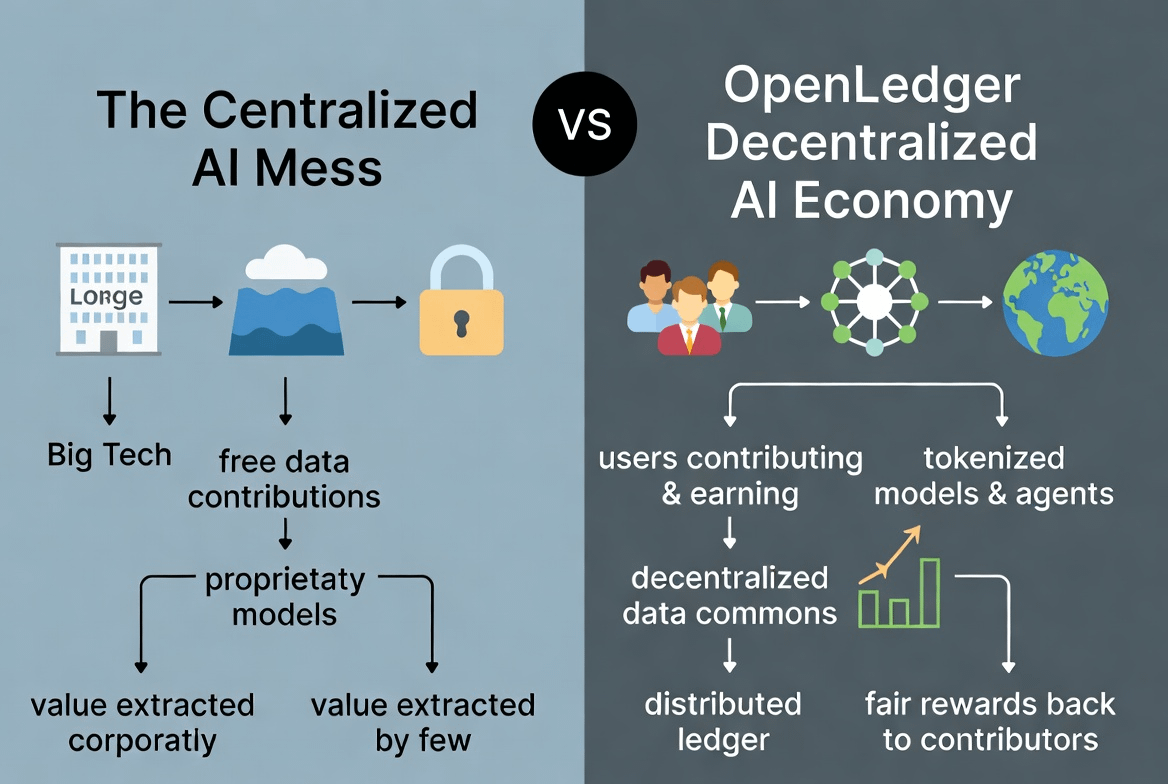
We’re the ones feeding the machine. Every search, every post, every photo, every correction we make, we’re constantly giving away data that makes these systems smarter. Then the big centralized companies package that intelligence, turn it into billion dollar products, and we get… convenience. Maybe a slightly better chatbot. That’s about it.
Regular people create the raw material, but they own almost nothing.
This is the exact frustration OpenLedger is trying to solve.
Instead of building just another “smarter AI,” they’re building the missing economic layer. Their Proof of Attribution (PoA) is the standout feature, a cryptographic system that tracks exactly how much each piece of data, feedback, or model refinement actually impacts the final AI output. Every contribution is recorded on chain, verifiable, and automatically rewarded with $OPEN when value is created.
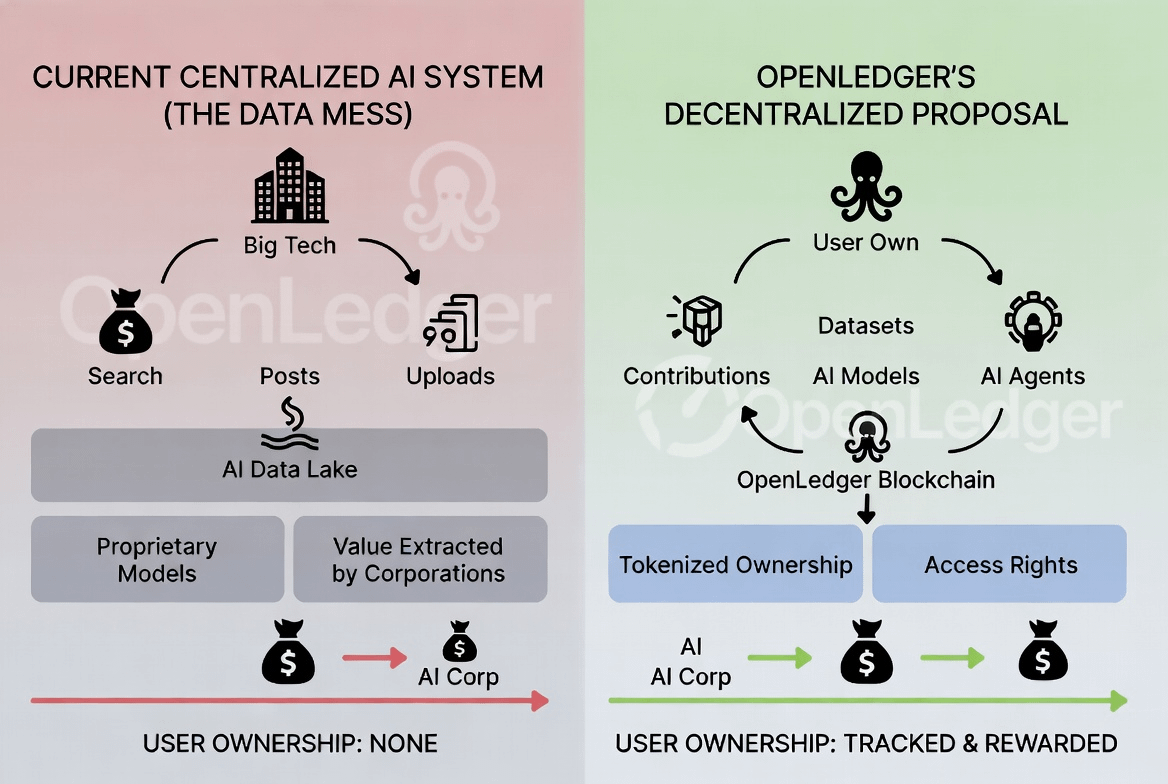
They also created Datanets, decentralized, community owned datasets where people can contribute high quality, specialized data (from Solidity coding to healthcare to DePIN) and earn ongoing rewards as those datasets get used. On top of that, OctoClaw lets anyone deploy real AI agents while maintaining clear attribution from start to finish, and the Model Factory gives users a no code way to fine tune models with built in reward tracking.
From a user experience standpoint, this feels completely different. You’re no longer just a free data source for some closed system. You become an actual stakeholder. The better and more useful your contribution, the more you stand to earn over time. It turns one time uploads into long term participation and ownership.
For the crypto community, this is important. Most AI tokens are pure hype, faster models, bigger numbers, empty promises. OpenLedger is trying to build real infrastructure that fixes the broken incentive model of centralized AI. If they succeed, it could create higher quality data, stronger models, and a healthier flywheel where value actually flows back to the people creating it.
Of course, it’s still early and execution will decide everything. But the direction feels honest.
In a world where AI is quietly becoming the new backbone of the internet, the question of “who owns the value” isn’t a side issue anymore. It’s going to be one of the defining fights of the next decade.
OpenLedger is one of the few projects seriously trying to answer it.

What do you think, is fair attribution the missing piece the AI space desperately needs, or are we all still too comfortable being farmed for free?