

A few nights ago I was watching wallets move across chains in real time and something started bothering me. Not the volatility. Not the leverage. Not even the fragmentation anymore. It was the feeling that crypto keeps producing enormous amounts of activity while still wasting an unbelievable amount of intelligence underneath the surface.
And I don’t mean human intelligence alone.
I mean the invisible layer of data contribution, execution routing, model optimization, decision timing, and behavioral coordination happening constantly across decentralized systems without proper attribution attached to it. The more I studied @OpenLedger the more I started wondering if DeFi’s biggest leak was never capital inefficiency at all. Maybe the real leak was informational value escaping networks faster than protocols could measure it.
That idea stayed in my head longer than I expected.
At first glance, #OpenLedger looks easy to misunderstand. Most people probably place it inside the growing category of “AI blockchain projects” and move on. Honestly, I almost did the same. Crypto has diluted the AI narrative so aggressively that it’s difficult to tell which systems are actually building infrastructure and which are simply attaching language to speculation cycles.
But OpenLedger feels structurally different once you spend time inside the architecture.
The protocol’s core design revolves around Proof of Attribution, decentralized Datanets, OpenLoRA model coordination, and AI native execution systems that attempt to create verifiable lineage for intelligence production itself. That last part matters more than it sounds. Verifiable lineage means the network can track where data originated, which contributors improved models, which agents generated useful outputs, and how value should flow back through the system economically.
In simple terms, $OPEN is trying to make intelligence auditable.
And this is where things become interesting.
Most AI systems today behave like black boxes. Users contribute data. Models improve quietly in the background. Platforms capture the majority of value extraction. Meanwhile contributors rarely retain ownership visibility over the intelligence they helped create. OpenLedger’s attribution architecture tries to reverse that dynamic by embedding contribution tracking directly into the infrastructure layer itself.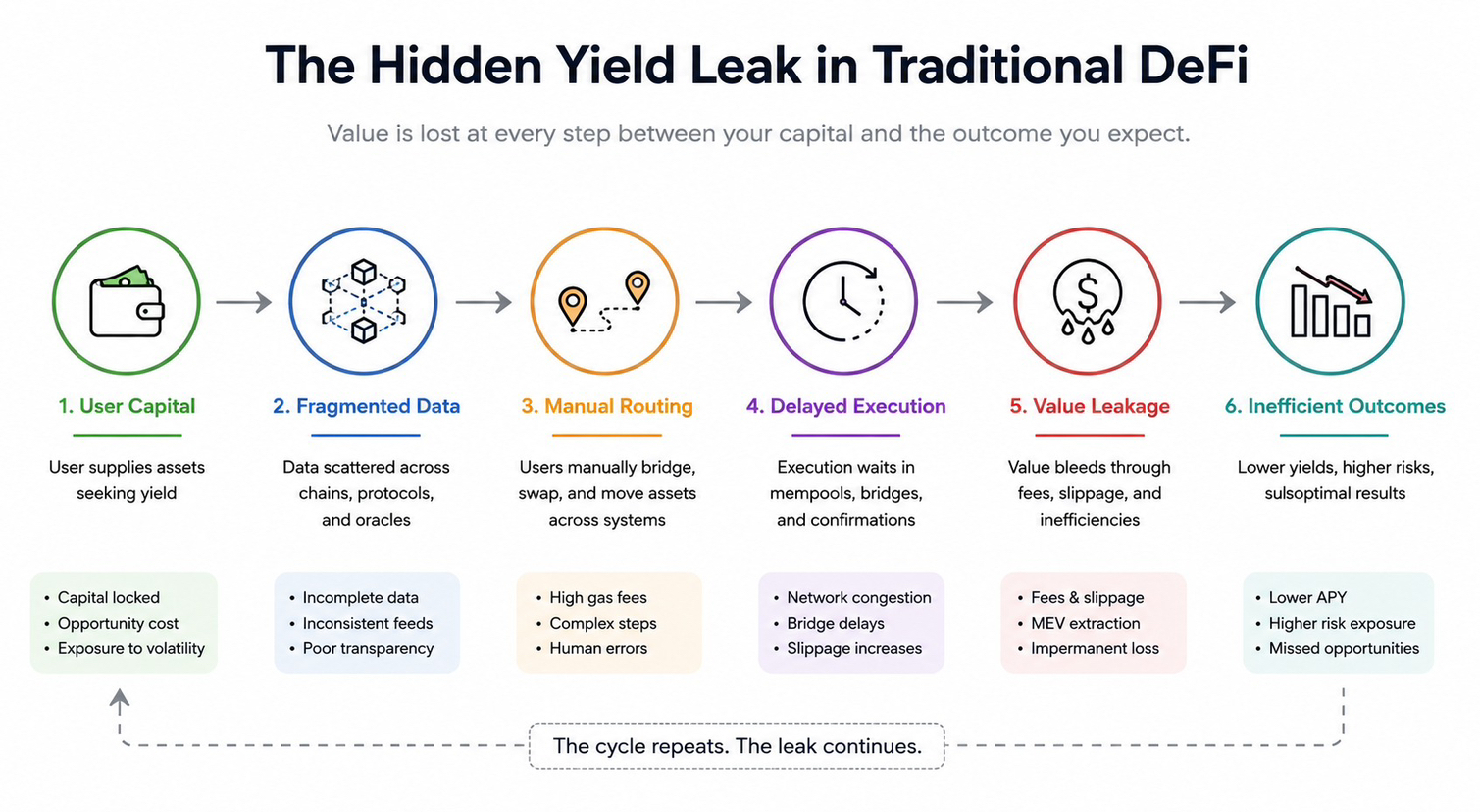
The more I think about it, the more this resembles supply chain logistics.
Global logistics companies became dominant because they mastered visibility. They knew where products originated, where delays happened, and how coordination could be optimized dynamically in real time. OpenLedger applies similar logic to decentralized intelligence systems. Datanets organize structured data flows. OpenLoRA enables modular fine-tuned model collaboration. Proof of Attribution creates traceable economic relationships between contributors, models, agents, and execution outcomes.
Suddenly AI stops feeling abstract.
It starts behaving like infrastructure.
According to recent ecosystem activity metrics, OpenLedger has already processed more than 25 million attribution linked AI events across its network layers, while ecosystem participation has crossed 1.4 million users alongside over 3 million wallet interactions tied to protocol activity. Those numbers aren’t interesting simply because they’re large. What matters is the behavioral pattern underneath them. The network is already experimenting with economic systems where intelligence contribution itself becomes measurable on chain.
To be honest, I don’t think the market fully understands what that changes.
Because traditional DeFi optimized liquidity allocation. OpenLedger seems focused on optimizing execution coordination instead. That distinction feels subtle at first, but it completely changes the architecture of value creation. In older DeFi systems, capital was the center of gravity. In AI native systems, informational efficiency may become the dominant resource instead.
Who routes decisions fastest?
Who coordinates execution most accurately?
Which agents adapt best to changing conditions?
Which datasets continuously improve model behavior?
These questions start mattering more than static yield percentages over time.
And maybe that sounds dramatic. But I don’t think it is.
Right now, users still operate crypto manually like exhausted air traffic controllers. We bridge assets, monitor gas fees, switch chains, rebalance strategies, compare yields, manage wallets, and process fragmented information streams constantly. Humans are acting like middleware between ecosystems that increasingly look capable of coordinating autonomously.
OpenLedger’s infrastructure direction hints toward something very different.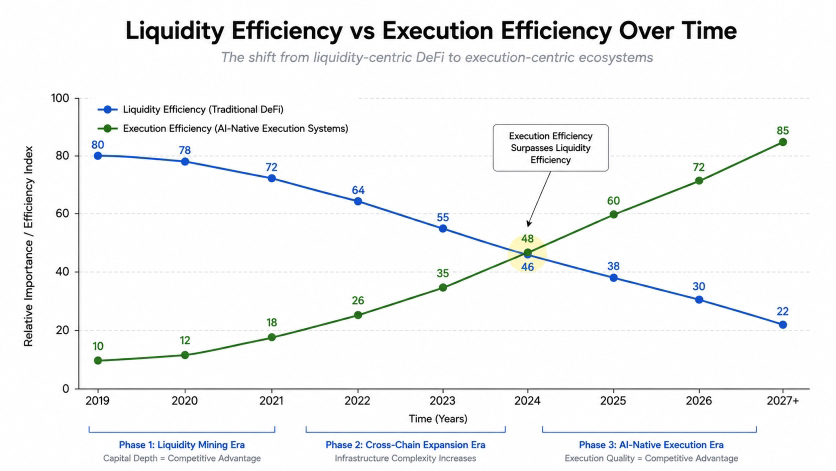
AI agents could theoretically use Datanets for structured information access, OpenLoRA for adaptive model specialization, and Proof of Attribution to verify contribution lineage while executing cross-chain actions dynamically in real time. Instead of manually optimizing every movement ourselves, autonomous systems could coordinate liquidity routing, data sourcing, strategy execution, and settlement continuously underneath the surface.
And the strange part is pieces of that future already exist.
But there’s another side to this.
The more execution becomes autonomous, the more difficult systems become to observe psychologically. Most users already struggle to understand traditional DeFi risks. AI native execution layers introduce entirely new categories of complexity. Attribution spoofing. Synthetic data poisoning. Agent collusion. Model manipulation. Feedback loops optimized for short term extraction rather than long term ecosystem health.
This is where the idea becomes difficult.
Because OpenLedger is not merely building AI tooling for blockchain users. It’s attempting to create economic coordination systems where machine intelligence itself participates inside decentralized markets with programmable incentives attached to behavior.
That’s a much larger shift than people realize.
And history suggests foundational infrastructure transitions usually appear confusing before they appear obvious. Early cloud computing looked unnecessary before digital economies scaled globally. TCP/IP looked boring before the internet absorbed commerce, communication, and culture simultaneously. Execution infrastructure is often invisible right before it becomes indispensable.
Maybe we’re approaching a similar moment with AI native blockchain coordination layers now.
I still keep thinking about one uncomfortable implication though.
Once autonomous execution systems mature, humans may gradually stop interacting directly with infrastructure altogether. You stop choosing chains manually. You stop optimizing yield strategies manually. You stop routing liquidity manually. Instead, you express intent while AI systems negotiate execution pathways underneath the surface dynamically.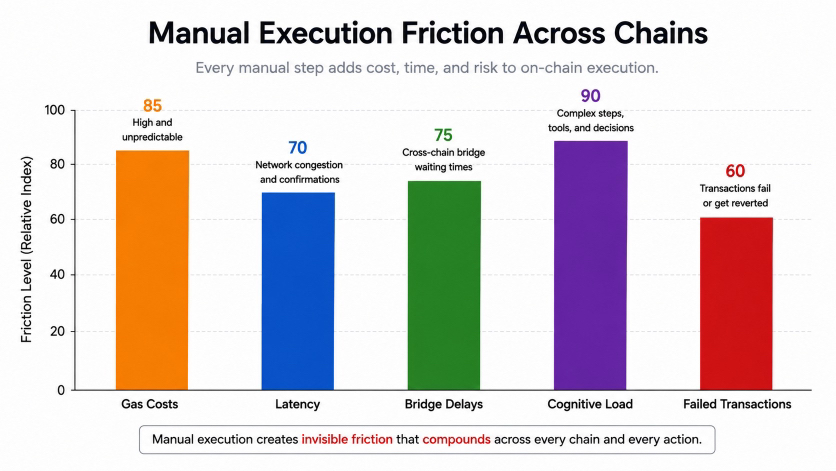
At that point, trust shifts away from interfaces and toward invisible coordination architectures.
That psychological transition feels enormous to me.
OpenLedger’s OPEN token ecosystem becomes important here not simply as a speculative asset, but as the coordination mechanism binding attribution rewards, governance participation, model incentives, execution validation, and decentralized contribution economies together. The token is less interesting as “currency” and more interesting as behavioral infrastructure for aligning machine driven ecosystems over time.
And honestly, I’m still unsure whether crypto is fully prepared for that transition.
Because if intelligence becomes programmable, attributable, and economically composable, then the definition of value inside blockchain systems changes completely. Yield no longer emerges only from passive liquidity provisioning. It emerges from producing useful intelligence, coordinating execution efficiently, improving adaptive models, and sustaining informational advantage across decentralized environments.
That is not the same market structure DeFi started with years ago.
And maybe that’s the real reason OpenLedger keeps pulling my attention back.
Not because it promises higher yields.
But because it quietly asks a much bigger question underneath everything else:
What happens when blockchain networks stop competing to store value and start competing to coordinate intelligence itself?
I don’t think we fully know the answer yet.