The strange thing about AI in 2026 is that almost everyone keeps celebrating outputs while quietly avoiding the conversation about inputs.
New models appear every week. Faster. Smoother. Better branding. Bigger promises. But under all that noise, there’s an uncomfortable reality sitting in plain sight: the internet is filling with synthetic content at a ridiculous pace. Low-effort threads. Auto-written blogs. AI comments replying to AI comments. Half the timeline feels recycled now.
That changes the value of real data completely.
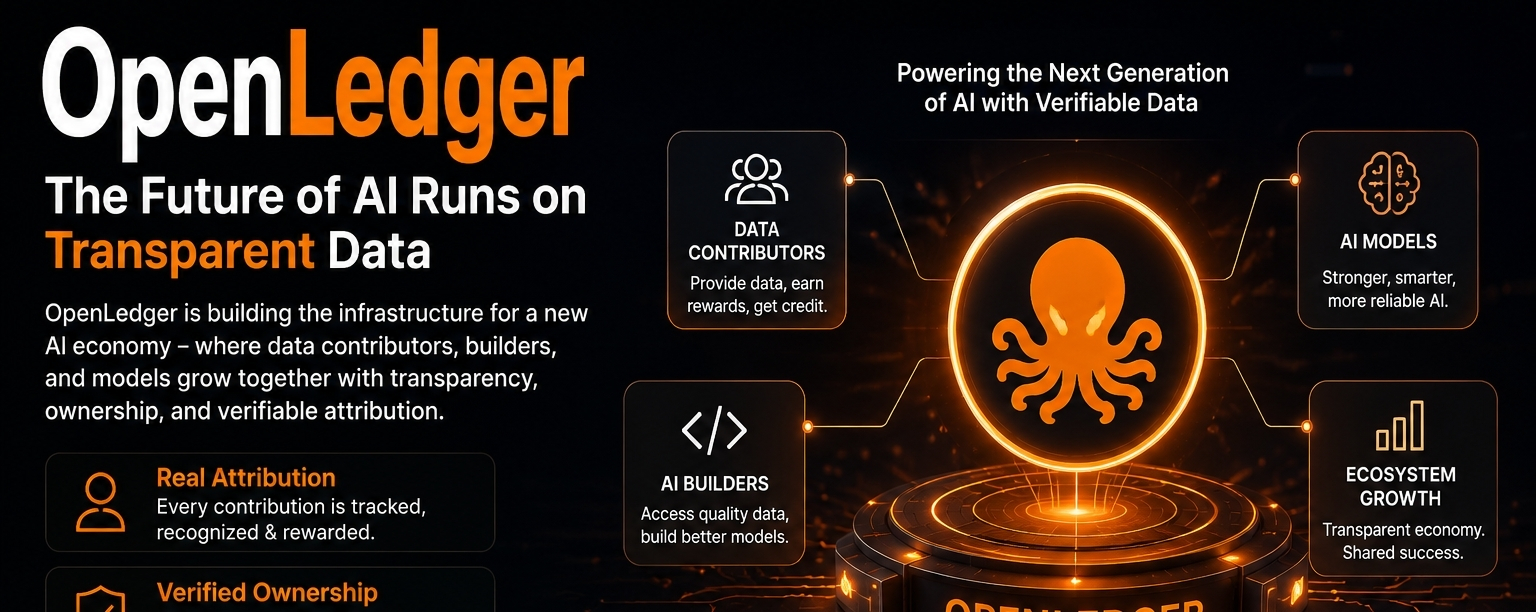
Which is partly why @OpenLedger has been getting attention from people who are tired of watching the same cycle repeat across crypto-AI projects. Instead of treating data like an invisible resource that magically appears, OpenLedger is building around contribution tracking, ownership, and verifiable participation inside AI ecosystems. That matters more than many people realize.
A few weeks ago I noticed a small thing during an AI community discussion. Builders weren’t arguing about model size anymore. They were arguing about data quality. Tiny shift. Big signal.
Because once polluted datasets start feeding future models, the problem compounds fast.
OpenLedger’s direction feels connected to that exact pressure. The idea is less about hype and more about creating cleaner incentive structures around useful human contribution. If someone provides meaningful data, context, labeling, validation, or domain expertise, the system should recognize where that value came from instead of absorbing it into a black hole.
Honestly, the old system was broken anyway.
Most contributors online generate value while platforms quietly keep the upside.
The interesting part is how decentralized infrastructure changes the psychology around participation. People contribute differently when ownership becomes visible. Communities behave differently too. Low-effort farming still exists of course this is crypto, nobody should pretend otherwise but transparent attribution changes incentives in ways centralized AI pipelines usually ignore.
And timing matters here.
As enterprises become more cautious about unreliable AI outputs, verifiable datasets start becoming commercially important instead of just technically interesting. That’s where projects like OpenLedger may end up sitting in a surprisingly valuable position over the next few years.
Not glamorous. Not loud. Just useful.
There’s also growing fatigue around AI systems trained on endless loops of duplicated machine-generated text. Some researchers have already warned about model collapse risks tied to recursive synthetic training data. People laughed at those concerns early on. They don’t laugh as much now.
That’s why the infrastructure layer around trusted contribution suddenly feels important again.
$OPEN is becoming part of that broader conversation because the market is slowly realizing that smarter models alone won’t solve degraded information environments. Better incentives around data might.
And weirdly enough, that conversation feels more mature than another benchmark screenshot posted at 2 AM with dramatic music behind it.