
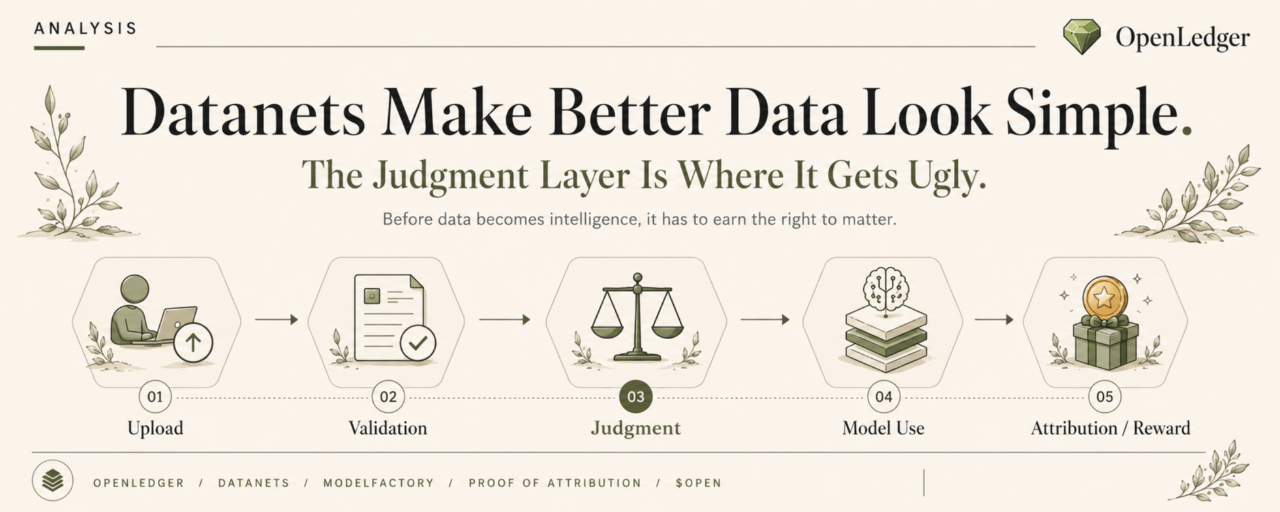
I used to treat AI trading tools like advisors.
You ask a question.
They give an answer.
You decide what to do with it.
Simple separation. Low risk.
If the AI is wrong, you blame it.
If you’re wrong, you blame yourself.
Either way, nothing actually moves unless you click the button.
That mental model breaks the moment the agent stops talking and starts acting.
That is the shift OpenLedger (@OpenLedger ) seems to be moving toward.
Not just agents that analyze markets, but agents that can eventually sit closer to execution, touching vaults, routing through strategies, interacting with on-chain rails. Once you bring things like Octoclaw, ERC-4626 integrations, and cross-chain movement into the picture, the question changes completely.
It is no longer:
“Is this analysis good?”
It becomes:
“Should this system be allowed to do something with real capital?”
That is a very different level of responsibility.
Because thinking is cheap.
Execution is expensive.
A model can hallucinate in a chat and nobody really cares. Worst case, you ignore it. But if that same logic is connected to a vault strategy, liquidity route, or automated flow, weak reasoning stops being annoying and starts being dangerous.
This is where OpenLedger’s architecture starts to matter in a more grounded way.
If an agent is going to act, the inputs feeding it cannot be random. That is where Datanets quietly become critical. Not as a buzzword, but as a filter. A trading or DeFi agent pulling from structured, domain-specific data has a completely different risk profile than one built on generic, noisy inputs. Cleaner memory reduces the chance that the system acts on garbage dressed up as insight.
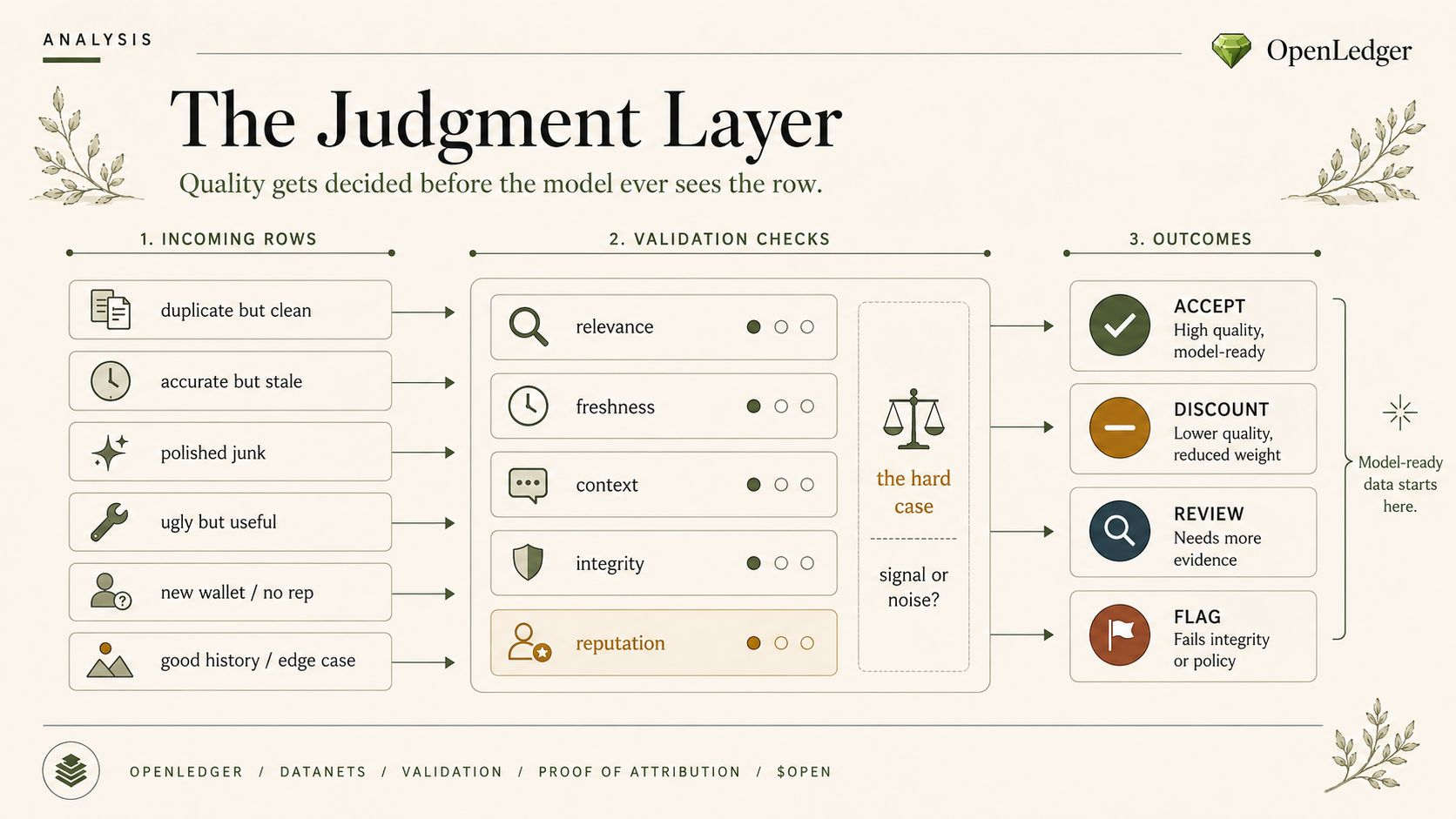
But good input is only half the story.
Once an agent does something, moves capital, interacts with a vault, shifts a strategy, the next question hits immediately:
What exactly made it do that?
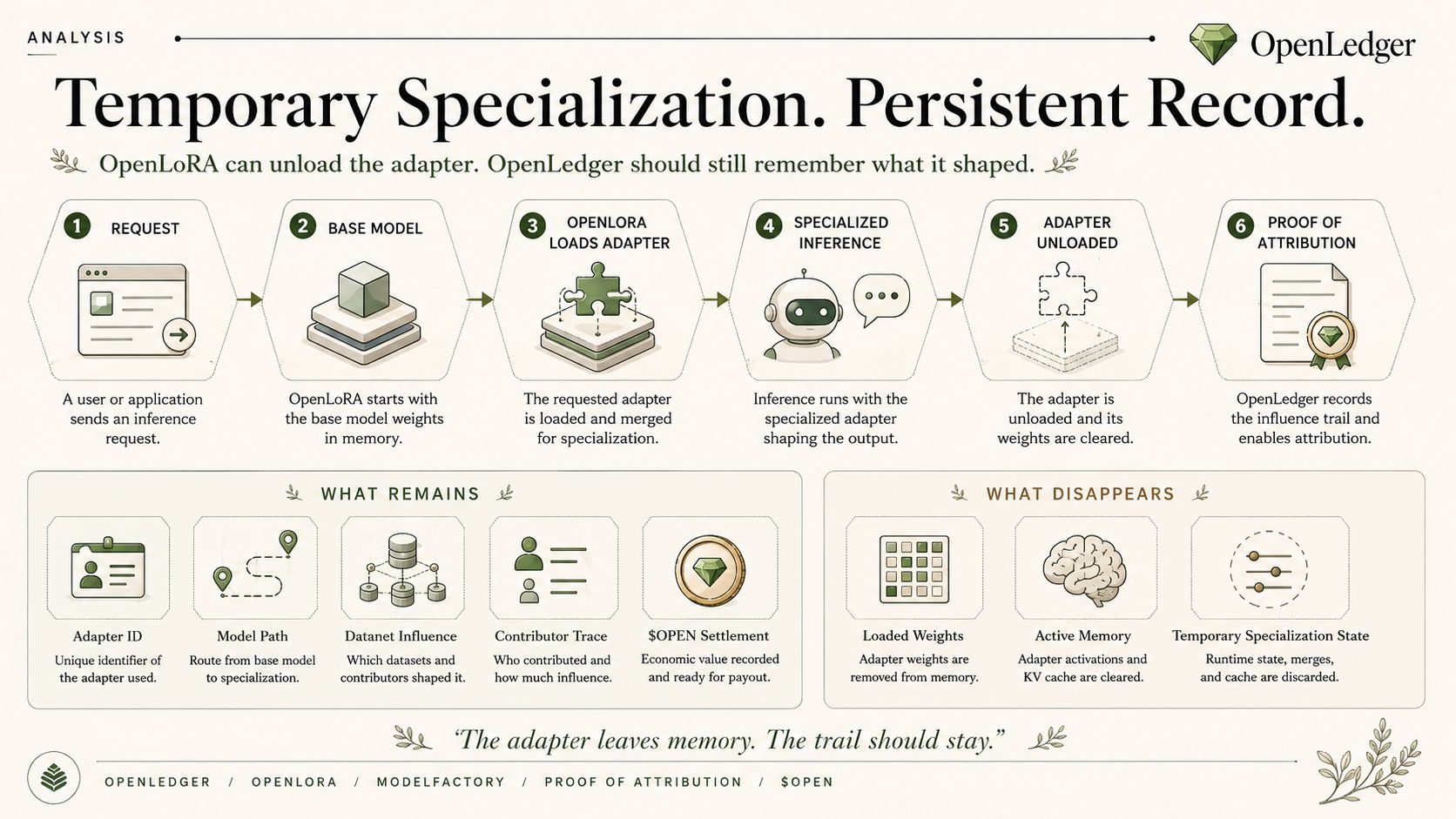
on OpenLedger, Proof of Attribution stops sounding like infrastructure and starts feeling like a safety layer. If an action was triggered, the system should not just record that it happened. It should expose why it happened. Which data mattered? Which model logic pushed the decision? Which signal carried weight?
Without that, you are not running an intelligent system.
You are trusting a black box with execution rights.
That is not a comfortable place to be, especially in markets.
The OpenLedger build layer matters more here too than people think. ModelFactory is not just about making deployment easier. It changes how quickly a builder can respond when something breaks. If an agent behaves badly in live conditions, you need to adjust, redeploy, and refine fast. Markets do not wait for clean architecture.
And I do not think one giant model should be anywhere near execution.
That is where OpenLoRA fits naturally into this picture. Execution feels like a job for specialists, not generalists. One module watching liquidity conditions. Another tracking DeFi risk. Another monitoring token flows. Another reacting to protocol changes. Let smaller OpenLedger systems handle specific responsibilities instead of one oversized brain pretending to understand everything equally well.
The more you think about it, the clearer the shift becomes.
Most AI today is built to sound right.
The next wave has to behave responsibly.
And behavior is where systems get tested.
That is also where OpenLedger ($OPEN ) becomes more interesting to me, but only if this direction turns into real activity. Not just agents that explain markets, but agents that operate inside them. Not just outputs, but actions backed by traceable reasoning, structured data, and visible contribution trails.
Because once AI starts touching capital, the standard changes.
You do not just ask:
“Was the answer good?”
You ask:
“Was the action justified?”
That is a harder question.
And that is exactly why the backend matters more than the interface.