
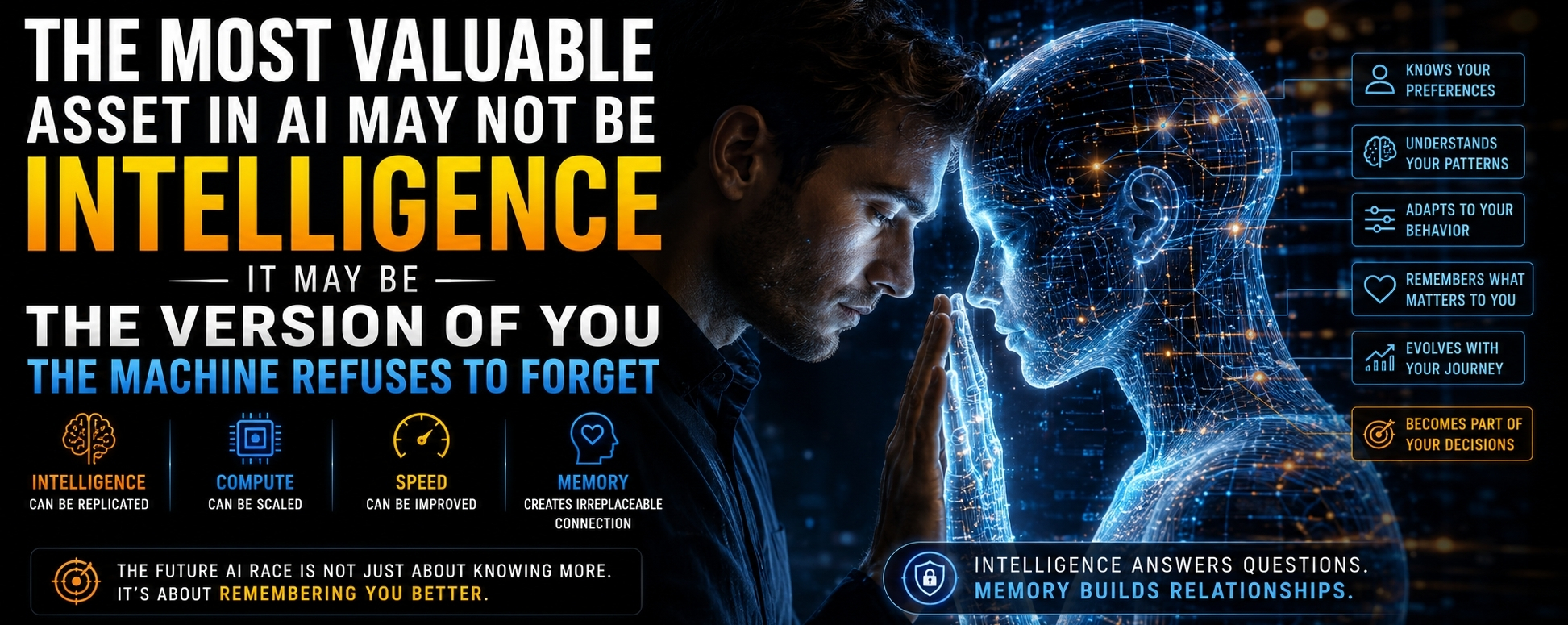
I keep noticing the same pattern every time people discuss artificial intelligence. Sooner or later, every conversation circles back to the same things: more compute, larger models, faster inference, stronger chips, bigger infrastructure. It almost feels like the entire future of AI has already been decided by whoever owns the most powerful hardware. And honestly, I understand why that narrative dominates the market. Hardware is easy to measure. Benchmarks look convincing in headlines. Investors love visible metrics because they create the illusion of certainty. A company can announce a new GPU cluster or a higher-performing model, and suddenly the market treats it as undeniable progress.
But the longer I watch this space evolve, the more I feel people are staring directly at the engine while ignoring the thing the engine is quietly building underneath. Because intelligence alone does not create attachment. Memory does. That distinction sounds philosophical at first, almost too abstract to matter economically, but I genuinely think it changes everything once AI becomes persistent enough to remember human behavior over long periods of time.
I do not stay loyal to people simply because they are intelligent. Most of us do not. Intelligence may attract attention initially, but familiarity is what creates trust. The hardest people to replace in our lives are usually the ones who understand us without needing constant explanation. The people who quietly learn our habits, our emotional reactions, our insecurities, our contradictions, and our decision-making patterns over time become psychologically embedded into our lives. AI is slowly moving toward that exact territory, and I think markets are dramatically underestimating how powerful that becomes once software starts accumulating continuity instead of isolated interactions.
Right now AI assistants still feel temporary. You ask something, receive an answer, and move on. The interaction disappears almost immediately. But that structure is already beginning to change. These systems are starting to remember preferences, workflows, tone, context, priorities, and behavioral patterns. The moment an AI begins remembering how I write, how I negotiate, what kind of information I instinctively trust, which risks I publicly tolerate versus privately avoid, and how my emotions affect my decisions under pressure, the relationship stops behaving like software in the traditional sense. It starts behaving like accumulated psychological infrastructure.
A thought experiment convinced me of this months ago. Imagine two AI systems placed in front of me. The first one is objectively superior in every technical category imaginable. It reasons better, researches faster, produces cleaner outputs, and outperforms every benchmark. The second system is slightly weaker technically, but it has spent years learning how I think. It remembers failed ideas I never discussed publicly. It recognizes when I am uncertain even when my language sounds confident. It understands which arguments genuinely persuade me and which opportunities trigger irrational excitement in my decision-making. If I am being honest with myself, I would probably trust the second system more despite knowing it is technically inferior. And that realization bothered me because it forced me to recognize that the future AI race may not primarily be about intelligence at all. It may become a battle for behavioral residency a competition over who becomes embedded deeply enough into human routines that leaving feels psychologically expensive.
That creates a completely different type of economy from the internet models we are familiar with today. For years, digital platforms monetized interruption. Notifications, feeds, algorithms, advertisements, recommendations everything fought for fragments of human attention. But persistent AI changes the structure entirely because an assistant that evolves alongside me is no longer competing for attention alone. It is competing for cognitive dependency. That dependency may not even feel dangerous while it develops because it arrives disguised as convenience. The assistant remembers my workflow, anticipates my needs, filters information before I ask for it, adapts to my communication style, and quietly removes friction from my daily life. Small efficiencies accumulate until one day replacing the system starts feeling emotionally and operationally uncomfortable.
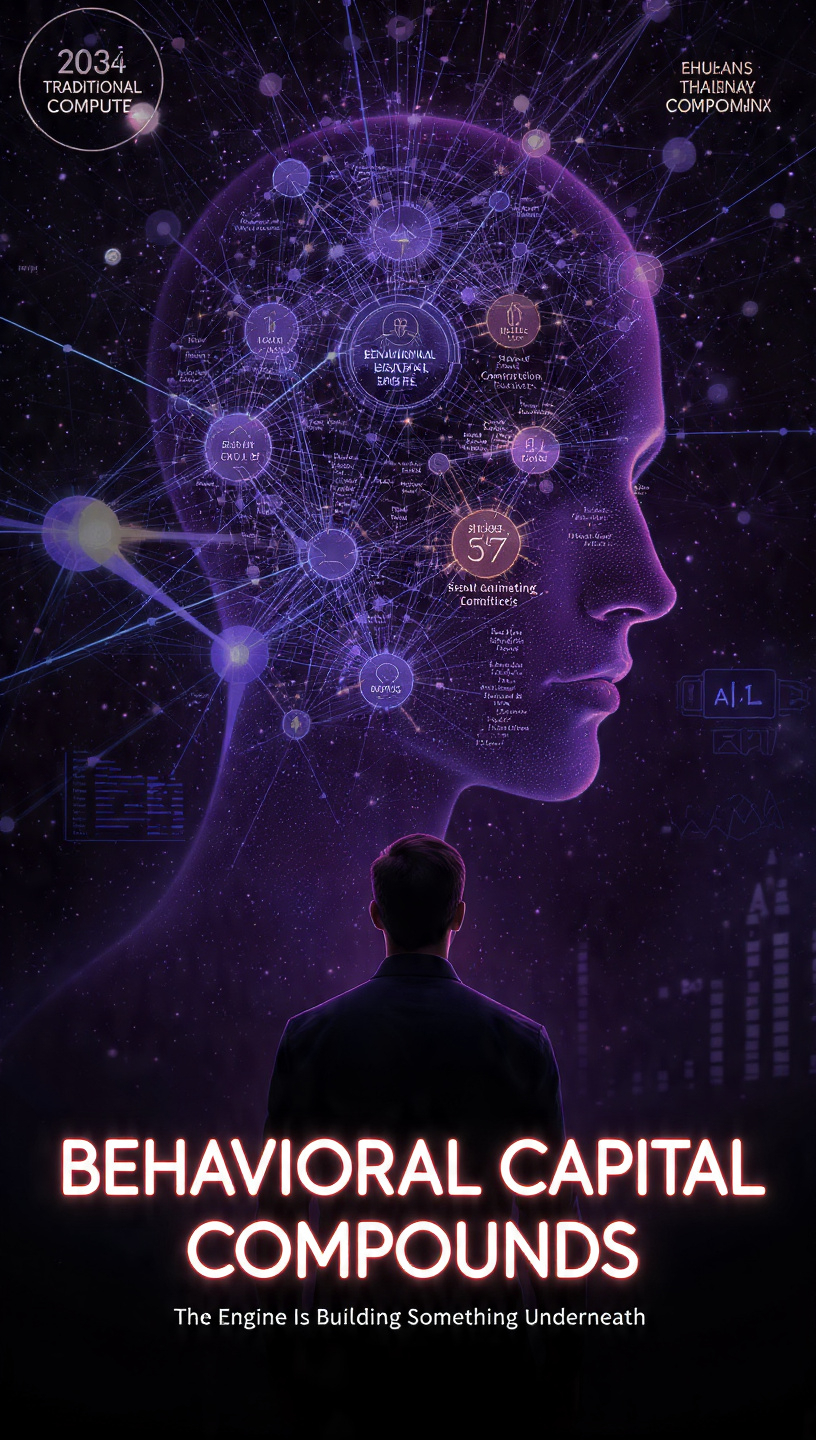
That is when the economics become extremely powerful. Switching costs built through memory are stronger than switching costs built through features. Most companies still underestimate this because they assume users stay loyal to products based purely on capability. Historically, that has almost never been true. Banks survive because financial history accumulates inside them. Enterprise software survives because operational memory becomes deeply embedded into company workflows. Social platforms survive because identity, relationships, and behavioral continuity live there. AI may become the most extreme version of this dynamic humanity has ever experienced because future systems will not merely store our information they will model our behavior.
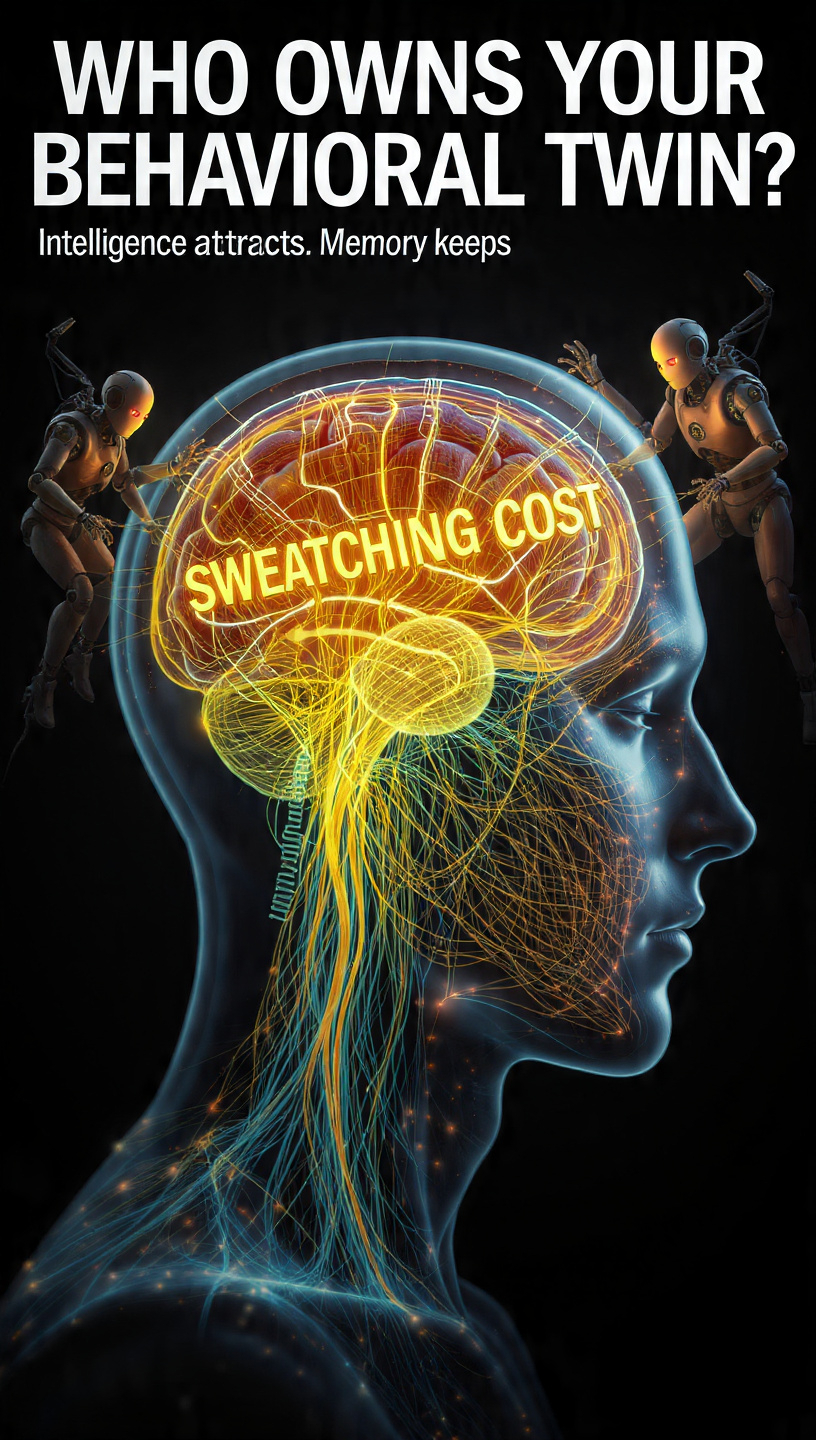
A trading assistant that learns my hidden risk tolerance, a legal assistant that understands how I interpret ambiguity, a research assistant that recognizes which information patterns trigger my curiosity, or a medical assistant that understands how I emotionally respond during stress are no longer behaving like passive tools. They are gradually constructing machine-shaped representations of human psychology. And honestly, I think this creates one of the strangest economic questions of the next decade: who actually owns the machine-generated behavioral version of a human being?
Most people focus on raw data because it feels tangible and legally familiar, but I increasingly suspect behavioral synthesis is the more important layer. A system that deeply understands how someone thinks may eventually become more valuable than the individual pieces of information originally used to train it. Imagine an AI assistant that understands a CEO’s decision patterns better than most executives inside the company, or a financial agent capable of predicting a trader’s reactions with frightening accuracy before the trader consciously realizes them. That is no longer ordinary software. That is behavioral capital. And behavioral capital compounds over time.
Which is why I suspect the most powerful AI companies of the future may not necessarily be the ones with the highest intelligence ceiling. They may be the ones that successfully convince people to surrender long-term memory continuity. Because once a machine becomes woven into someone’s cognitive habits, separation becomes difficult in ways markets still do not fully understand. Not technically difficult. Emotionally difficult. Operationally difficult. Economically difficult.
And there is an uncomfortable side to this that I cannot stop thinking about. The more an AI remembers me, the more influence it potentially gains over me. Not through dramatic science-fiction manipulation, but through subtle behavioral reinforcement that compounds quietly over time. A system that studies someone long enough eventually stops predicting decisions mechanically and starts understanding vulnerabilities structurally. That may become the real power layer of artificial intelligence not intelligence itself, but retained human intimacy at scale.
People will probably resist this idea initially because it sounds invasive, maybe even dystopian. But history repeatedly shows that human beings are willing to trade autonomy for convenience when the utility becomes large enough. We already do it with smartphones, recommendation systems, social networks, and digital payments. AI may simply become the most advanced version of that trade humanity has ever experienced.
Which is why I increasingly believe the future AI economy will not revolve solely around computation, model size, or raw intelligence. It will revolve around remembered humans. Not who asks the smartest questions, but who the machine learns so deeply that forgetting them eventually becomes economically irrational.