
In 2008, when the global financial crisis shook the world, trust in traditional banks and financial systems began to collapse. During that uncertain time, an anonymous figure named Satoshi Nakamoto introduced an idea that would eventually change finance forever. That idea was Bitcoin a digital currency that operates without banks, governments, or centralized control.
When Bitcoin launched in 2009, most people saw it as nothing more than an internet experiment. Very few believed it could become valuable. In fact, one of the earliest real-world Bitcoin transactions involved 10,000 $BTC being used to buy just two pizzas. Today, that same amount would be worth hundreds of millions of dollars, showing how dramatically Bitcoin has evolved over the years.
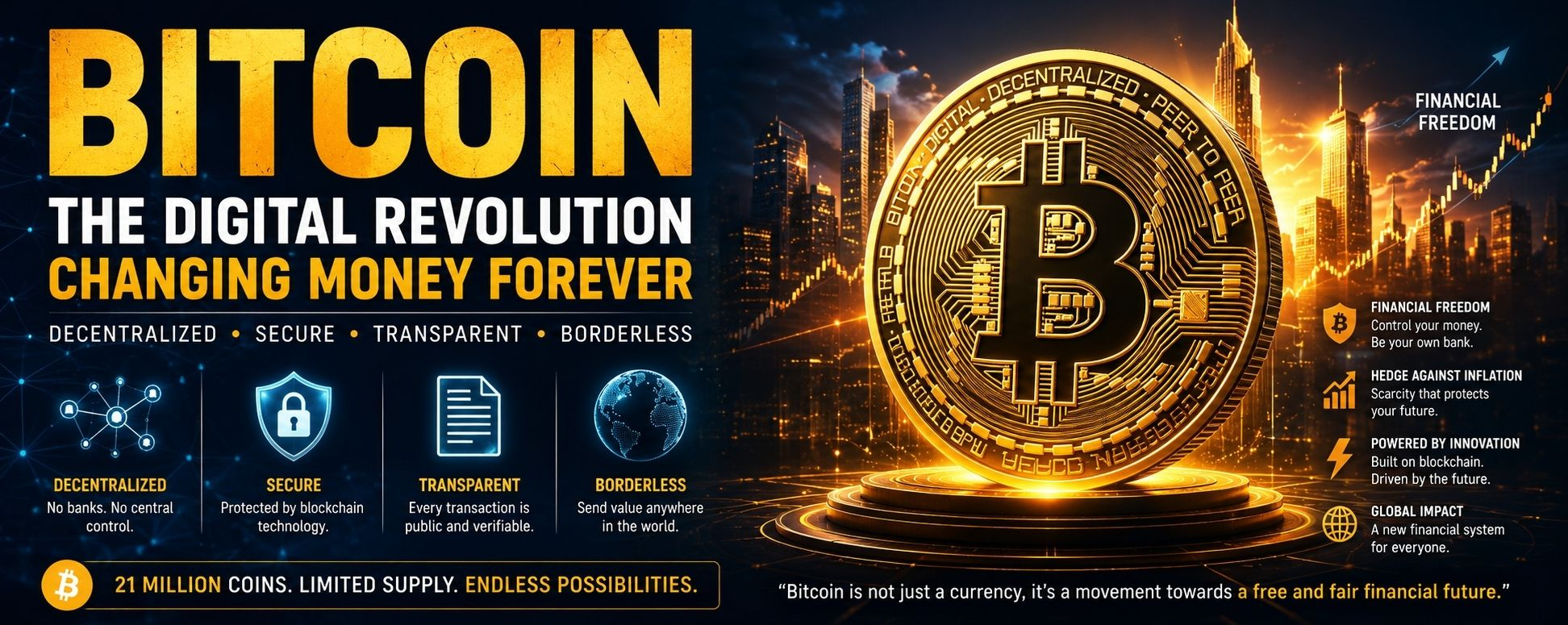
What makes Bitcoin different from traditional money is its decentralized nature. Unlike fiat currencies that governments can print endlessly, Bitcoin has a fixed supply of only 21 million coins. This scarcity is one of the main reasons many investors now call it “digital gold.” Every Bitcoin transaction is recorded on a blockchain a transparent public ledger secured by thousands of computers around the world. This system makes Bitcoin highly secure, resistant to censorship, and independent from any single authority.
Over the past decade, Bitcoin has transformed from a niche technology into a global financial asset. Major companies, investment firms, and even some governments have started recognizing its value. Many investors see Bitcoin as protection against inflation and economic instability, especially in countries where local currencies continue to lose value.
Supporters believe Bitcoin represents financial freedom. It allows people to send and receive money globally without relying on banks or payment processors. For millions of people living under unstable economies or strict financial restrictions, Bitcoin offers an alternative system that cannot easily be controlled.
However, Bitcoin’s journey has not been without controversy. Its price volatility remains one of the biggest concerns. Massive price surges are often followed by sharp crashes, making the market unpredictable. Critics argue that Bitcoin is too speculative to become a stable global currency, while supporters believe volatility is normal for a revolutionary technology still in its early stages.
Environmental concerns have also become part of the debate. Bitcoin mining consumes large amounts of electricity, leading to criticism from environmental groups. At the same time, many mining companies are now shifting toward renewable energy sources and more efficient technologies to reduce their environmental impact. #bitcoin
Despite the criticism, Bitcoin has already changed the conversation around money and financial power. It proved that digital assets can exist outside the traditional banking system and still gain global trust. More importantly, it introduced the idea that people can truly own and control their wealth without depending entirely on centralized institutions.
Today, $BITCOIN is more than just a cryptocurrency. It has become a symbol of technological innovation, financial independence, and the future of decentralized finance. Whether it eventually becomes a global reserve asset or simply remains digital gold, one thing is certainBitcoin has permanently changed the world’s understanding of money.