
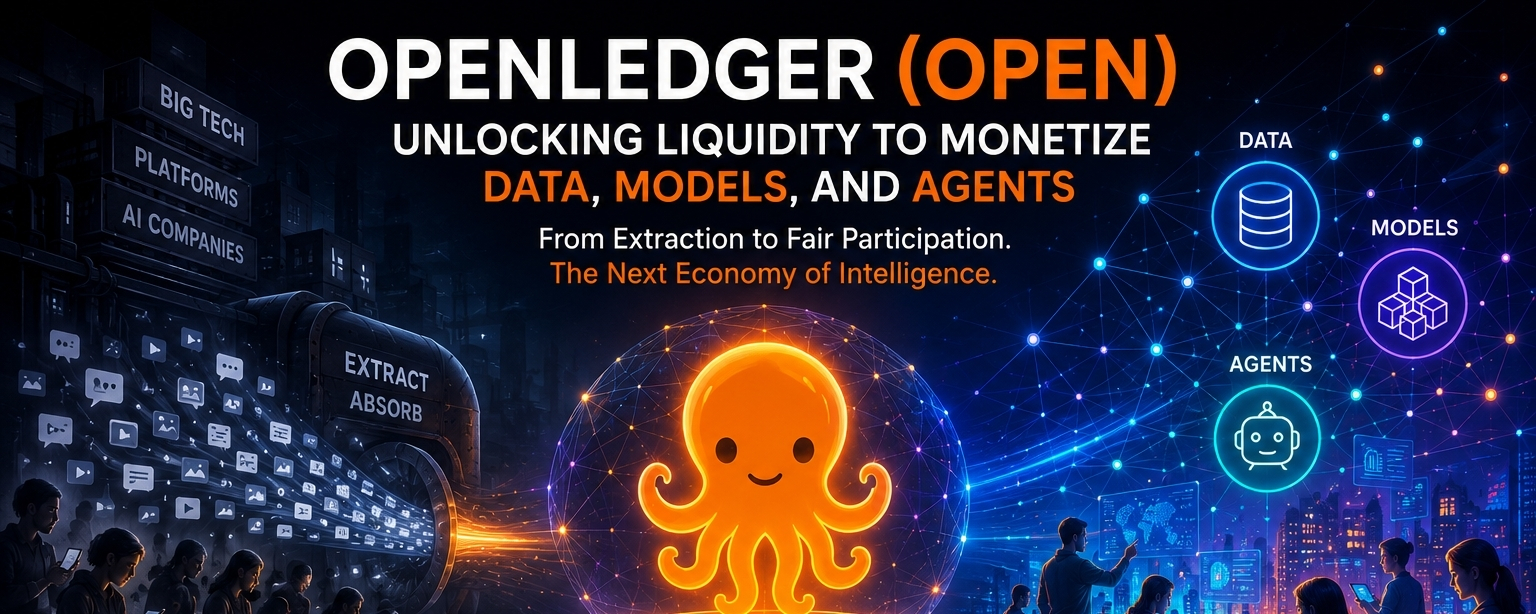
Here’s the thing nobody really wants to say out loud:
The internet trained billions of people to give away their intelligence for free.
Not just their attention. Their actual intelligence.
Think about how much value people create online every single day. Random Reddit threads explaining complex topics better than university lectures. Tiny accounts dropping insanely useful insights. Developers fixing bugs in public. Researchers sharing ideas. Communities answering questions for strangers at 2AM for absolutely no reason except “someone needed help.”
AI systems absorb all of it.
Constantly.
And honestly, most people still haven’t processed how massive that shift really is.
Because this isn’t just about chatbots or AI tools getting better. That’s the surface-level conversation. The deeper story is that human knowledge itself has become raw material for the next economic era.
That sounds dramatic. I know.
But look around.
The biggest AI companies in the world need endless streams of human-generated data to improve their systems. Conversations. Context. Reactions. Corrections. Explanations. Specialized knowledge. Cultural nuance. All of it matters.
And the weird part?
The people creating most of that value rarely participate in the upside.
That’s where things start feeling... off.
For years, the internet rewarded visibility above everything else. Whoever captured attention won. Loud opinions. Viral clips. Outrage farming. Algorithms loved all of it because attention became the business model.
I’ve seen this pattern for a long time, honestly. Platforms say they “empower creators,” but most of them really optimize extraction. They monetize participation at scale while contributors fight over scraps of visibility.
And now AI enters the picture and quietly changes the rules again.
Because AI doesn’t actually care who’s famous.
It cares about usefulness.
That’s the shift people don’t talk about enough.
The next version of the internet probably won’t reward the loudest people nearly as much as it rewards the most useful contributors. The people improving datasets. Refining information. Training systems. Building reliable agents. Supplying niche expertise nobody else has.
That’s a completely different economy.
And I don’t think most people realize how big that change could become.
Sit with this for a second:
For the first time ever, human intelligence itself is becoming infrastructure.
Not metaphorically. Literally.
The internet started as a network of information. Then it became a network of people. Now it’s turning into a network of intelligence — human and machine constantly feeding each other.
That’s exciting. But let’s be real, it’s also dangerous if the same old extraction model survives into the AI era.
Because we’ve already seen what happens when a handful of companies control the value layer of the internet. Wealth concentrates fast. Contributors become disposable. Platforms win. Users adapt.
Same story. Different technology.
That’s why OpenLedger caught my attention.
Not because I think every project with “AI” attached to it matters. Most don’t. A lot of them just recycle buzzwords and hope retail traders fill in the blanks.
But OpenLedger touches a deeper problem that actually matters.
The core idea feels simple when you strip away the hype:
If people contribute value to AI systems, shouldn’t they participate in the value created by those systems too?
Honestly... yeah. They probably should.
And that’s where OpenLedger gets interesting.
Instead of treating AI like a closed corporate machine, it leans toward the idea of open economic participation around data, models, and AI agents. Not just ownership at the top. Contribution throughout the network.
That distinction matters more than people think.
Because the future AI economy probably won’t run on hype forever. Eventually, systems need high-quality inputs. Reliable intelligence. Specialized data. Actual utility.
And utility changes incentives.
This reminds me a little of the early internet days. Back then, most people underestimated how deeply digital infrastructure would reshape society. They thought websites were the story. They missed the fact that entirely new economic systems were forming underneath.
I think something similar is happening with AI right now.
People focus on the tools because the tools are visible.
But the ownership layer? The economic coordination layer? The question of who captures value from intelligence itself?
That’s the real game.
And honestly, this is where things get philosophical whether people like it or not.
Because AI forces society to answer uncomfortable questions.
Who owns knowledge once machines learn from everyone?
Who benefits when billions of human interactions train intelligent systems?
Who captures the upside from collective intelligence?
Right now, the answers look pretty centralized.
A few companies own the infrastructure. A few companies control distribution. A few companies absorb most of the economic leverage.
Maybe that continues. Maybe it doesn’t.
But I do think projects like OpenLedger represent a growing realization that the current setup feels incomplete. People sense it instinctively even if they can’t fully articulate it yet.
The old internet monetized attention.
The next internet may monetize contribution itself.
That’s a very different world.
And honestly? I think we’re still underestimating how strange and how important that transition could become over the next few years.
