
The AI industry moves so fast that most people barely have time to question what’s actually happening underneath it.
Every week there’s a new model.
A new partnership.
A new wave of hype convincing people that intelligence itself is the final destination.
But lately, I’ve been thinking about something much deeper than capabilities.
What if the real battle in AI isn’t about who builds the smartest system… but about who creates the fairest structure around it?
That thought is exactly why OpenLedger keeps pulling my attention back.
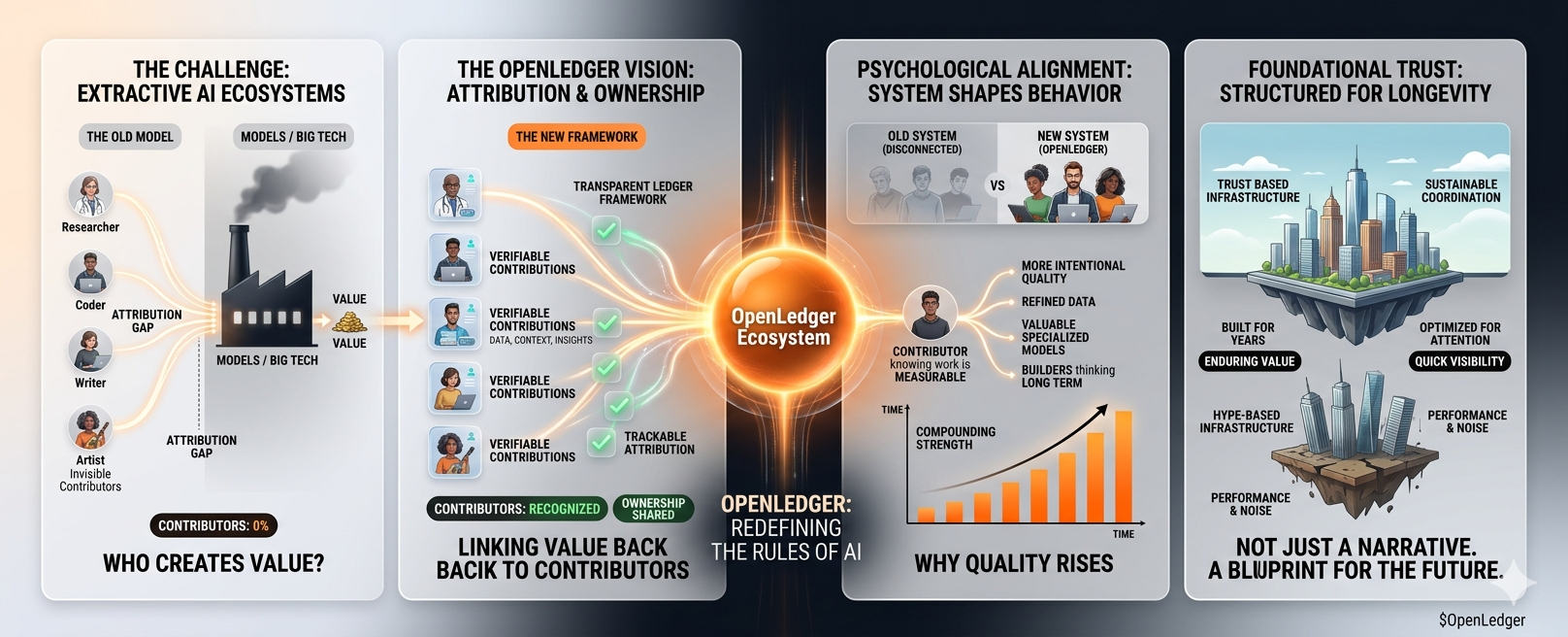
The more time I spend exploring the ecosystem, the less it feels like another AI project competing for short-term visibility. Instead, it feels like infrastructure quietly forming beneath the surface — a framework designed around attribution, ownership, and incentive alignment at a time when most of the industry still treats contributors like invisible resources.
And honestly, that difference feels massive.
Right now, AI grows because millions of people continuously feed it information, context, refinement, creativity, and behavioral data. Researchers improve models. Communities generate insights. Niche experts contribute specialized knowledge. But once value is created, most systems stop acknowledging the people who helped produce it.
That disconnect has existed for years.
The internet trains intelligence collectively… yet ownership remains concentrated.
OpenLedger seems to recognize that imbalance early.
Instead of focusing only on outputs, it focuses on traceability — creating an environment where contributions can actually be linked back to contributors through transparent infrastructure. At first glance, that might sound technical. But the deeper implication is psychological.
Because systems shape behavior.
When contributors know their work is measurable and recognized, they naturally become more intentional about quality. Data becomes more refined. Specialized models become more valuable. Builders think longer term instead of optimizing for quick attention. Over time, those small behavioral shifts compound into stronger ecosystems.
That’s the part many people still underestimate about AI.
Technology alone rarely creates durable systems. Alignment does.
And from my perspective, OpenLedger feels increasingly aligned with where the next phase of decentralized AI is heading. Not toward louder narratives — but toward sustainable coordination between intelligence, contribution, and ownership itself.
What also stands out to me is the project’s tone.
It doesn’t feel engineered purely for virality.
It feels structured for longevity.
There’s a calmness to the way the ecosystem positions itself that actually makes it more interesting in a market overloaded with performance and noise. While many platforms compete aggressively for visibility, OpenLedger appears focused on building foundational trust first.
Historically, infrastructure built on trust tends to outlast infrastructure built on excitement alone.
That’s why I don’t view OpenLedger as just another AI narrative anymore.
The project increasingly feels like an early blueprint for a future where contributors are no longer disconnected from the value they help create. And if AI continues expanding into every digital layer of society, that ownership layer may eventually become more important than the models themselves.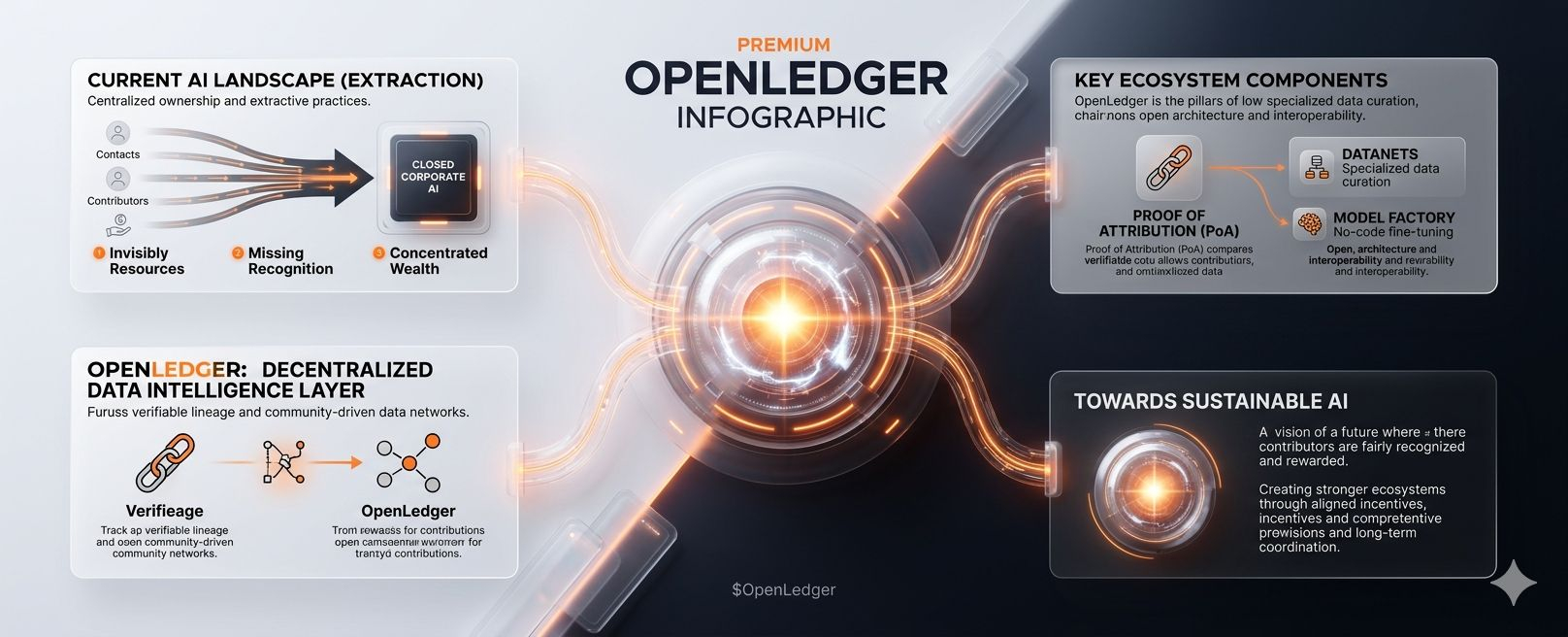
Maybe that’s the quiet realization happening here.
The future of AI may not belong only to the companies building intelligence.
It may belong to the ecosystems capable of distributing its value fairly.
