
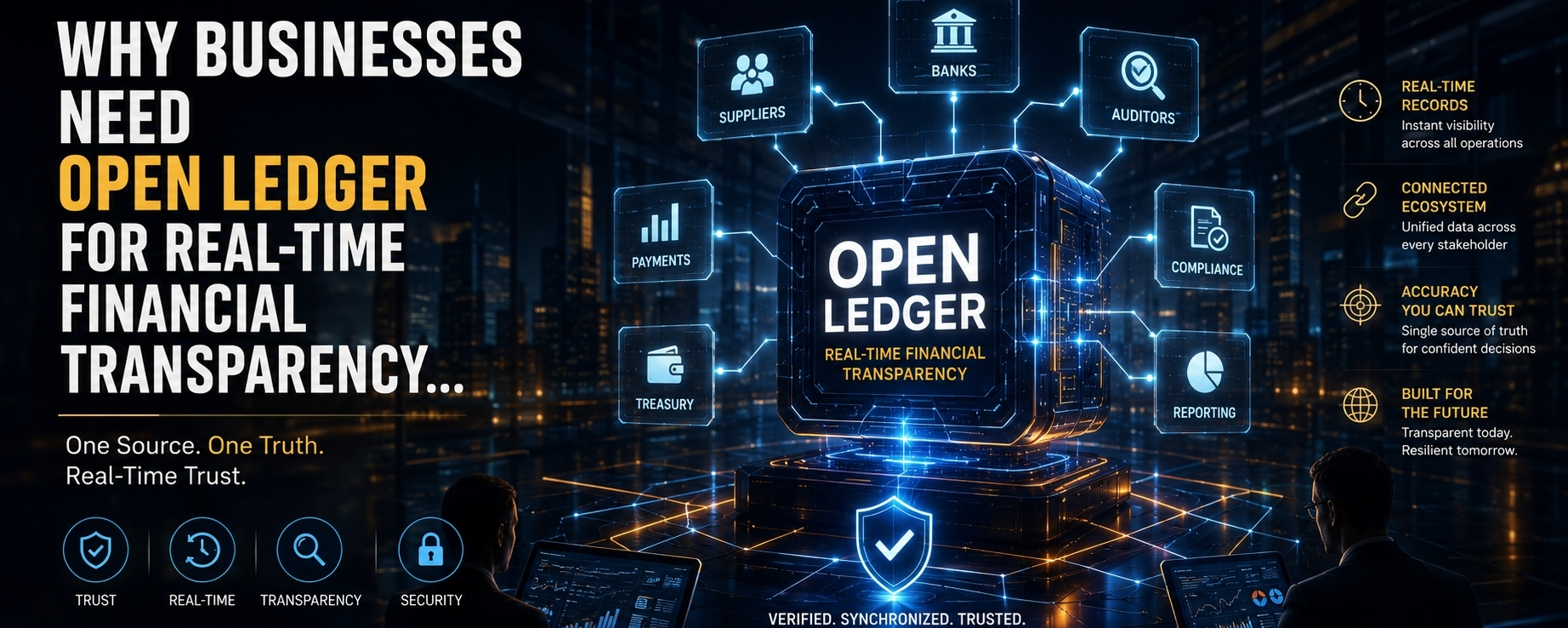
Every few years the financial industry finds a new way to market trust. First it was enterprise software. Then cloud accounting. Then blockchain.
Now the conversation has shifted toward Open Ledger systems and “real-time financial transparency.”
It sounds impressive. Efficient. Almost overdue.
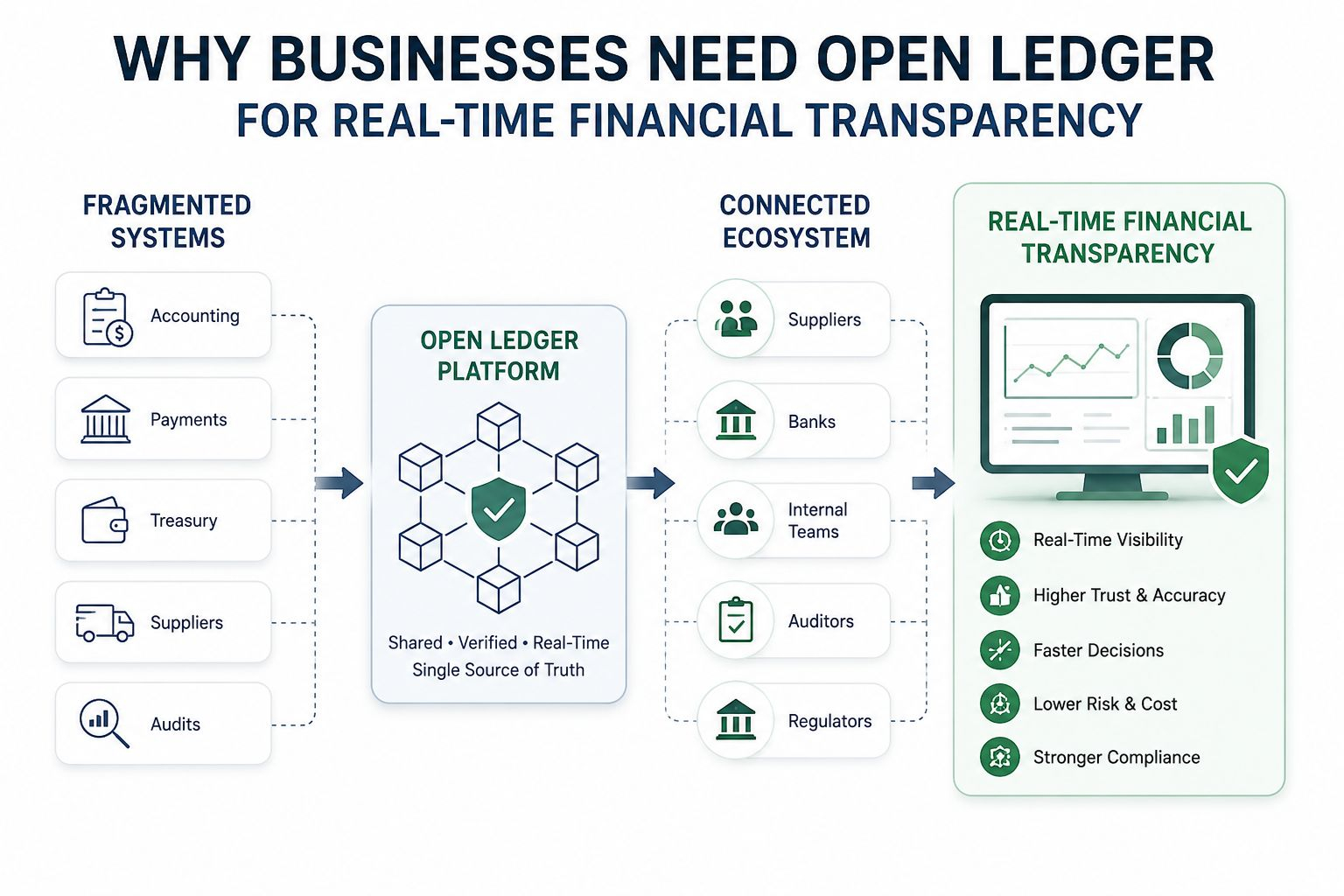
The core argument behind Open Ledger is simple enough. Most large companies still operate on fragmented financial systems where accounting records, supplier payments, treasury operations, and audits move through disconnected databases.
One department sees one version of reality. Another sees something slightly different. Reconciliation becomes a constant exercise because nobody fully trusts the numbers flowing through the system.
That problem is real.
Modern businesses can track shipments globally in real time, yet many still close their financial books using spreadsheets, manual approvals, and delayed reporting cycles that belong to another era.
When markets are stable, companies survive the inefficiency. When pressure hits liquidity problems, supply chain shocks, or counterparty failures the cracks suddenly become visible.
This is where Open Ledger systems enter the discussion.
The idea is to create synchronized financial records where transactions are verified continuously instead of weeks or months later. Suppliers, banks, auditors, and internal teams would all work from shared operational data instead of isolated reporting systems constantly arguing with each other.
On paper, it sounds clean.
But let’s be honest. Financial opacity exists for a reason.
Executives like flexibility. Banks protect informational advantages. Governments themselves often rely on delayed reporting structures because real-time oversight creates political and regulatory pressure.
Transparency sounds attractive until it starts reducing leverage for the people already controlling the system.
That is the first catch most marketing teams avoid discussing.
The second problem is decentralization or the lack of it.
Most Open Ledger platforms talk about distributed trust, but when you look closely, somebody still controls the network.
Somebody defines access rules. Somebody approves participants. Somebody manages governance. In many cases, these systems are simply centralized infrastructure wearing blockchain branding.
The language changes. The power structure often does not.
I watched this happen repeatedly in crypto infrastructure over the last decade. Systems promise openness while quietly depending on a handful of operators, validators, or corporate partners controlling the rails underneath. Open Ledger risks drifting into the same pattern.
Then comes the complexity problem.
Because adding another financial coordination layer does not automatically remove friction. Sometimes it creates more of it.
Large enterprises already struggle with ERP migrations and accounting integrations that take years and cost millions. Open Ledger systems require multiple organizations — suppliers, banks, regulators, auditors — to coordinate on shared infrastructure simultaneously. That sounds manageable in a conference presentation. In reality, it becomes operationally messy very quickly.
And when these systems fail, accountability becomes blurry.
Who absorbs liability if automated settlement logic breaks? What happens when regulations differ across countries? What happens when real-world business disputes collide with software rules that were supposed to automate trust?
Technology people often underestimate this part. Business transactions are rarely neat enough to fit perfectly into programmable systems. Human judgment still matters because finance itself is messy.
There is also the economic layer nobody should ignore.
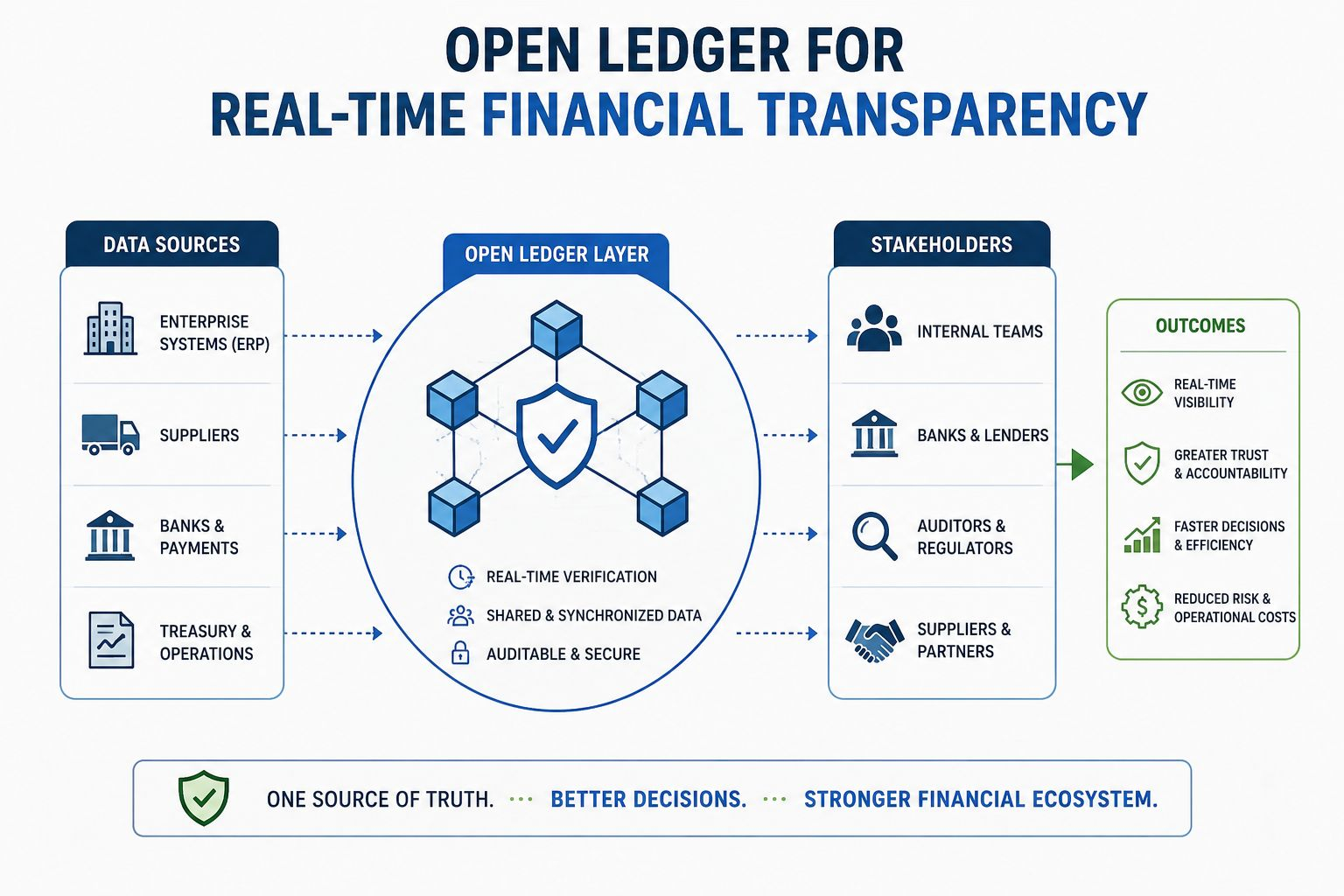
Follow the incentives and you usually find infrastructure providers, consultants, venture capital firms, and token issuers positioning themselves as the new gatekeepers of financial transparency. Ironically, many systems marketed as “removing middlemen” simply replace old intermediaries with new ones carrying modern titles.
Same business model. Different vocabulary.
Still, the pressure behind Open Ledger is understandable. Traditional financial reporting looks increasingly outdated in an economy operating at digital speed. Delayed visibility creates real risk. Manual reconciliation wastes time and money. Auditing problems after the fact no longer feels sustainable when transactions themselves happen instantly.
Businesses know the old model is weakening.
The question is whether Open Ledger actually simplifies financial coordination or simply adds another layer of infrastructure, governance disputes, cybersecurity risk, and operational dependency on top of already fragile systems.
Because that’s the uncomfortable reality sitting underneath the hype. Transparency sounds powerful until companies realize it also means giving up control, flexibility, and informational advantage.
And historically, institutions rarely surrender those willingly.


