
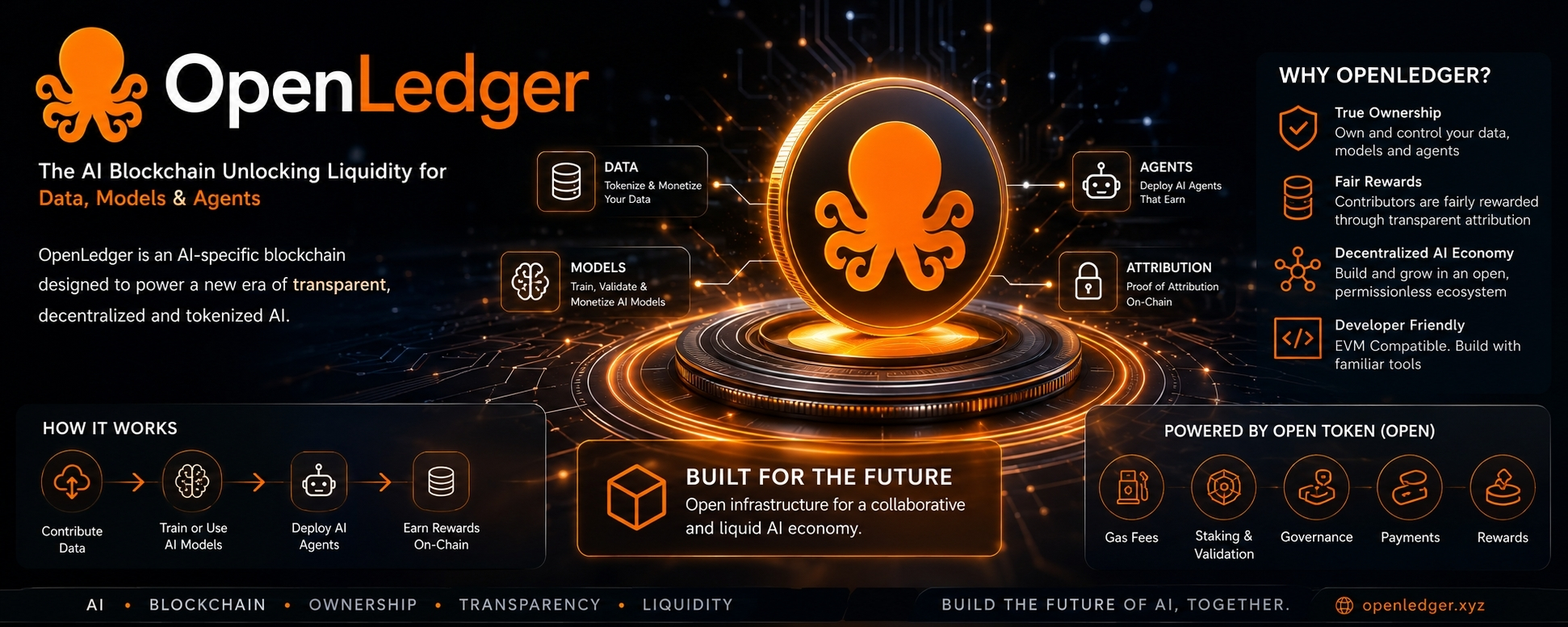

Artificial Intelligence aur blockchain dono technologies alag alag industries ko transform kar rahi hain. Lekin pichhle kuch saalon mein ek naya trend saamne aaya hai jahan AI aur decentralized infrastructure ko combine karne ki koshish ki ja rahi hai. Isi direction mein ek project kaafi rapidly attention gain kar raha hai — OpenLedger (OPEN).
OpenLedger khud ko “AI Blockchain” ke taur par present karta hai. Iska main goal sirf ek aur cryptocurrency banana nahi, balki ek aisa decentralized ecosystem create karna hai jahan data providers, AI model developers, aur autonomous AI agents ek transparent economic system mein kaam kar saken. Project ka focus especially “data monetization” aur “AI attribution” par hai, jo aaj ke AI industry ke sabse important issues mein se ek ban chuka hai.
Aaj ki AI economy mein sabse bada problem yeh hai ke billions of dollars ki datasets centralized companies ke control mein hoti hain. Jo log ya organizations data provide karte hain, unko aksar proper compensation ya recognition nahi milta. OpenLedger isi imbalance ko solve karne ki koshish karta hai. Project ka kehna hai ke AI models ko train karne mein jo data use hota hai, uska ownership record aur attribution on-chain hona chahiye taake contributors ko fair rewards mil saken.
OpenLedger ka infrastructure “Datanets” naam ke system par based hai. Simple language mein samjhein to Datanets community-owned datasets hain jahan users apna data contribute kar sakte hain. Jab koi AI model us data ko use karta hai, to blockchain par us contribution ka record maintain hota hai. Iska faida yeh hai ke transparency improve hoti hai aur reward distribution automated ban sakta hai.
Project ka ek aur interesting aspect iska “Prooof Attribution” mechanism hai. Traditional AI systems mein yeh trace karna mushkil hota hai ke kisi model ne kis dataset se kya seekha. OpenLedger is process ko verifiable banana chahta hai. Agar koi AI output kisi specific dataset ya contributor ki wajah se valuable banta hai, to contributor ko automatically incentives mil sakte hain. Yeh concept especially future AI regulation aur copyright debates ke context mein important ho sakta hai.
Technical side par OpenLedger Ethereum-compatible blockchain architecture use karta hai. Iska matlab developers relatively familiar tooling ke through decentralized AI applications build kar sakte hain. Project documentation ke mutabiq users datasets create kar sakte hain, models train kar sakte hain aur AI applications deploy kar sakte hain — sab kuch on-chain tracking ke saath.
AI industry mein ek aur major challenge compute efficiency hai. Large AI models ko train aur deploy karna extremely expensive hota hai. OpenLedger ne “OpenLoRA” naam ki serving layer introduce ki hai jo supposedly ek GPU par multiple AI models efficiently run karne mein help karti hai. Community discussions aur demonstrations mein is concept ko highlight kiya gaya hai, kyunki decentralized AI ko scalable banana bina efficient infrastructure ke possible nahi hota.
Project ka native token “OPEN” ecosystem ka central utility asset hai. Iska use gas fees, governance voting, AI inference payments aur contributor rewards ke liye hota hai. Official tokenomics ke mutabiq total supply 1 billion OPEN tokens rakhi gayi hai, jabke ecosystem aur community allocations ko significant portion diya gaya hai.
Lekin kisi bhi blockchain project ki tarah OpenLedger ko sirf positive angle se dekhna enough nahi hai. AI + crypto narrative recent years mein kaafi popular hua hai, aur market mein bohot se projects sirf hype create karne ke liye buzzwords use karte hain. Isliye investors aur developers dono ke liye zaroori hai ke woh real adoption, active development aur ecosystem activity ko carefully analyze karein.
OpenLedger ka vision ambitious hai, lekin us vision ko successful execution mein convert karna sabse difficult part hota hai. Decentralized AI infrastructure build karna technically aur economically dono لحاظ se challenging task hai. Blockchain scalability, data verification, AI model quality aur incentive design — yeh sab issues long-term sustainability decide karenge.
Community discussions mein OpenLedger ko AI-focused crypto projects jaise Fetch.ai aur SingularityNET ke saath compare kiya gaya hai. Difference yeh hai ke OpenLedger specifically attribution aur data monetization ko apni identity ka central part banata hai. Agar future mein AI regulations stricter hoti hain aur data ownership legally important issue ban jata hai, to is tarah ke infrastructure projects ki relevance increase ho sakti hai.
Is project ki growth largely ecosystem participation par depend karegi. Agar developers genuinely OpenLedger par AI applications build karte hain aur datasets contribute karne wale users ko fair incentives milte hain, to network effects develop ho sakte hain. Lekin agar ecosystem sirf speculative trading tak limited raha, to long-term value creation mushkil ho jayegi.
Crypto market mein AI narrative abhi bhi relatively early stage par hai. Investors generally un projects ko closely watch kar rahe hain jo real utility provide kar saken. OpenLedger ka core narrative — “AI ko transparent aur economically fair banana” — theoretically strong lagta hai. Lekin theory aur production-level adoption ke darmiyan ka gap hamesha significant hota hai.
Ek aur important point regulatory landscape hai. AI governance aur data privacy globally rapidly evolve ho rahe hain. Future regulations determine kar sakti hain ke decentralized AI platforms kis tarah operate karenge. Agar OpenLedger compliance-friendly infrastructure develop karta hai, to institutional interest ka possibility bhi exist karti hai. Warna regulatory pressure innovation ko slow kar sakta hai.
Market data ke mutabiq OPEN token ne listing ke baad volatility experience ki hai, jo naturally crypto sector mein common baat hai. Investors ke liye sirf price movement dekhna enough nahi hota; on-chain activity, developer engagement, partnerships aur ecosystem growth zyada meaningful indicators hote hain.
OpenLedger ko samajhne ke liye isko sirf ek cryptocurrency ke taur par dekhna shayad incomplete approach hogi. Yeh project asal mein ek infrastructure experiment hai jo AI economy ko decentralized incentives ke saath redesign karne ki koshish kar raha hai. Iska success ultimately is baat par depend karega ke kya yeh genuinely developers, researchers aur data contributors ke liye useful ecosystem create kar pata hai ya nahi.
Aaj ki digital economy mein data ko “new oil” kaha jata hai. Lekin data ka ownership aur monetization model abhi bhi unclear hai. OpenLedger jese projects isi uncertainty ko opportunity ke taur par dekh rahe hain. Agar blockchain-based attribution systems effectively kaam karte hain, to future AI ecosystems zyada transparent aur collaborative ban sakte hain.
Conclusion ke taur par dekha jaye to OpenLedger (OPEN) ek ambitious AI-blockchain initiative hai jo data ownership, AI transparency aur decentralized incentives ko combine karne ki koshish karta hai. Project ka vision modern AI economy ke real problems ko target karta hai, jo isko surface-level meme projects se alag banata hai. Lekin long-term credibility sirf ideas se nahi, balki execution, adoption aur sustained ecosystem development se build hoti hai.
Filhaal OpenLedger un projects mein count hota hai jise AI aur blockchain convergence ke context mein closely observe kiya ja raha hai. Aane wale years mein yeh clear hoga ke kya yeh platform decentralized AI infrastructure ka meaningful part ban pata hai ya phir rapidly changing crypto narratives mein ek aur experimental concept bankar reh jata hai.
